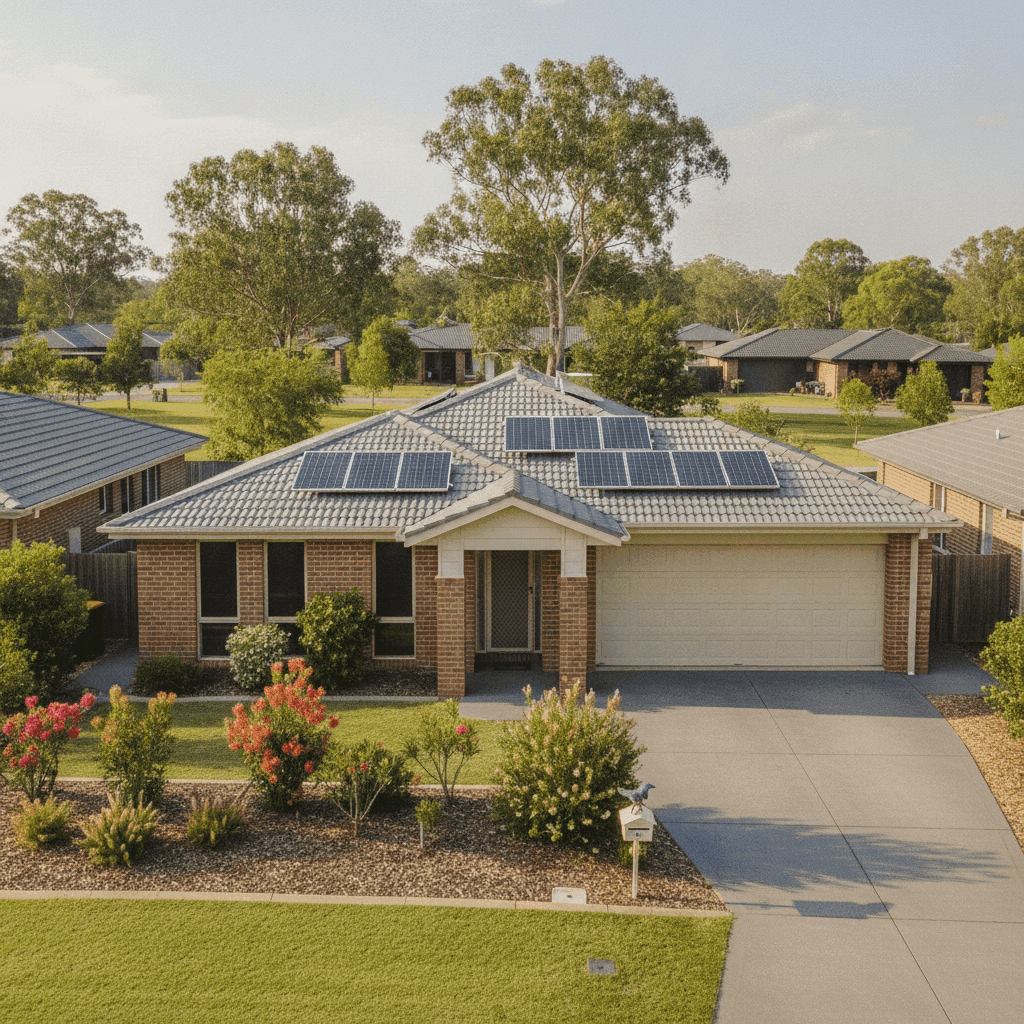
If you own a free standing home in Woodend, QLD 4305, you're probably aware that insurance premiums across Queensland can vary enormously — sometimes shockingly so. This article breaks down a real home and contents insurance quote for a four-bedroom brick veneer property in Woodend, comparing it against local, state, and national benchmarks to help you understand whether you're getting a fair deal.
---
Is This Quote Fair?
The quote in question comes in at $1,583 per year (or $152 per month) for combined home and contents cover, with a building sum insured of $447,000 and contents valued at $105,000. Both the building and contents excess are set at $1,000.
Our price rating for this quote is CHEAP — below average — and the data backs that up convincingly. The suburb average for Woodend sits at $2,942 per year, meaning this quote is coming in at roughly 46% below what most comparable properties in the area are paying. Even the cheapest quarter of quotes in the suburb (the 25th percentile) averages $2,621 per year — still well above this figure.
For a homeowner in Woodend, this is a genuinely competitive result. Whether it's the result of a particular insurer's pricing model, the property's characteristics, or simply good timing, a premium this far below the local average is worth taking note of — and worth protecting by reviewing annually to ensure it doesn't creep up at renewal.
---
How Woodend Compares to the Rest of Queensland and Australia
To put this quote in broader context, it helps to zoom out.
| Benchmark | Annual Premium |
|---|---|
| This Quote | $1,583 |
| Woodend Suburb Average | $2,942 |
| Woodend Suburb Median | $2,922 |
| QLD State Average | $9,129 |
| QLD State Median | $3,903 |
| Scenic Rim LGA Average | $8,744 |
| National Average | $5,347 |
| National Median | $2,764 |
The Queensland state average of $9,129 per year is a striking figure, heavily influenced by high-risk areas — particularly those exposed to cyclone, flood, and storm surge. The Scenic Rim LGA average of $8,744 per year reflects similar pressures, with many properties in that broader region facing elevated natural hazard risk.
Woodend itself, however, sits in a more favourable position. The suburb median of $2,922 is notably below the national median of $2,764 — though not dramatically so. What stands out is just how far below the curve this particular quote falls. At $1,583, it undercuts even the national median by over $1,100.
It's worth noting that the suburb sample size here is eight quotes, so the local averages should be treated as indicative rather than definitive. More data points would sharpen those figures, but the directional story is clear: Woodend is a relatively affordable suburb for home insurance by Queensland standards, and this quote is at the very competitive end of that market.
---
Property Features That Affect Your Premium
Several characteristics of this property are likely working in the homeowner's favour when it comes to pricing.
Brick veneer construction is generally viewed favourably by insurers. It offers solid fire resistance and structural durability compared to timber-framed weatherboard homes, which can translate into lower rebuild risk assessments and, in turn, lower premiums.
Concrete roofing is another positive signal. Concrete tiles are highly durable, resistant to storm damage, and have a long lifespan — all factors that reduce the likelihood of a claim. Combined with a slab foundation, the structural profile of this home is one that most insurers consider relatively low-risk.
The property was built in 1992, placing it in a generation of homes that generally meet modern building standards without the age-related concerns that come with pre-1980s construction. Older homes can attract higher premiums due to outdated wiring, plumbing, or roofing materials.
Solar panels are worth a mention. While they add value to the property and are typically covered under a building policy, they can slightly increase the sum insured required to cover full replacement costs. It's important to confirm with your insurer that solar panels are explicitly included in your building cover — not all policies treat them the same way.
Ducted climate control is a high-value fixture that should be accounted for in your building sum insured. At $447,000, the building cover here appears to reflect the property's full replacement value, which is the right approach. Underinsuring — even slightly — can leave you significantly out of pocket in the event of a total loss.
The 130 sqm building size, standard fittings quality, and timber/laminate flooring all point to a mid-range property without luxury finishes that would push replacement costs higher. This is a straightforward home to price, which likely contributes to the competitive premium.
There's no pool on this property, which removes one common source of liability and additional cover complexity.
---
Tips for Homeowners in Woodend
1. Review your sum insured annually — especially with solar. Building costs have risen significantly in recent years. Your sum insured should reflect what it would actually cost to rebuild your home today, not what it cost five years ago. With solar panels and ducted air conditioning on site, make sure those are factored into your replacement cost estimate. Use a quantity surveyor or your insurer's calculator to check.
2. Don't let a cheap quote become a set-and-forget policy. A below-average premium is great, but it's only valuable if the cover is adequate. Read your Product Disclosure Statement (PDS) carefully — particularly around storm, water damage, and accidental damage inclusions — to make sure you're not paying less because you're covered for less.
3. Compare at renewal, every year. Insurers often reserve their best pricing for new customers. When your renewal notice arrives, treat it as an invitation to shop around. Even if your current insurer is competitive, knowing what else is available gives you negotiating power — or a better deal elsewhere.
4. Check your contents cover reflects your actual belongings. A $105,000 contents sum is a reasonable starting point for a four-bedroom home, but it's worth doing a room-by-room inventory to make sure it's accurate. Electronics, furniture, whitegoods, clothing, and jewellery add up quickly. Being underinsured on contents is one of the most common and costly mistakes homeowners make.
---
Compare Your Home Insurance Options
Whether you're a Woodend local reviewing your current policy or shopping for the first time, it pays to see what the market has to offer. CoverClub makes it easy to compare home and contents quotes side by side, so you can be confident you're getting the right cover at the right price.
Get a home insurance quote today and see how your premium stacks up against the suburb, state, and national benchmarks — all in one place.