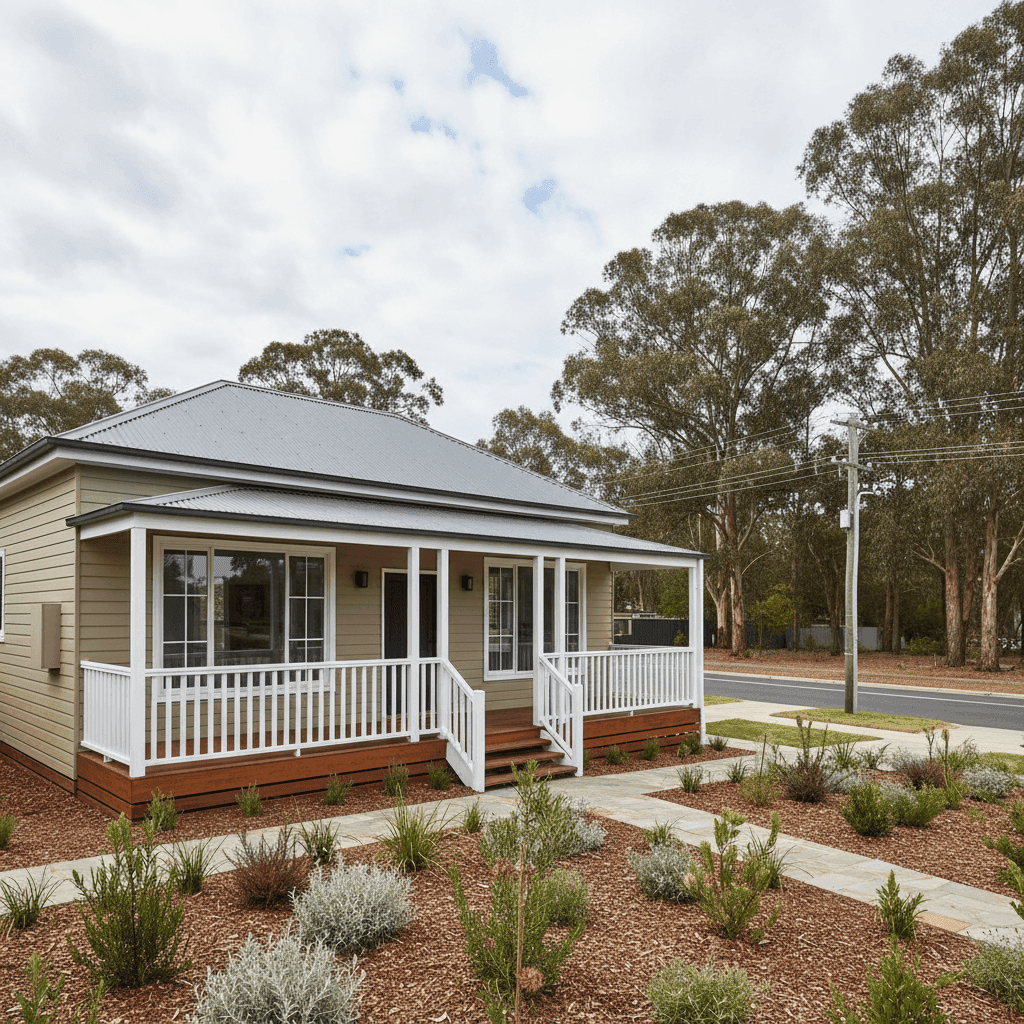
If you own a free standing home in Woodend, VIC 3442, you're likely well aware that insurance premiums can vary enormously depending on your property's characteristics and the insurer you choose. Nestled in the Macedon Ranges, Woodend is a charming regional town that blends lifestyle appeal with some unique risk considerations — all of which feed into what you'll pay to protect your home. This article breaks down a real home and contents insurance quote for a four-bedroom, two-bathroom weatherboard property in the area, and puts it in context against local, state, and national benchmarks.
---
Is This Quote Fair?
The quote in question comes in at $2,238 per year (or $215/month) for a combined home and contents policy, covering a building sum insured of $865,000 and contents valued at $50,000. Both the building and contents excess are set at $1,000.
Our price rating for this quote is FAIR — around average. That's a reasonable outcome, but it doesn't necessarily mean this is the best price available. "Fair" tells us the premium sits comfortably within the typical range for comparable properties in Woodend, without being a standout bargain or an obvious overpay.
For context, the suburb average premium across 72 quotes collected for Woodend sits at $2,264 per year, meaning this quote is actually slightly below the local average — a modest but welcome saving of around $26 annually. The suburb median, however, is a lower $1,631/yr, which suggests the distribution of premiums in the area is skewed upward by some higher-value or higher-risk properties. At $2,238, this quote sits between the 75th percentile ($2,293) and the median, indicating it's on the higher side for the suburb but not in outlier territory.
---
How Woodend Compares
Understanding where Woodend sits relative to broader benchmarks helps put this premium in perspective.
| Benchmark | Average Premium | Median Premium |
|---|---|---|
| Woodend (3442) | $2,264/yr | $1,631/yr |
| LGA (Moorabool) | $2,640/yr | — |
| Victoria | $3,000/yr | $2,718/yr |
| National | $5,347/yr | $2,764/yr |
Compared to the Victorian state average of $3,000/yr, this quote is 25% cheaper — a meaningful difference that reflects Woodend's relatively lower-risk profile compared to many parts of the state. Victoria's premium average is dragged upward by high-density urban areas, flood-prone regions, and bushfire-exposed zones that attract significant loadings.
When stacked against the national average of $5,347/yr, the Woodend quote looks even more competitive, coming in at less than half the national figure. Much of that national average is inflated by Queensland and Northern Australia, where cyclone risk and flooding push premiums to extraordinary levels. Woodend, sitting outside any cyclone risk zone, benefits from a considerably calmer risk profile.
The LGA average for Moorabool ($2,640/yr) is also notably higher than this quote, which suggests the property's specific characteristics are working in the homeowner's favour relative to others in the broader local government area.
---
Property Features That Affect Your Premium
Several aspects of this property have a direct bearing on what insurers charge. Here's how the key features play out:
Weatherboard timber walls are one of the most significant factors. Timber-clad homes are generally considered a higher fire risk than brick veneer or full brick construction, which can attract a premium loading. In a region like the Macedon Ranges — which has experienced significant bushfire events historically — insurers pay close attention to wall construction materials.
Steel/Colorbond roofing is viewed favourably by insurers. It's durable, fire-resistant, and performs well in high-wind conditions. Compared to older tile or terracotta roofs, a Colorbond roof is less likely to fail during a storm event, which can positively influence your premium.
Stump foundations are common in regional Victoria and are generally well understood by insurers. They do introduce some considerations around subsidence and pest access, but for a home built in 2018, these risks are typically well-managed through modern building standards.
Timber and laminate flooring contributes to the overall contents and building replacement cost. These materials are more expensive to replace than carpet, which is partly reflected in the above-average fittings quality rating for this property.
Construction year of 2018 is a genuine advantage. Newer homes are built to more stringent Australian building codes — including improved fire resistance, structural integrity, and energy efficiency standards — which insurers reward with more competitive pricing.
Ducted climate control adds to the replacement value of the home and is factored into the building sum insured. At $865,000, the sum insured reflects a well-appointed property, and ensuring this figure accurately represents full rebuild cost (not market value) is critical.
No pool and no solar panels simplify the risk profile slightly. Pools introduce liability considerations, while solar panels — particularly older systems — can present fire risks. The absence of both keeps the premium calculation cleaner.
---
Tips for Homeowners in Woodend
1. Review your sum insured annually Building costs in regional Victoria have risen sharply in recent years. A sum insured of $865,000 may be appropriate today, but it's worth reassessing each year — ideally using a quantity surveyor's estimate or an online building calculator — to ensure you're not underinsured. Underinsurance is one of the most common and costly mistakes homeowners make.
2. Explore bushfire preparedness discounts Given Woodend's location in the Macedon Ranges, some insurers offer discounts or more favourable terms for homes with active bushfire mitigation measures — such as ember guards on vents, maintained clear zones around the property, and fire-rated materials. Ask your insurer directly whether any of these qualify for a reduction.
3. Consider a higher excess to lower your premium Both the building and contents excess on this policy are set at $1,000. Opting for a higher excess (say, $2,500 or $5,000) can meaningfully reduce your annual premium. This strategy works well if you have sufficient savings to cover a larger out-of-pocket cost in the event of a claim.
4. Don't auto-renew without comparing A "FAIR" rating means there's room to do better. Insurers regularly adjust their pricing models, and the market can shift significantly from one year to the next. Taking 15 minutes to compare quotes before your renewal date could save you hundreds of dollars — particularly given the wide spread of premiums seen in Woodend, where the 25th percentile sits at just $1,314/yr.
---
Ready to Compare?
Whether you're renewing your current policy or shopping for the first time, comparing quotes is the single most effective way to ensure you're not overpaying. At CoverClub, we make it easy to see what multiple insurers would charge for your specific property — so you can make a confident, informed decision. Get a home insurance quote now and find out if you can do better than average.