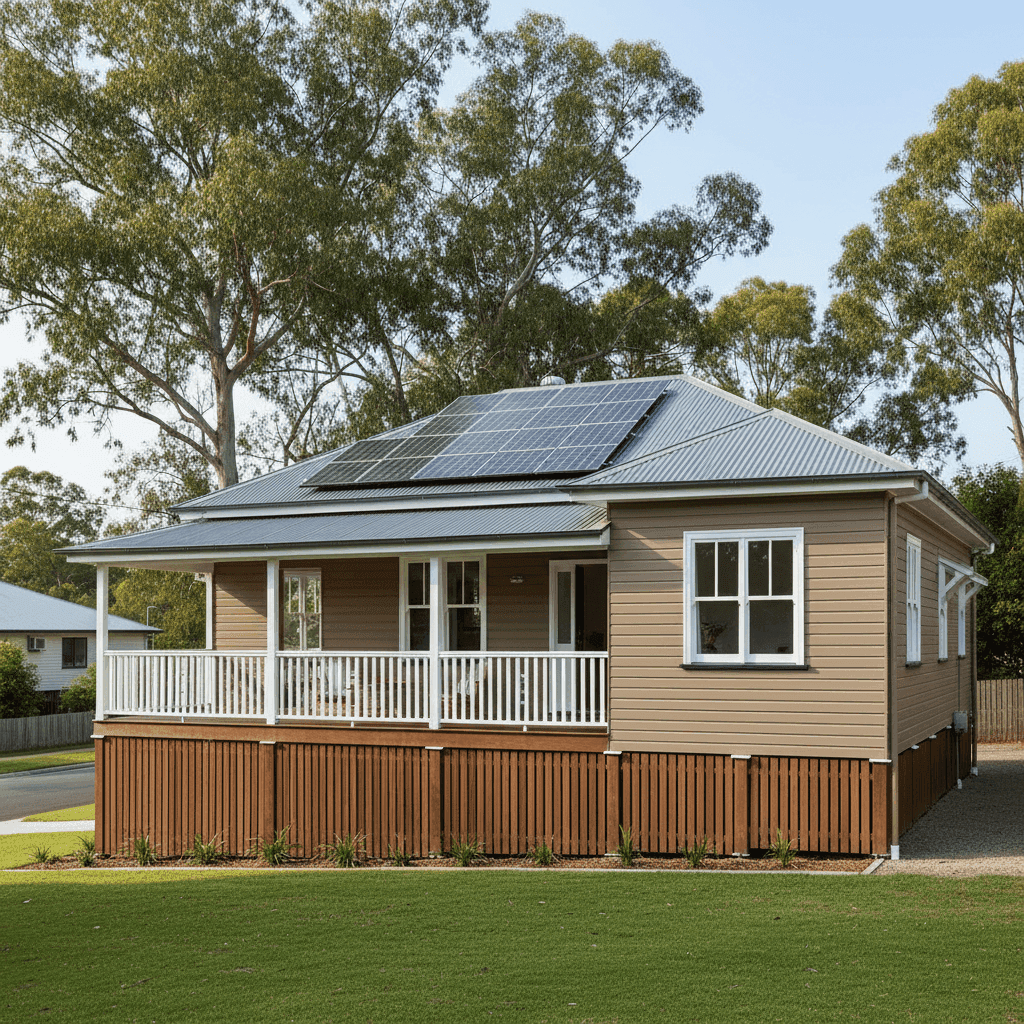
If you own a free standing home in Woodhill, QLD 4285, you've probably noticed that home insurance isn't cheap — and you may be wondering whether the quote sitting in your inbox is actually competitive. This article breaks down a real home and contents insurance quote for a five-bedroom weatherboard property in Woodhill, compares it against suburb, state, and national benchmarks, and offers practical tips to help you make a more informed decision.
---
Is This Quote Fair?
The quote in question comes in at $3,861 per year (or $370/month) for combined home and contents cover, with a building sum insured of $1,048,000 and contents valued at $90,000. Both the building and contents excess sit at $1,000.
Our price rating for this quote is Expensive — above average for the Woodhill area.
To put that in context: the suburb average for Woodhill sits at $2,803/yr, with a median of $2,774/yr. This quote is roughly 38% above the suburb average and sits well above the 75th percentile of $3,200/yr — meaning it's more expensive than at least three-quarters of comparable quotes in the area. That's a meaningful gap worth investigating before you commit.
That said, it's important to understand why a quote might be higher before assuming it's simply overpriced. A higher building sum insured, specific property features, and the insurer's own risk appetite all play a role. We'll unpack those factors below.
---
How Woodhill Compares
Understanding where Woodhill sits in the broader insurance landscape helps frame whether this premium is an outlier or part of a wider trend.
| Benchmark | Average Premium | Median Premium |
|---|---|---|
| Woodhill (suburb) | $2,803/yr | $2,774/yr |
| Logan LGA | $4,617/yr | — |
| Queensland (state) | $9,129/yr | $3,903/yr |
| National | $5,347/yr | $2,764/yr |
A few things stand out here. Queensland's state average of $9,129/yr is dramatically high — largely skewed by North Queensland postcodes that carry significant cyclone and flood risk, which pulls the mean upward. The state median of $3,903/yr is a far more representative figure for most Queensland homeowners, and the quote of $3,861/yr actually falls just under that mark.
Nationally, the average premium across Australia is $5,347/yr, though again the median of $2,764/yr tells a more grounded story. Woodhill's suburb median of $2,774/yr is closely aligned with the national median, suggesting it's a relatively mid-range area when it comes to insurance risk.
Compared to the broader Logan LGA average of $4,617/yr, this quote is actually more affordable — which may reflect Woodhill's semi-rural character and lower density compared to other parts of Logan. You can explore more suburb-level data on the Woodhill stats page and the Queensland stats overview.
---
Property Features That Affect Your Premium
Several characteristics of this property are likely influencing the premium, both up and down.
Weatherboard Timber Walls
Weatherboard timber construction is one of the most significant premium drivers for older Queensland homes. Timber is considered a higher fire risk than brick veneer or rendered masonry, and it can be more costly to repair or replace after storm or impact damage. Insurers typically apply a loading to timber-framed or weatherboard properties, especially those built before modern building codes.
Stump Foundation (Elevated by at Least 1 Metre)
This home is elevated on stumps by at least one metre — a hallmark of the classic Queensland style. Elevation can actually be a positive factor in flood-prone areas, as it reduces the likelihood of inundation reaching the living areas. However, stumped foundations can also be more expensive to repair structurally, and the underfloor space introduces additional risk considerations for some insurers.
Construction Year: 1986
At nearly 40 years old, this home predates many modern building standards. Older properties can carry higher premiums due to ageing electrical wiring, plumbing, and roofing materials — all of which increase the likelihood and cost of a claim.
Steel/Colorbond Roof
This is a positive for insurers. Colorbond steel roofing is highly regarded for its durability, resistance to corrosion, and performance in storm conditions. It's generally viewed more favourably than older tile or fibrous cement roofing.
Solar Panels
The presence of solar panels adds a modest amount to the insured value of the property. Panels can be damaged in hailstorms or high winds, and their replacement cost is factored into the building sum insured. Make sure your policy explicitly covers solar panels — not all do by default.
Building Sum Insured: $1,048,000
At 277 sqm, a sum insured of just over $1 million for a five-bedroom home is on the higher end, though not unreasonable for a well-appointed property of this size. A higher sum insured directly increases your premium, so it's worth periodically reviewing whether your rebuild cost estimate is accurate — both over-insuring and under-insuring carry real risks.
---
Tips for Homeowners in Woodhill
1. Compare Multiple Quotes Before Renewing
With only 11 quotes in our Woodhill sample, there's meaningful variation between insurers in this area. The gap between the 25th percentile ($2,567/yr) and this quote ($3,861/yr) is over $1,200 annually — that's real money. Use a comparison tool like CoverClub to see what multiple insurers would charge for your specific property.
2. Review Your Building Sum Insured
It's worth getting an independent building replacement cost estimate — particularly for an older, larger weatherboard home. If your sum insured is higher than the actual rebuild cost, you may be paying more premium than necessary. Conversely, being under-insured can leave you seriously out of pocket after a major claim.
3. Ask About Discounts for Security and Safety Features
Some insurers offer discounts for smoke alarms, deadbolts, security systems, and other safety features. Given this home doesn't have a pool (one less risk factor), it's worth asking your insurer whether any features of the property qualify for a discount.
4. Consider Your Excess Level
Both the building and contents excess on this policy are set at $1,000. Opting for a higher excess — say $2,500 or $5,000 — can meaningfully reduce your annual premium. This strategy works well if you have the savings to cover a larger out-of-pocket expense in the event of a claim, and you're primarily seeking protection against major, catastrophic losses rather than minor incidents.
---
Ready to Find a Better Deal?
Whether you're renewing your existing policy or shopping for the first time, comparing quotes is the single most effective way to ensure you're not overpaying. Head to CoverClub to get a personalised home insurance comparison for your Woodhill property — it takes just a few minutes and could save you hundreds of dollars a year.