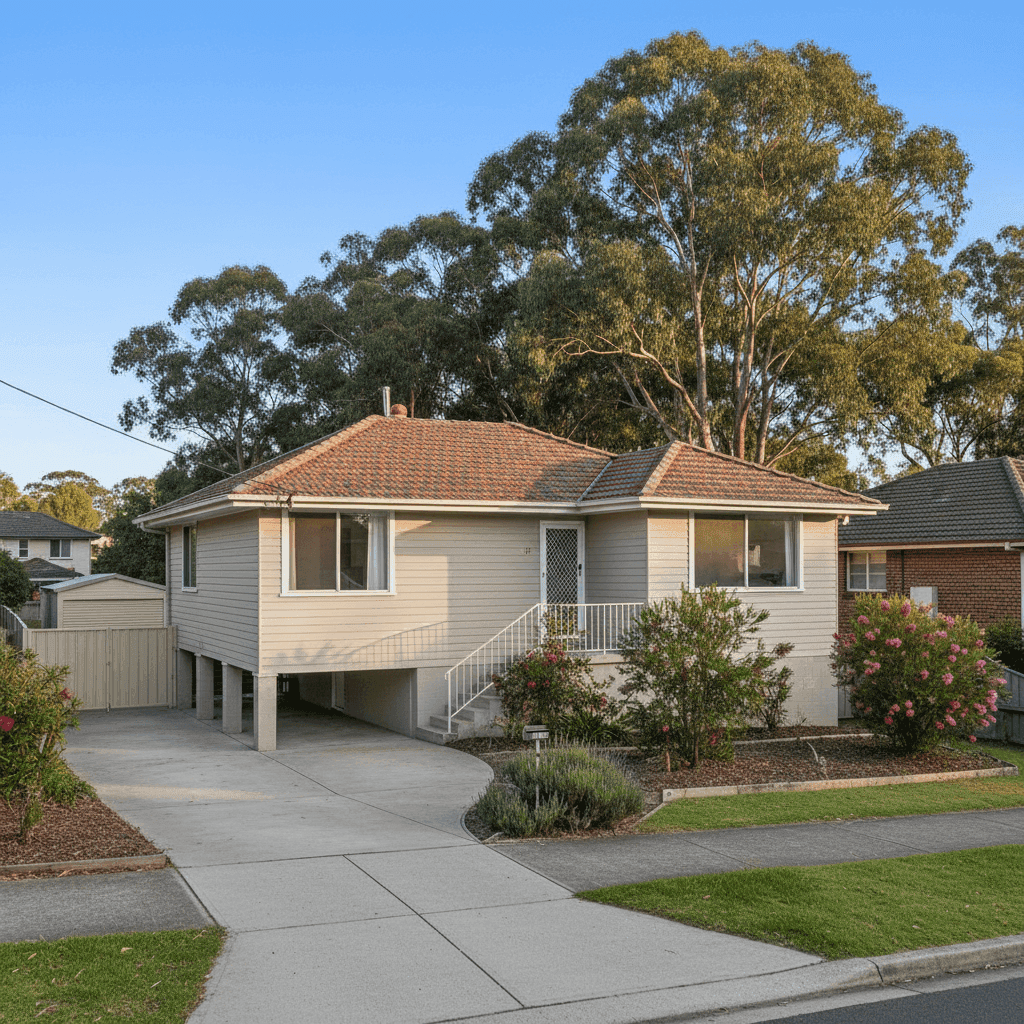
If you own a free standing home in Woodrising, NSW 2284, you're likely keeping a close eye on the cost of home insurance — especially as premiums across Australia have climbed steadily in recent years. This article breaks down a real building insurance quote for a three-bedroom, one-bathroom home in the suburb, examines how it compares to local and national benchmarks, and offers practical tips to help you get the best value cover for your property.
---
Is This Quote Fair?
The quote in question comes in at $1,522 per year (or roughly $152 per month) for building-only cover on a free standing home with a sum insured of $590,000. The building excess is set at $4,000.
Our price rating for this quote? Cheap — below average. That's genuinely good news for the homeowner.
To put that in perspective, the average building insurance premium across Woodrising sits at $2,258 per year, with a median of $2,229. Even the cheapest quarter of quotes in the suburb (the 25th percentile) comes in at $1,987 per year — still well above this quote. In other words, this premium undercuts the majority of comparable quotes in the area by a meaningful margin.
At the state level, the picture is even more striking. The average home insurance premium across NSW is $3,801 per year, with a median of $3,410. This quote is less than half the NSW average — a significant saving that reflects both the specific characteristics of this property and the insurer's assessment of local risk.
Nationally, the average premium across Australia sits at $2,965 per year, with a median of $2,716. Again, this quote comes in well below both figures, reinforcing the "cheap" rating.
---
How Woodrising Compares
Woodrising is a quiet residential suburb on the western shore of Lake Macquarie, roughly 15 kilometres south of Newcastle. It's predominantly a low-density suburban area with a mix of older and newer housing stock — and that context matters when interpreting insurance pricing.
Here's a quick snapshot of how premiums stack up across different geographic levels:
| Benchmark | Average Premium | Median Premium |
|---|---|---|
| Woodrising (2284) | $2,258/yr | $2,229/yr |
| NSW | $3,801/yr | $3,410/yr |
| National | $2,965/yr | $2,716/yr |
One figure worth flagging: the Lake Macquarie LGA average of $11,064 per year. This number is likely skewed by a small number of very high-risk or high-value properties within the broader LGA — perhaps waterfront homes or properties in flood-prone pockets — and shouldn't be taken as representative of typical Woodrising premiums. The suburb-level data, drawn from 12 quotes, paints a far more grounded picture.
What this comparison tells us is that Woodrising homeowners generally enjoy more affordable premiums than the NSW state average, and this particular quote sits at the very competitive end of the local market.
---
Property Features That Affect Your Premium
Several characteristics of this property likely contribute to its competitive premium. Understanding these factors can help you appreciate why your own quote may differ — and what you might be able to do about it.
Hardiplank/Hardiflex external walls Fibre cement cladding like Hardiplank or Hardiflex is viewed favourably by most insurers. It's durable, resistant to rot, fire-retardant, and holds up well in coastal and humid climates — all of which reduce the likelihood of a claim.
Tiled roof Terracotta or concrete tile roofs are a standard, well-understood roofing material for Australian insurers. They're generally considered lower risk than some alternatives (such as older corrugated iron), though they can be susceptible to hail damage in certain regions.
Stump foundation The home sits on stumps, elevated by less than one metre. Stump foundations are common in older NSW homes and can be a double-edged sword for insurers — they allow for good ventilation and some flood resilience, but may require periodic maintenance (restumping) as the home ages. A 1988 build on stumps is worth monitoring over time.
Construction year: 1988 At around 37 years old, this home is mature but not ancient. Homes of this era were generally built to solid standards, though insurers may factor in the age of key systems (roofing, plumbing, electrical) when pricing the risk.
No pool, no solar panels, no ducted climate control Each of these features can add complexity — and cost — to an insurance policy. Their absence here simplifies the risk profile and likely contributes to the lower premium.
130 sqm building size At 130 square metres, this is a modest but comfortable home footprint. A smaller building size generally means lower rebuild costs, which supports a more affordable premium even with a $590,000 sum insured (which accounts for full replacement, including demolition, professional fees, and construction costs).
---
Tips for Homeowners in Woodrising
Whether you're renewing your policy or shopping around for the first time, here are a few practical steps to make sure you're getting the right cover at the right price.
1. Don't underinsure — review your sum insured regularly Building costs have risen sharply across Australia in recent years. A sum insured of $590,000 for a 130 sqm home may be appropriate today, but it's worth revisiting this figure annually. Underinsurance is one of the most common — and costly — mistakes homeowners make.
2. Consider whether building-only cover is enough This quote covers the building only. If you have valuable contents — furniture, electronics, appliances, clothing — a separate contents policy or a combined building and contents policy may be worth exploring. Contents cover is especially relevant for owner-occupiers.
3. Check your excess carefully This policy carries a $4,000 building excess. A higher excess typically lowers your premium, but it also means a larger out-of-pocket cost if you need to make a claim. Make sure the excess is genuinely affordable for your household before locking it in.
4. Compare quotes before you renew The fact that this quote is rated "cheap" doesn't mean it's the best policy for every homeowner in Woodrising. Insurers assess risk differently, and premiums can vary significantly for similar properties. Use a comparison tool to benchmark your renewal quote against the market each year.
---
Compare Home Insurance Quotes in Woodrising
Whether this quote is your current policy or you're exploring your options, the smartest move is to compare. CoverClub makes it easy to see how your premium stacks up against real quotes from across the suburb, state, and country. Enter your address and get a quote today — it takes just a few minutes and could save you hundreds of dollars a year.