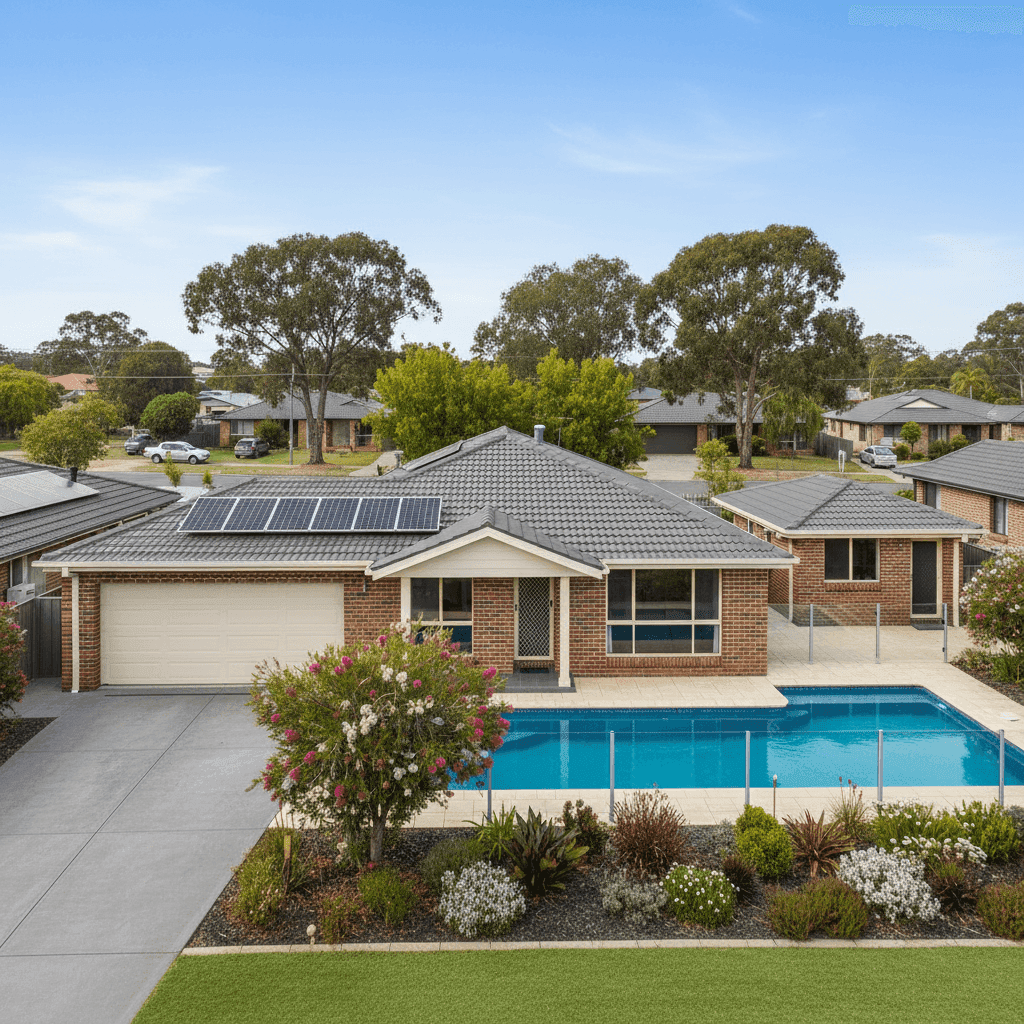
Woodrising is a quiet lakeside suburb in the Lake Macquarie local government area of New South Wales — a popular spot for families drawn to its relaxed lifestyle, proximity to the water, and easy access to Newcastle. If you own a free standing home here, understanding what you should be paying for home and contents insurance is just as important as knowing your property's value. This article breaks down a real insurance quote for a 3-bedroom brick veneer home in Woodrising and puts the numbers in context so you can make a more informed decision at renewal time.
---
Is This Quote Fair?
The quote in question comes in at $3,761 per year (or $374/month) for combined home and contents cover, with a building sum insured of $1,053,000 and contents valued at $145,000. The building excess is set at $3,000 and the contents excess at $1,000.
Our rating for this quote is Expensive — Above Average. That assessment is based on how the premium stacks up against what other homeowners in Woodrising are paying, as well as broader state and national benchmarks.
To be fair, several features of this property justify a higher-than-typical premium. The building sum insured of over $1 million is substantial, and the property includes a swimming pool, solar panels, ducted climate control, and a granny flat — all of which add to the insurer's liability. The top-of-the-range fittings quality also pushes rebuild costs higher, which flows directly into the premium calculation. That said, even accounting for these features, there is likely room to find more competitive pricing without sacrificing meaningful cover.
---
How Woodrising Compares
Here's where things get interesting. When you look at home insurance data for Woodrising (NSW 2284), the suburb average sits at just $2,258 per year, with a median of $2,229. Even at the 75th percentile — meaning 75% of quotes in the suburb are cheaper — the figure is only $2,656/yr. This quote at $3,761 sits well above that upper band.
Zooming out to the NSW state level, the average premium is $3,801/yr and the median is $3,410/yr. So while this quote is broadly in line with the NSW average, it's worth noting that state averages are heavily influenced by higher-risk and higher-value properties across the state. Woodrising itself is a lower-risk suburb by comparison, which makes the gap between this quote and local benchmarks more notable.
At the national level, the average home insurance premium across Australia is $2,965/yr, with a median of $2,716/yr. This quote exceeds both figures meaningfully.
One number that stands out is the Lake Macquarie LGA average of $11,064/yr — an unusually high figure that likely reflects a small number of very high-value or high-risk properties skewing the average within that dataset. It's a reminder that LGA-level averages can be misleading, and suburb-level comparisons tend to be far more useful when benchmarking your own premium.
| Benchmark | Average Premium |
|---|---|
| Woodrising (suburb) | $2,258/yr |
| NSW (state) | $3,801/yr |
| Australia (national) | $2,965/yr |
| This quote | $3,761/yr |
---
Property Features That Affect Your Premium
Several characteristics of this property have a direct bearing on the insurance premium, and it's worth understanding each one.
Brick veneer construction and tiled roof are generally viewed favourably by insurers. Brick veneer is durable and fire-resistant, while tiled roofs tend to perform well in storms compared to corrugated iron. These features typically work in your favour when it comes to pricing.
Slab foundation is a common choice in NSW and doesn't carry the same moisture or movement risks associated with some other foundation types, so it's broadly neutral from an insurance perspective.
Construction year (1980) means the home is over 40 years old. Older homes can attract slightly higher premiums due to ageing plumbing, electrical systems, and roofing materials — even when the home has been well maintained. Insurers may factor in a higher likelihood of claims related to wear and tear.
Swimming pool adds liability exposure. If someone is injured in or around the pool, your insurer may be called upon to cover legal costs and damages. This is a meaningful contributor to a higher premium.
Solar panels add replacement value to the roof and can complicate claims if the roof is damaged. Insurers need to account for the cost of replacing panels and any associated electrical systems.
Ducted climate control is a significant fixed asset within the home. If damaged by fire, flood, or storm, it's expensive to repair or replace — and that's reflected in the premium.
Granny flat effectively means the insurer is covering two dwellings on the one property. Additional structures increase the overall sum insured and the range of potential claims scenarios.
Top-of-the-range fittings — think high-end kitchen appliances, premium bathroom fixtures, and quality flooring — push the rebuild cost higher. The $1,053,000 building sum insured reflects this, and the premium follows accordingly.
---
Tips for Homeowners in Woodrising
1. Shop around at renewal time The gap between this quote and the Woodrising suburb average suggests there may be more competitive options available for a similar level of cover. Insurers price risk differently, and a property with a pool, solar panels, and a granny flat won't be assessed the same way by every provider. Use a comparison tool like CoverClub to get multiple quotes side by side.
2. Review your sum insured carefully A building sum insured of $1,053,000 for a 130 sqm home in Woodrising is on the higher end. Make sure this figure reflects the actual cost to rebuild — not the market value of the property. Over-insuring drives up your premium unnecessarily, while under-insuring can leave you short at claim time. A quantity surveyor or online rebuild calculator can help you land on the right number.
3. Consider your excess settings This policy carries a $3,000 building excess and a $1,000 contents excess. Opting for a higher excess is one of the most straightforward ways to reduce your annual premium. If you have the financial buffer to cover a larger out-of-pocket cost in the event of a claim, increasing your excess could bring meaningful savings.
4. Bundle and ask about discounts If your home and contents are already bundled (as they are in this case), check whether your insurer offers additional discounts for security systems, loyalty, or paying annually rather than monthly. Paying monthly typically costs more over the course of the year — in this case, $374 × 12 = $4,488/yr versus the annual premium of $3,761, a difference of $727.
---
Compare Your Quote with CoverClub
Whether you're renewing your policy or shopping for the first time, it pays to compare. CoverClub makes it easy to see how your current premium stacks up against what other homeowners in your suburb are paying — and to get quotes from multiple insurers in one place. Start your comparison at CoverClub and make sure you're not paying more than you need to for the cover your home deserves.