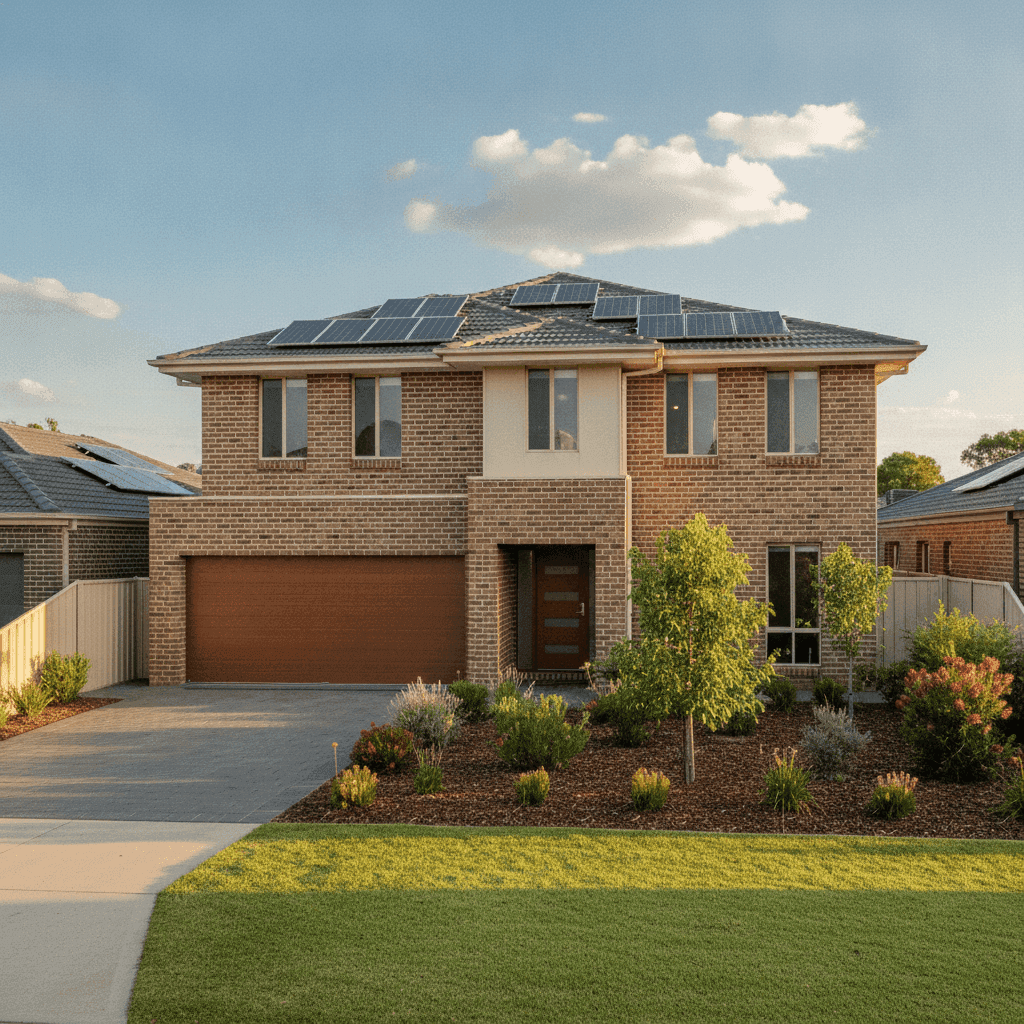
Woongarrah is a well-established residential suburb on the Central Coast of New South Wales, characterised by family-friendly streets and modern housing stock. If you own a free standing home here, understanding what you should be paying for home and contents insurance — and why — can save you hundreds of dollars a year. This article breaks down a real quote for a 4-bedroom, 2-bathroom home in Woongarrah (postcode 2259) and puts it in context against local, state, and national benchmarks.
---
Is This Quote Fair?
The quote in question comes in at $2,558 per year (or $245 per month) for combined home and contents cover, with a $600,000 building sum insured and $100,000 in contents cover. Both the building and contents excess are set at $1,000.
Our pricing analysis rates this quote as Fair — Around Average. That means it's not a standout bargain, but it's also not cause for alarm. The premium sits modestly above the suburb average of $2,339/yr but well within the normal range for this area. For a property of this size and specification, paying a little above the suburb average isn't unusual — particularly when solar panels and ducted climate control are factored into the replacement cost equation.
The key takeaway: this quote is reasonable, but there's still room to shop around and potentially do better.
---
How Woongarrah Compares
To properly assess any quote, it helps to see where it sits relative to the broader market. Here's how Woongarrah stacks up:
| Benchmark | Premium |
|---|---|
| This Quote | $2,558/yr |
| Woongarrah Suburb Average | $2,339/yr |
| Woongarrah Suburb Median | $1,961/yr |
| Woongarrah 25th Percentile | $1,417/yr |
| Woongarrah 75th Percentile | $3,113/yr |
| LGA (Cessnock) Average | $2,462/yr |
| NSW State Average | $9,528/yr |
| NSW State Median | $3,770/yr |
| National Average | $5,347/yr |
| National Median | $2,764/yr |
(Based on 22 quotes sampled for the Woongarrah area.)
A few things stand out here. First, the NSW state average of $9,528/yr looks eye-watering — but that figure is heavily skewed by high-risk and high-value properties across the state, particularly in flood-prone, bushfire-exposed, or coastal areas. The state median of $3,770/yr is a more reliable reference point, and this quote sits comfortably below it.
Compared to the national median of $2,764/yr, this quote is only marginally lower, suggesting Woongarrah is broadly in line with typical Australian home insurance costs. Homeowners here are, by and large, paying what you'd expect anywhere in the country — which is reassuring given the Central Coast's relatively benign risk profile.
You can explore more local data on the Woongarrah suburb stats page, compare it against all of NSW, or see where it sits on the national overview.
---
Property Features That Affect Your Premium
Every insurer prices a policy based on the specific characteristics of the property. Here's how the features of this Woongarrah home influence what you pay:
Brick Veneer Walls Brick veneer is one of the most common external wall materials in Australian suburban homes, and insurers generally view it favourably. It offers solid fire resistance and structural durability, which can help keep premiums moderate compared to timber-clad or weatherboard homes.
Concrete Roof Tiles Concrete tile roofing is robust and widely used. It performs well in moderate weather events and is less susceptible to wind damage than corrugated iron or older terracotta tiles. This is a neutral-to-positive factor for insurers.
Slab Foundation A concrete slab foundation is standard for homes built in this era and region. It's a low-risk construction method that doesn't attract loading from insurers the way pier-and-beam or suspended timber floors might.
Solar Panels This property has solar panels, which adds value to the structure. Most insurers include solar panels under the building sum insured, so it's important to ensure the $600,000 building cover adequately reflects their replacement cost. A typical residential solar system can cost $8,000–$15,000 to replace — worth confirming your policy explicitly covers this.
Ducted Climate Control Ducted air conditioning is a significant fixed asset. Like solar panels, it forms part of the building and contributes to the overall replacement cost. Underinsuring a property with high-value fixtures like this is a common mistake — make sure your sum insured accounts for it.
Built in 2006 At roughly 20 years old, this home is relatively modern. Newer builds tend to comply with more recent building codes, which can reduce risk in the eyes of insurers. There's also less likelihood of ageing infrastructure issues compared to homes built in the 1970s or 1980s.
No Pool, No Cyclone Risk The absence of a swimming pool removes a liability and maintenance risk that can nudge premiums upward. And being outside a designated cyclone risk zone means no cyclone-specific loadings apply — a meaningful saving compared to properties in northern Queensland or parts of WA.
---
Tips for Homeowners in Woongarrah
1. Review Your Building Sum Insured Annually With solar panels, ducted climate control, and 214 sqm of living space, the cost to rebuild this home from scratch could shift year on year. Construction costs across NSW have risen significantly in recent years. Use a building replacement cost calculator or speak with a quantity surveyor to make sure $600,000 still covers you adequately.
2. Don't Assume Loyalty Pays Off Many insurers reserve their best pricing for new customers. If you've been with the same provider for several years without shopping around, there's a good chance you're overpaying. The 25th percentile for Woongarrah sits at $1,417/yr — a meaningful gap below this quote — which suggests competitive options exist in the market.
3. Consider Your Excess Carefully Both the building and contents excess on this policy are set at $1,000. Opting for a higher excess (say, $2,000 or $2,500) can reduce your annual premium noticeably. If you have the financial buffer to absorb a larger out-of-pocket cost in the event of a claim, this is often a smart trade-off.
4. Check What's Included for Solar and Fixtures As noted above, solar panels and ducted systems are significant assets. Before renewing, read your Product Disclosure Statement carefully to confirm these are covered under the building section and that limits aren't capped below their actual replacement value.
---
Compare Your Options at CoverClub
Whether you're renewing soon or just curious about what else is out there, comparing quotes is the fastest way to know if you're getting a fair deal. CoverClub makes it simple to see multiple options side by side for your specific property. Get a home insurance quote today and find out if you could be paying less — without sacrificing the cover you need.