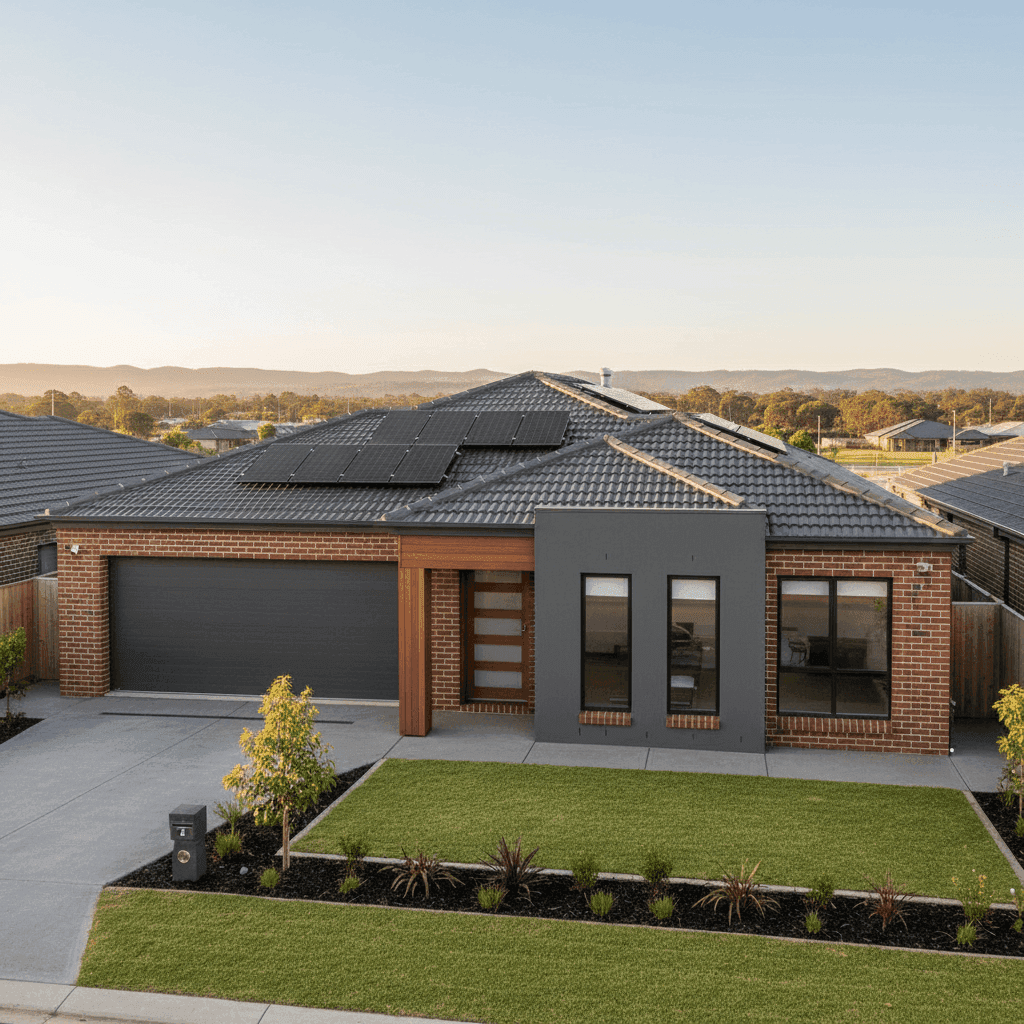
Woongarrah is a modern residential suburb on the Central Coast of New South Wales, and it's becoming an increasingly popular choice for families seeking newer builds in a well-connected community. If you own a free standing home here, understanding what you should be paying for home and contents insurance — and whether your current quote is competitive — can make a real difference to your household budget. This article breaks down a recent insurance quote for a 3-bedroom, 2-bathroom free standing home in Woongarrah (postcode 2259) and puts the numbers in context.
---
Is This Quote Fair?
The quote in question comes to $1,629 per year (or $157 per month) for combined home and contents cover, with a building sum insured of $681,000 and contents valued at $127,000. The building excess sits at $2,000 and the contents excess at $600.
Our pricing analysis rates this quote as FAIR — Around Average. That's not a red flag, but it's also not cause for celebration. It means the premium is broadly in line with what other homeowners in Woongarrah are paying, sitting comfortably within the middle of the local market range. You're not overpaying significantly, but there may still be room to do better depending on your insurer and the specific features of your policy.
For homeowners who haven't reviewed their cover in a year or two, a "fair" rating is a useful nudge to shop around — even a modest saving can add up over time.
---
How Woongarrah Compares
One of the most telling aspects of this quote is how well Woongarrah stacks up against broader benchmarks. Here's a quick snapshot:
| Benchmark | Average Premium | Median Premium |
|---|---|---|
| Woongarrah (suburb) | $1,646/yr | $1,607/yr |
| NSW (state) | $3,801/yr | $3,410/yr |
| National | $2,965/yr | $2,716/yr |
| Cessnock LGA | $2,585/yr | — |
The figures tell a compelling story. At $1,629 per year, this quote sits just below the Woongarrah suburb average of $1,646 — meaning it's marginally better than what most local homeowners are paying. More strikingly, it's less than half the NSW state average of $3,801, and well below the national average of $2,965.
Even compared to the broader Cessnock LGA average of $2,585, Woongarrah homeowners are enjoying notably lower premiums. This reflects the suburb's relatively low-risk profile — newer housing stock, no cyclone zone designation, and a location that doesn't carry the bushfire or flood loading seen in many other parts of New South Wales.
The local 25th percentile sits at $1,223/yr, which means roughly a quarter of Woongarrah homeowners are paying less than that. If you're keen to push your premium lower, it's worth investigating whether adjusting your excess, removing unnecessary add-ons, or switching insurers could help you edge toward that bracket.
---
Property Features That Affect Your Premium
Several characteristics of this property work in its favour from an insurance pricing perspective:
Construction year (2019): A relatively new build means the home was constructed to modern Australian building standards. Newer homes tend to attract lower premiums because they're less likely to have ageing wiring, plumbing issues, or structural concerns that older properties might carry.
Brick veneer walls and tiled roof: These are considered solid, durable materials by most insurers. Brick veneer offers good fire resistance and structural integrity, while a tiled roof is generally viewed more favourably than, say, corrugated iron or older materials. Together, they contribute to a lower risk profile.
Slab foundation: A concrete slab is a standard and well-regarded foundation type in Australian residential construction. It's less susceptible to subsidence issues in stable soil conditions and is straightforward to assess for insurers.
Solar panels: The presence of solar panels can sometimes add a small amount to your premium, as they increase the replacement value of the home and carry their own risk (e.g., storm damage, electrical faults). It's worth confirming with your insurer that your panels are explicitly covered under your building policy.
Ducted climate control: Like solar panels, ducted systems are a fixed asset that adds to the rebuilding cost of the home. Ensuring your sum insured of $681,000 adequately accounts for these inclusions is important — underinsurance is a common and costly mistake.
Above-average fittings quality: Higher-quality fixtures and finishes mean higher replacement costs. This is already reflected in the sum insured, but it's worth revisiting periodically as renovation costs and material prices change.
No pool, no cyclone risk zone: The absence of a pool removes a common liability concern, and the non-cyclone classification keeps premiums from attracting the significant loadings seen in northern Queensland and parts of WA.
---
Tips for Homeowners in Woongarrah
1. Review your sum insured annually With a building sum insured of $681,000 and above-average fittings, it's essential to keep this figure up to date. Construction costs have risen considerably in recent years, and underinsurance — where your payout doesn't cover the full cost of rebuilding — is one of the most common issues homeowners face after a claim. Use a building cost calculator or ask your insurer to help you reassess.
2. Confirm solar panels are covered Solar panel systems are a significant investment. Not all standard home insurance policies cover them automatically, and some may only cover damage caused by specific events. Check your Product Disclosure Statement (PDS) carefully, and if in doubt, ask your insurer directly.
3. Consider adjusting your excess to lower your premium The current building excess is $2,000 and the contents excess is $600. If you're in a strong financial position and comfortable covering smaller claims out of pocket, increasing your excess can reduce your annual premium — sometimes meaningfully. Just make sure you can genuinely afford the excess if you need to make a claim.
4. Compare quotes at renewal time Even a "fair" rating means there's potential to find a better deal. Insurers reprice policies regularly, and loyalty doesn't always pay. Spending 15 minutes comparing quotes before your renewal date could save you hundreds of dollars a year without sacrificing cover quality.
---
Ready to Find a Better Rate?
Whether you're a first-time buyer or a long-time Woongarrah resident, it pays to know what the market looks like before you commit to a policy. At CoverClub, we make it easy to compare home and contents insurance quotes side by side, so you can see exactly where your premium sits and whether you can do better.
Get a quote today at CoverClub and find out if you're getting the best deal available for your home.