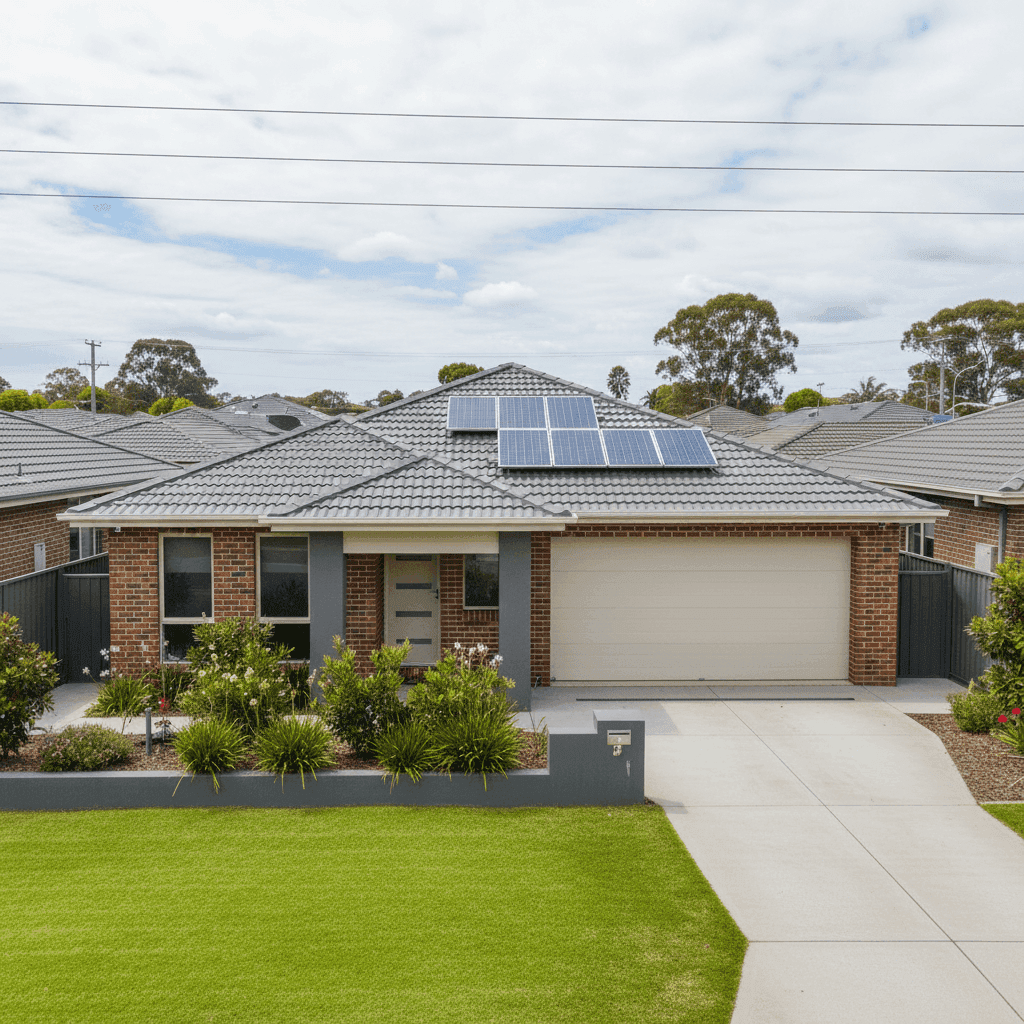
Woongarrah is a modern residential suburb on the NSW Central Coast, known for its family-friendly streets and relatively new housing stock. If you own a free standing home here, understanding what you should be paying for home and contents insurance — and why — can make a real difference to your household budget. This article breaks down a real quote of $2,532 per year for a 4-bedroom, 2-bathroom brick veneer home in Woongarrah (postcode 2259) and puts it in context against local, state, and national benchmarks.
---
Is This Quote Fair?
The short answer: yes, broadly speaking — but there's room to do better.
This quote has been rated Fair (Around Average), which means it sits in the middle of the road rather than at either extreme. At $2,532 per year (or $243 per month), the premium is above the suburb average of $2,339/yr for Woongarrah and notably above the suburb median of $1,961/yr. That said, it remains comfortably below the suburb's 75th percentile of $3,113/yr, meaning roughly a quarter of comparable properties are paying even more.
A "Fair" rating doesn't mean you're being overcharged — it simply means you're not getting the best possible deal available in the market. Given the suburb median sits at $1,961/yr, there's a realistic chance that shopping around could save this homeowner somewhere in the range of $500–$600 annually without sacrificing meaningful coverage.
The building is insured for $658,000 with a $25,000 contents cover, both carrying a $1,000 excess. These are reasonable settings for a 214 sqm home of this type, and the sum insured appears proportionate to the property's size and construction quality.
---
How Woongarrah Compares
One of the most striking things about this quote becomes clear when you zoom out and look at the broader picture.
| Benchmark | Average Premium | Median Premium |
|---|---|---|
| Woongarrah (suburb) | $2,339/yr | $1,961/yr |
| LGA (Cessnock) | $2,462/yr | — |
| NSW (state) | $9,528/yr | $3,770/yr |
| National | $5,347/yr | $2,764/yr |
The NSW state average of $9,528/yr is dramatically higher than what Woongarrah residents typically pay — a gap largely driven by high-risk and high-value properties across the state skewing the average upward. The state median of $3,770/yr is a more useful comparison point, and Woongarrah sits well below it, which is genuinely good news for local homeowners.
Compared to the national average of $5,347/yr, this quote looks quite reasonable. Even the national median of $2,764/yr is higher than the Woongarrah suburb median, suggesting the Central Coast's 2259 postcode is a relatively affordable area to insure.
The LGA average for Cessnock sits at $2,462/yr — almost identical to the suburb average — which suggests pricing in this region is fairly consistent. This quote at $2,532/yr is only marginally above both figures, reinforcing the "Fair" rating.
> Note: Suburb-level data is based on a sample of 22 quotes, so averages should be treated as indicative rather than definitive. As more data comes in, these figures will become increasingly precise.
---
Property Features That Affect Your Premium
Several characteristics of this property play a meaningful role in how insurers price the risk.
Brick veneer construction and tiled roof are generally viewed favourably by insurers. Brick veneer offers solid fire resistance and structural durability, while a tiled roof is considered more resilient than corrugated iron or colorbond in many scenarios. These features typically attract lower premiums compared to, say, weatherboard homes with metal roofing.
Slab foundation is standard for homes built in this era and region, and poses no unusual risk factors for insurers. Similarly, tile flooring throughout the home is considered low-risk — it's durable, resistant to water damage, and less susceptible to certain types of claims compared to carpet or timber.
Solar panels are worth flagging. While they add value to a home, they also introduce some complexity for insurers. Solar panels are typically covered under building insurance, but it's worth confirming with your insurer exactly what's included — particularly for storm damage, hail, or electrical faults. Make sure your sum insured accounts for the replacement cost of the panels.
Ducted climate control is another feature that insurers factor in. Ducted systems are expensive to repair or replace, and their presence can nudge premiums slightly upward. Again, it's important to ensure your building sum insured is sufficient to cover this infrastructure.
Standard fittings quality keeps things straightforward — high-end or custom fittings can significantly increase rebuild costs and therefore premiums, so a standard specification home like this one benefits from more predictable pricing.
The property is not in a cyclone risk area, which is a meaningful advantage. Cyclone-prone regions (particularly in northern Queensland and parts of WA) can attract significant premium loadings, so Central Coast homeowners are spared that particular cost burden.
---
Tips for Homeowners in Woongarrah
1. Shop around at renewal time The gap between this quote ($2,532/yr) and the suburb median ($1,961/yr) suggests there's genuine competition in the market for this type of property. Don't let your policy auto-renew without first checking whether a comparable level of cover is available at a better price. Even a modest saving of $300–$500/yr adds up significantly over time.
2. Review your sum insured carefully At $658,000 for a 214 sqm brick veneer home, the building sum insured looks reasonable — but construction costs have risen sharply in recent years. Use a building cost calculator to verify your sum insured reflects current rebuild costs, including any upgrades like solar panels and ducted air conditioning. Being underinsured can leave you significantly out of pocket after a major claim.
3. Consider a higher excess to reduce your premium Both the building and contents excess are set at $1,000. Increasing your excess — say, to $2,000 — can reduce your annual premium noticeably. This strategy works well if you have the financial buffer to cover a larger excess in the event of a claim and you're unlikely to make small claims.
4. Bundle building and contents cover This quote already combines home and contents insurance, which is smart. Many insurers offer a discount for bundling, and it simplifies claims management. If you're currently holding separate policies, it's worth getting a combined quote to see if you can save.
---
Compare Your Options with CoverClub
Whether you're renewing your existing policy or shopping for the first time, comparing quotes is the single most effective way to make sure you're not overpaying. CoverClub makes it easy to see how your premium stacks up against others in your suburb and across Australia. Get a home insurance quote today and find out if you could be paying less for the same level of protection.