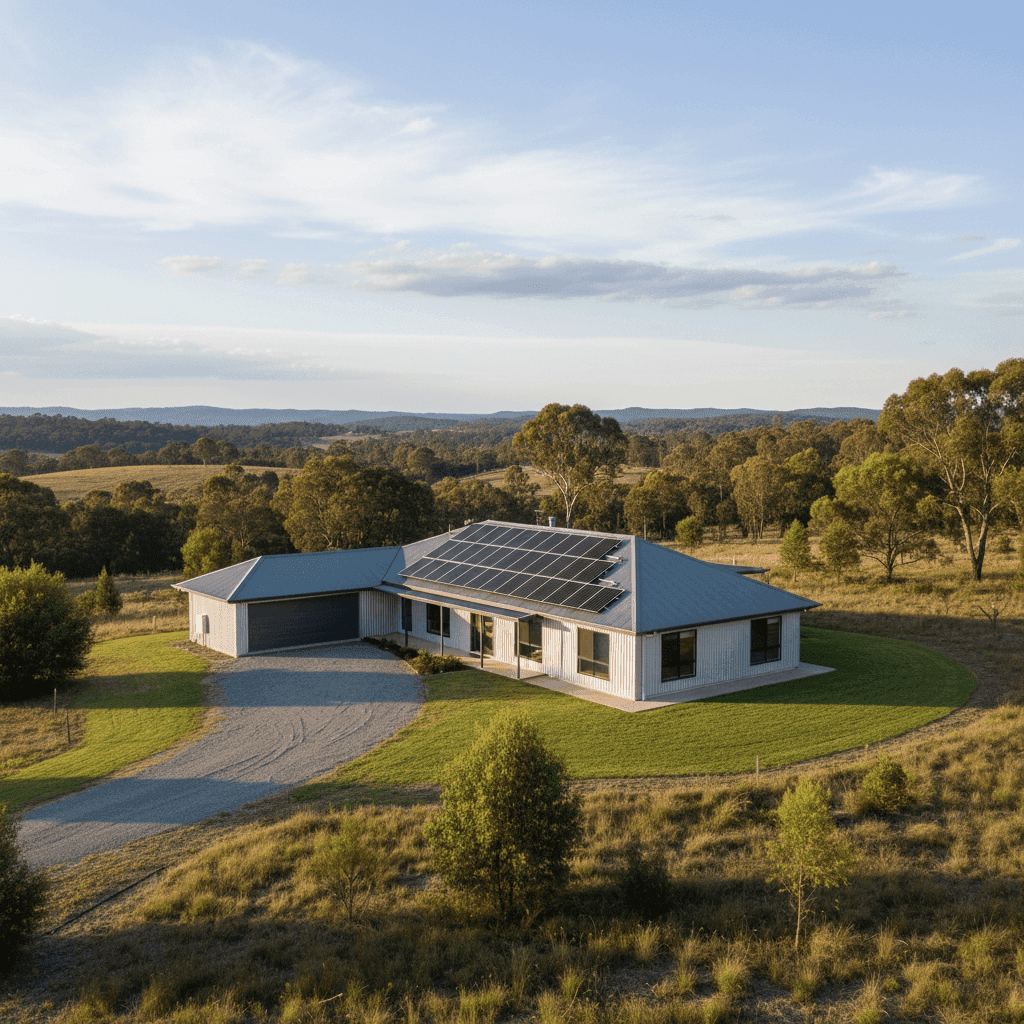
If you own a free standing home in Wooragee, VIC 3747, you'll know that finding the right home and contents insurance can feel like navigating a maze. Nestled in the foothills of the Victorian Alps near Wangaratta, Wooragee is a semi-rural locality where property risks — and therefore premiums — can look quite different from the broader Victorian average. This article breaks down a recent home and contents insurance quote for a 3-bedroom, 2-bathroom free standing home in the area, compares it against local, state, and national benchmarks, and offers practical tips to help you get better value on your cover.
---
Is This Quote Fair?
The quote in question comes in at $7,163 per year (or $680/month), covering a building sum insured of $825,000 and contents valued at $159,000, each with a $1,000 excess. Our analysis rates this quote as EXPENSIVE — above average for the area.
To put that in perspective: the average home and contents premium across Wooragee sits at around $4,475 per year, with a median of $4,193. This quote is roughly 60% higher than the suburb average and sits well above the 75th percentile of $4,537 — meaning it's more expensive than at least three-quarters of comparable quotes in the postcode.
That's a meaningful gap. While some of it can be explained by property-specific factors (more on those below), it's a strong signal that shopping around could yield significant savings. A difference of $2,000–$3,000 per year is not trivial — over a decade, that's potentially $20,000–$30,000 in excess premiums.
---
How Wooragee Compares
Understanding where Wooragee sits in the broader insurance landscape is key to interpreting any quote you receive. Here's how the numbers stack up:
| Benchmark | Annual Premium |
|---|---|
| This Quote | $7,163 |
| Wooragee Suburb Average | $4,475 |
| Wooragee Suburb Median | $4,193 |
| Wooragee 25th Percentile | $3,551 |
| Wooragee 75th Percentile | $4,537 |
| LGA (Wangaratta) Average | $3,113 |
| VIC State Average | $3,000 |
| VIC State Median | $2,718 |
| National Average | $5,347 |
| National Median | $2,764 |
A few things stand out here. First, Wooragee's suburb average ($4,475) is already notably higher than both the Victorian state average of $3,000 and the national median of $2,764. This tells us that insuring property in this part of rural Victoria carries a genuine risk premium — likely tied to bushfire exposure, the cost of rebuilding in a regional area, and limited insurer competition in semi-rural postcodes.
Second, even against the elevated Wooragee suburb average, this particular quote still stands out as expensive. The Wangaratta LGA average of $3,113 is less than half this quote's annual cost, reinforcing the case for comparing multiple insurers before committing.
It's also worth noting that the national average ($5,347) is higher than both the state and suburb averages — a reflection of how heavily high-risk postcodes in Queensland and Western Australia skew the national figure. Wooragee is not a cyclone-prone area, so that national average isn't a particularly useful comparison point here.
---
Property Features That Affect Your Premium
Several characteristics of this property will directly influence how insurers price the risk:
Aluminium cladding and Colorbond roof — These are generally viewed favourably by insurers. Aluminium weatherboard is non-combustible and low-maintenance, while steel Colorbond roofing is durable and resistant to ember attack — an important consideration in a bushfire-prone region like the Victorian high country. Homes with these materials often attract lower premiums than those with timber cladding or tiled roofs.
Slab foundation — A concrete slab is a stable, low-risk foundation type that insurers tend to treat as standard. It reduces the likelihood of subsidence or pest-related structural claims compared to raised timber stumps.
Timber and laminate flooring — While aesthetically popular, timber and laminate floors can be more susceptible to water damage than tiles. Insurers may factor this in when assessing contents and building risk, particularly if the home experiences flooding or burst pipes.
Solar panels — The presence of rooftop solar adds a modest layer of complexity to the risk profile. Solar systems can be damaged by hail, fire, or storm, and their replacement cost needs to be factored into the building sum insured. Some insurers include solar panels automatically under building cover; others treat them as an optional extra. It's worth confirming your policy wording carefully.
Building size and sum insured — At 139 sqm, this is a modestly sized home, but the building sum insured of $825,000 is relatively high. This may reflect the cost of rebuilding in a regional area — where labour and materials can cost significantly more per square metre than in metropolitan Melbourne — as well as the quality of finishes. Ensuring your sum insured accurately reflects true rebuild costs (not market value) is essential to avoiding underinsurance.
No pool, no ducted climate control — The absence of a pool and ducted air conditioning simplifies the risk profile slightly and removes two common sources of claims.
---
Tips for Homeowners in Wooragee
1. Compare at least three quotes before renewing With only nine quotes in our suburb sample, the Wooragee insurance market is relatively thin. That makes comparison even more important — a single insurer's pricing can vary wildly from the next. Use a comparison platform like CoverClub to see multiple quotes side by side without the legwork.
2. Review your building sum insured annually Construction costs in regional Victoria have risen sharply in recent years. If your sum insured hasn't kept pace, you could be underinsured — meaning you'd receive less than you need to fully rebuild after a major loss. Consider getting a professional building valuation or using an online rebuild cost estimator to sense-check your figure.
3. Check your bushfire risk rating and policy inclusions Wooragee and the surrounding Wangaratta region carry genuine bushfire exposure. Make sure your policy explicitly covers bushfire, and check whether there are any exclusion periods (some insurers impose a 72-hour waiting period after a new policy is taken out). Reviewing your property's Bushfire Attack Level (BAL) rating can also help you understand the risk and ensure your home is appropriately protected.
4. Ask about bundling discounts and excess options Many insurers offer discounts when you hold both building and contents cover under the same policy — which this quote already does. However, you may be able to reduce your premium further by increasing your excess. Moving from a $1,000 excess to $2,500 can sometimes shave 10–20% off your annual premium, depending on the insurer.
---
Ready to Find a Better Deal?
If this quote doesn't feel right for your situation, you're not stuck with it. CoverClub makes it easy to compare home and contents insurance quotes from multiple Australian insurers in one place. Whether you're renewing or buying cover for the first time, get a quote today at CoverClub and see how much you could save.