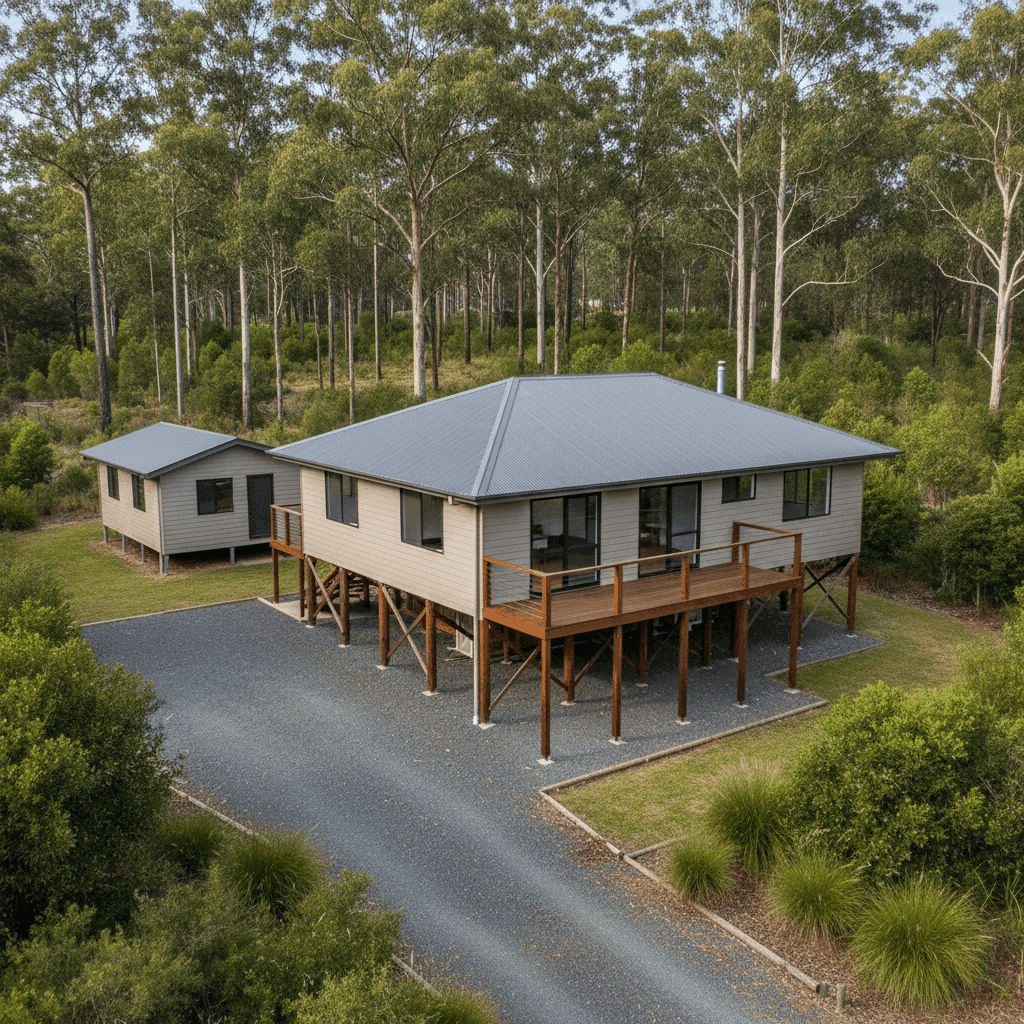
Woori Yallock is a quiet township nestled in the Yarra Valley, about 60 kilometres east of Melbourne in the Cardinia Shire. It's the kind of place where large blocks, mature trees, and a semi-rural lifestyle attract families looking to escape the city — but that same landscape comes with its own set of insurance considerations. This article breaks down a real home and contents insurance quote for a four-bedroom free standing home in Woori Yallock, and examines whether the premium is reasonable given the property's features and the local risk environment.
---
Is This Quote Fair?
The annual premium for this property came in at $5,179 per year (or $496/month), covering a building sum insured of $768,000 and $100,000 in contents — both with a $1,000 excess. Our pricing analysis rates this quote as Expensive (Above Average).
To put that in context: the suburb average for Woori Yallock sits at $3,996 per year, with a median of $3,826. This quote is approximately $1,183 above the suburb average — a meaningful gap that's worth interrogating before simply accepting the premium.
That said, "above average" doesn't automatically mean "unfair." A number of property-specific factors — which we'll explore below — can legitimately push a premium higher than the local norm. The key question is whether those factors fully justify the difference, or whether shopping around could yield a better deal.
---
How Woori Yallock Compares
Understanding how this quote sits within broader pricing data helps frame the conversation.
| Benchmark | Annual Premium |
|---|---|
| This Quote | $5,179 |
| Woori Yallock Suburb Average | $3,996 |
| Woori Yallock Suburb Median | $3,826 |
| Woori Yallock 25th Percentile | $3,518 |
| Woori Yallock 75th Percentile | $4,462 |
| Cardinia LGA Average | $3,089 |
| VIC State Average | $3,000 |
| VIC State Median | $2,718 |
| National Average | $5,347 |
| National Median | $2,764 |
(Suburb data based on a sample of 14 quotes. [View full VIC stats](https://coverclub.com.au/stats/VIC) or [national stats](https://coverclub.com.au/stats/national).)
A few things stand out here. First, this quote actually sits below the national average of $5,347 — which tells you that on a country-wide basis, it's not wildly out of step. However, it's significantly above both the local suburb benchmarks and the Cardinia LGA average of $3,089.
The wide gap between the national average ($5,347) and national median ($2,764) is also telling — it suggests a relatively small number of high-risk or high-value properties are pulling the national average upward. This property, with its $768,000 building sum insured, is likely sitting in that higher-value tier, which goes some way to explaining the elevated premium.
---
Property Features That Affect Your Premium
Several characteristics of this property are likely influencing the cost of cover. Here's what insurers are probably weighing up:
Construction Era and Materials
Built in 1975, this home is over 50 years old. Older properties can attract higher premiums due to the potential for ageing electrical wiring, plumbing, and structural components that may not meet current building codes. The Hardiplank/Hardiflex external walls are a fibre cement product — generally considered fire-resistant and durable — which is a positive factor in a bushfire-adjacent region like the Yarra Valley. The steel/Colorbond roof is also well-regarded by insurers for its durability and resistance to ember attack.
Stump Foundation and Elevated Position
This home sits on stumps and is elevated by less than one metre. Stump foundations are common in older Victorian homes and can be a flag for insurers — they may factor in the cost of subfloor access, potential timber decay, or vulnerability to underfloor pest damage. The slight elevation, while minor, can also affect flood and water damage risk assessments.
Granny Flat
The presence of a granny flat on the property adds complexity to the insurance equation. Depending on how the policy is structured, the granny flat may or may not be included in the building sum insured. Homeowners should confirm with their insurer whether the granny flat is covered under the main dwelling policy or requires separate cover — an oversight here could leave you underinsured.
Ducted Climate Control
The inclusion of ducted climate control is a meaningful addition to the building's value and replacement cost. These systems can cost tens of thousands of dollars to replace, and their presence is likely a contributing factor to the higher building sum insured of $768,000.
Bushfire and Environmental Risk
Woori Yallock and the broader Yarra Valley are situated in a region with elevated bushfire risk. While this property is not in a designated cyclone risk area, its semi-rural location means insurers will factor in proximity to vegetation, access for emergency services, and historical fire activity in the area. This is one of the most significant drivers of higher premiums in this part of Victoria.
---
Tips for Homeowners in Woori Yallock
If you're looking to manage your home insurance costs without sacrificing meaningful cover, here are some practical steps worth considering:
- Review your building sum insured carefully. At $768,000, this is a substantial sum insured. Make sure it reflects the actual cost to rebuild — not the market value of the property. Overinsuring can push premiums up unnecessarily, while underinsuring leaves you exposed. A quantity surveyor can provide a professional rebuild estimate if you're unsure.
- Ask about bushfire mitigation discounts. Some insurers offer premium reductions for properties with active bushfire preparation measures — such as cleared gutters, ember guards on vents, and maintained asset protection zones. Given the Yarra Valley's fire history, demonstrating a well-maintained property can make a difference.
- Clarify granny flat coverage. Before renewing, confirm exactly what your policy covers in relation to the granny flat. If it's being rented out or used as a separate dwelling, you may need landlord insurance or a specific endorsement — and your standard home policy may not respond in the way you'd expect.
- Compare quotes annually. The home insurance market is competitive, and loyalty doesn't always pay. With this quote sitting above the suburb average, it's well worth running a fresh comparison each year. Even a modest saving of $500–$1,000 per year adds up significantly over time.
---
Ready to Compare?
Whether you're renewing your existing policy or shopping for the first time, comparing quotes is the single most effective way to ensure you're not overpaying. CoverClub makes it easy to see how your premium stacks up against real data from your suburb and across Australia.
Get a home insurance quote today and find out if you could be paying less for the same level of cover.