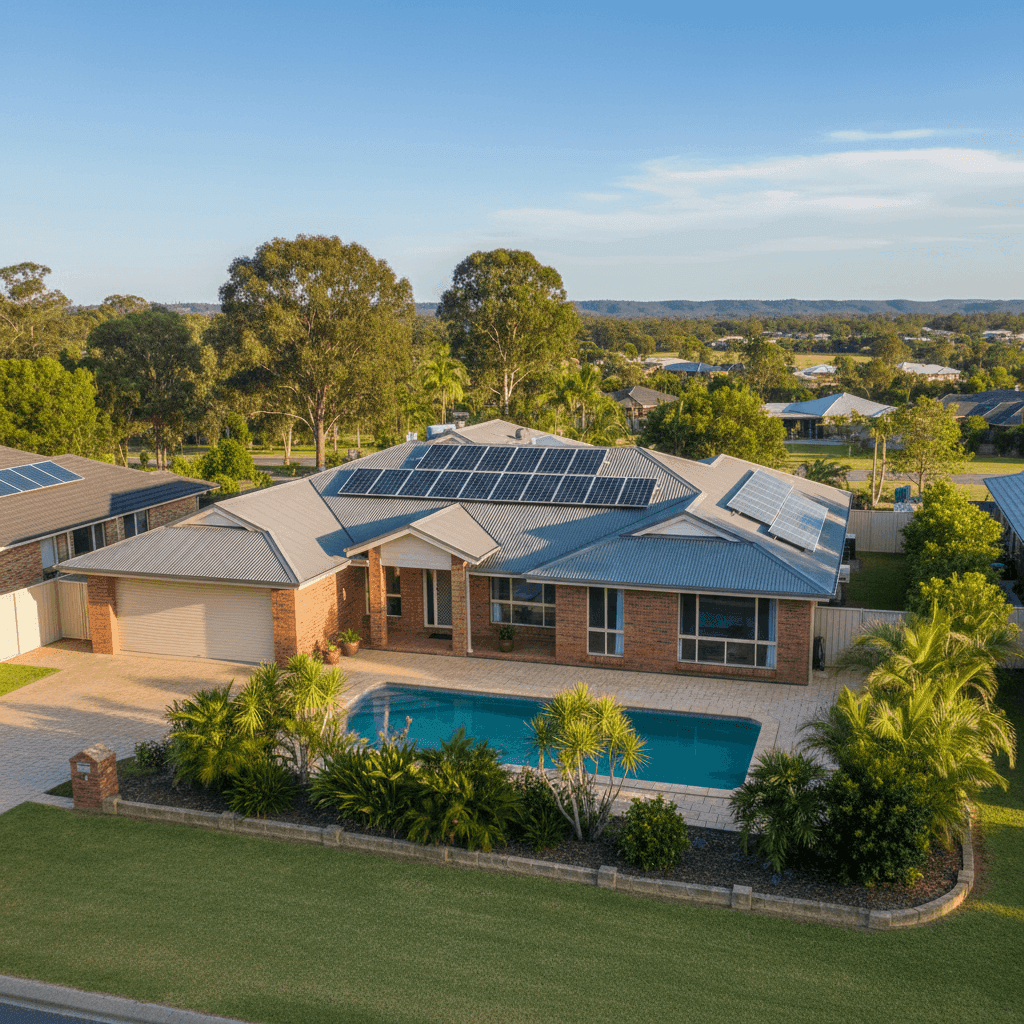
Worongary is a leafy, semi-rural suburb nestled in the Gold Coast hinterland, known for its spacious blocks, established homes, and relaxed lifestyle just minutes from the M1. If you own a large free standing home in this pocket of Queensland, you're likely paying a premium that reflects both the size and value of your property — and understanding whether that premium is competitive can save you hundreds of dollars a year.
This article breaks down a recent home and contents insurance quote for a six-bedroom, four-bathroom free standing home in Worongary (QLD 4213), compares it against local, state, and national benchmarks, and offers practical tips to help you get the best value cover.
---
Is This Quote Fair?
The quote in question comes in at $6,966 per year (or $661/month) for combined home and contents insurance, covering a building sum insured of $1,548,000 and contents valued at $242,000. Both the building and contents excess are set at $1,000.
Our independent price rating for this quote is FAIR — Around Average.
For a property of this size and specification, that assessment holds up well under scrutiny. At $6,966, the premium sits comfortably below the suburb average of $7,358/yr and meaningfully below the suburb median of $7,804/yr. It also comes in well under the Gold Coast LGA average of $8,161/yr. In other words, this homeowner is paying less than most comparable properties in the area — which is a solid outcome for a 429 sqm home with a pool and solar panels.
That said, "fair" doesn't mean "the best available." There's still a gap between this quote and the suburb's 25th percentile of $5,825/yr, suggesting that more competitive pricing does exist in the market for Worongary properties. Whether that cheaper cover offers equivalent protection is a separate question worth investigating.
---
How Worongary Compares
To put this quote in context, it helps to look at the broader pricing landscape. You can explore detailed local data on the Worongary suburb stats page.
| Benchmark | Annual Premium |
|---|---|
| This Quote | $6,966 |
| Suburb Average (Worongary) | $7,358 |
| Suburb Median (Worongary) | $7,804 |
| Suburb 25th Percentile | $5,825 |
| Suburb 75th Percentile | $9,005 |
| Gold Coast LGA Average | $8,161 |
| QLD State Average | $9,129 |
| National Average | $5,347 |
A few things stand out here. First, Queensland's state average premium of $9,129/yr is notably high — a reflection of the state's elevated exposure to natural hazards including floods, storms, and cyclones. Worongary itself is not classified as a cyclone risk area, which helps keep premiums more manageable than coastal or far-north Queensland properties.
Second, the national average of $5,347/yr is considerably lower than what Worongary homeowners typically pay. This is largely driven by lower-cost states like Victoria and South Australia pulling the national figure down. Comparing your Worongary premium to the national average is a bit like comparing apples to oranges — the local and state benchmarks are far more meaningful for Gold Coast hinterland properties.
It's worth noting that the suburb sample size here is five quotes, so the local data should be treated as indicative rather than definitive. As more quotes are collected, these averages will become increasingly reliable.
---
Property Features That Affect Your Premium
Several characteristics of this particular property have a meaningful influence on what insurers charge.
Size and Sum Insured At 429 sqm with six bedrooms and four bathrooms, this is a substantial home. The building sum insured of $1,548,000 reflects the true replacement cost of a large, above-average quality dwelling — and insurers price accordingly. Underinsuring to reduce premiums is a common mistake that can be financially devastating after a major claim.
Construction Materials Brick veneer external walls and a steel/Colorbond roof are generally viewed favourably by insurers. Colorbond roofing in particular is durable, fire-resistant, and performs well in storm conditions. Slab foundations are standard and present no particular risk concern. Tiled flooring is also considered low-risk compared to timber or carpet in terms of water damage claims.
Above-Average Fittings The above-average fittings quality rating signals to insurers that fixtures, finishes, and inclusions are higher-end than a standard build. This increases the replacement cost and, consequently, the premium — but it also means the cover is appropriately calibrated to what it would actually cost to rebuild.
Swimming Pool A pool adds liability exposure and can increase premiums slightly. Insurers consider the risk of accidents and the cost of repairs or replacement if the pool or surrounding area is damaged.
Solar Panels Solar panels are now a standard feature on many Australian homes, but they do add to the replacement cost of the building. Some insurers include solar panels under the building policy automatically; others require them to be specifically listed. It's worth confirming your panels are fully covered under your current policy.
No Cyclone Risk Worongary's inland location means it falls outside designated cyclone risk zones. This is a meaningful premium advantage compared to properties on the Gold Coast coastline or further north in Queensland.
---
Tips for Homeowners in Worongary
1. Shop the market every renewal Insurance loyalty rarely pays. Premiums can shift significantly between insurers year to year, and the gap between the cheapest and most expensive quotes in Worongary is over $3,000 annually (25th to 75th percentile). Use a comparison tool like CoverClub to benchmark your renewal quote before accepting it.
2. Review your sum insured regularly Construction costs in South East Queensland have risen sharply in recent years. If your building sum insured hasn't been reviewed since you first took out the policy, there's a real risk you're underinsured. Consider getting a professional building valuation or using an online calculator to verify your coverage level reflects current rebuild costs.
3. Confirm solar panels and pool equipment are covered Check the fine print of your policy to ensure both your solar panel system and pool equipment (pumps, filters, heating) are explicitly covered. Some standard policies have limits or exclusions that may leave you out of pocket after a storm or electrical fault.
4. Consider your excess strategically Both the building and contents excess on this quote are set at $1,000. Opting for a higher excess — say $2,000 — can reduce your annual premium, but only makes sense if you have the financial buffer to cover that amount in the event of a claim. For a large, well-maintained property, this can be a smart trade-off.
---
Compare Your Home Insurance Today
Whether you're reviewing an existing policy or shopping for cover for the first time, getting multiple quotes is the single most effective way to ensure you're not overpaying. CoverClub makes it easy to compare home and contents insurance options tailored to your property. Get a quote today and see how your premium stacks up against your neighbours.