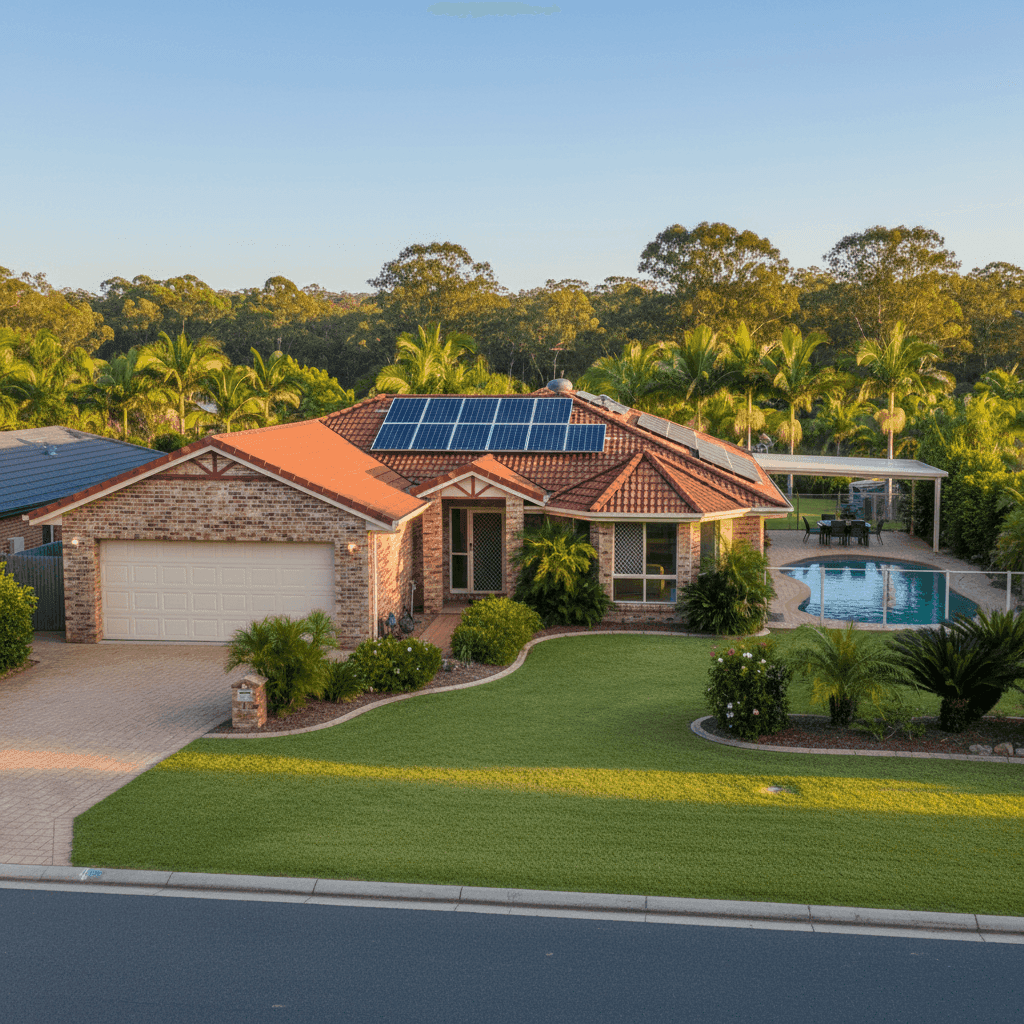
Worongary is a leafy, semi-rural suburb nestled in the Gold Coast hinterland, known for its larger allotments, quality family homes, and a relaxed lifestyle just a short drive from the coast. If you own a free standing home here — particularly a substantial four-bedroom, four-bathroom property built in the 1990s — understanding what you should be paying for building insurance is genuinely worthwhile. Premiums in South East Queensland can vary enormously, and knowing where your quote sits relative to the market could save you thousands each year.
This article breaks down a recent building-only insurance quote for a 472 sqm brick veneer home in Worongary, with a sum insured of $1,568,000 and an annual premium of $4,191 (or $410 per month). Let's look at whether that stacks up.
---
Is This Quote Fair?
In short — yes, and then some. This quote has been rated CHEAP, meaning it sits well below the average for comparable properties in the area. For a home of this size, age, and specification, that's a genuinely strong result.
The building excess is set at $5,000, which is on the higher side and will contribute to the lower premium. A higher excess means you're agreeing to absorb more of the cost in a claim, which reduces the insurer's risk exposure and, in turn, your upfront premium. Whether that trade-off suits you depends on your financial position and your appetite for risk — but for many homeowners with a well-maintained property, it's a sensible strategy.
At $4,191 per year, this quote represents excellent value when you consider the size of the dwelling and the level of cover being provided. The sum insured of $1,568,000 reflects the significant cost of rebuilding a home of this scale and quality in today's construction market.
---
How Worongary Compares
To put this quote in context, here's how it measures up against suburb, state, and national benchmarks:
| Benchmark | Premium |
|---|---|
| This quote | $4,191/yr |
| Worongary suburb average | $7,358/yr |
| Worongary suburb median | $7,804/yr |
| Worongary 25th percentile | $5,825/yr |
| Gold Coast LGA average | $8,161/yr |
| QLD state average | $9,129/yr |
| QLD state median | $3,903/yr |
| National average | $5,347/yr |
| National median | $2,764/yr |
A few things stand out here. First, this quote at $4,191 sits below even the 25th percentile for Worongary, meaning it's cheaper than at least 75% of quotes collected in the suburb. That's a strong indicator this policyholder has either shopped around effectively, accepted a higher excess, or both.
Second, the Gold Coast LGA average of $8,161 is nearly double this quote — a reminder of just how much variation exists across the region. Coastal and flood-prone parts of the Gold Coast tend to drive that average up significantly, while hinterland suburbs like Worongary generally benefit from lower natural hazard risk profiles.
It's worth noting the difference between the QLD state average ($9,129) and the QLD state median ($3,903). The average is pulled upward by high-risk areas — particularly cyclone-prone North Queensland — while the median gives a more representative picture of what most Queensland homeowners actually pay. This quote sits comfortably between those two figures, which is right where you'd expect a well-rated Gold Coast hinterland property to land.
---
Property Features That Affect Your Premium
Several characteristics of this property work in the homeowner's favour from an insurance pricing perspective:
Brick Veneer Construction & Tile Roof Brick veneer walls and a tiled roof are among the most insurer-friendly combinations in Australia. Both materials offer strong resistance to fire, and tiles in particular hold up well in hail events compared to metal or corrugated iron. This construction profile typically attracts lower premiums than timber-framed or Colorbond-roofed homes.
Slab Foundation A concrete slab foundation is generally viewed positively by insurers. It reduces the risk of subfloor moisture damage and pest ingress, both of which can lead to costly structural claims over time.
Construction Year: 1994 Homes built in the early-to-mid 1990s sit in a reasonable sweet spot — old enough to have appreciated in land value, but built under modern enough building codes to avoid the structural concerns associated with much older dwellings. Queensland's building codes were also strengthened progressively through the 1990s, which helps with risk assessment.
Solar Panels The presence of solar panels adds a modest layer of complexity to a building policy. Panels are typically covered as part of the building sum insured, but it's worth confirming this with your insurer and ensuring your sum insured adequately accounts for their replacement value — quality solar systems can cost $10,000–$20,000 or more to replace.
Swimming Pool A pool is considered part of the building for insurance purposes and should be factored into your sum insured. Pool surrounds, fencing, pumps, and filtration equipment can all be costly to repair or replace after a storm or structural event.
Ducted Climate Control Ducted air conditioning systems are a significant fixed asset in a home of this size. Like solar panels, they're generally covered under building insurance, but their replacement value should be reflected in your sum insured calculation.
No Cyclone Risk Worongary falls outside designated cyclone risk zones, which is a meaningful premium advantage. Cyclone-rated policies in North Queensland can cost several times more than equivalent cover in South East Queensland — so this property benefits from being in a lower-hazard climate region.
---
Tips for Homeowners in Worongary
1. Review Your Sum Insured Annually Construction costs have risen sharply in recent years. A sum insured of $1,568,000 for a 472 sqm home works out to roughly $3,322 per square metre — which is broadly reasonable for an above-average quality finish, but worth revisiting each year as labour and materials costs shift. Underinsurance is one of the most common and costly mistakes homeowners make.
2. Consider Whether Building-Only Cover Is Enough This quote covers the building only, with no contents cover included. For a four-bedroom home with above-average fittings, the contents could easily be worth $100,000 or more. If you don't have a separate contents policy, it may be worth exploring combined building and contents options to ensure you're fully protected.
3. Weigh Up Your Excess Carefully The $5,000 building excess on this policy is helping keep the premium down, but it means you'd need to cover the first $5,000 of any claim yourself. If you're comfortable holding that amount in reserve, this is a smart way to reduce your ongoing costs. If a $5,000 out-of-pocket expense would be a stretch, consider whether a lower excess — and slightly higher premium — might suit you better.
4. Shop the Market Every Year The fact that this quote comes in well below the suburb average is a good reminder that loyalty doesn't always pay in insurance. Premiums can shift significantly from year to year, and the best price at renewal may not be with your current insurer. Using a comparison tool at renewal time takes only a few minutes and can yield meaningful savings.
---
Compare Your Own Quote
Whether you're reviewing your current policy or shopping for the first time, it pays to know where your premium stands. CoverClub makes it easy to see how your quote compares to real data from your suburb, LGA, and across Queensland. Get a home insurance quote today and find out if you're getting a fair deal — or leaving money on the table.