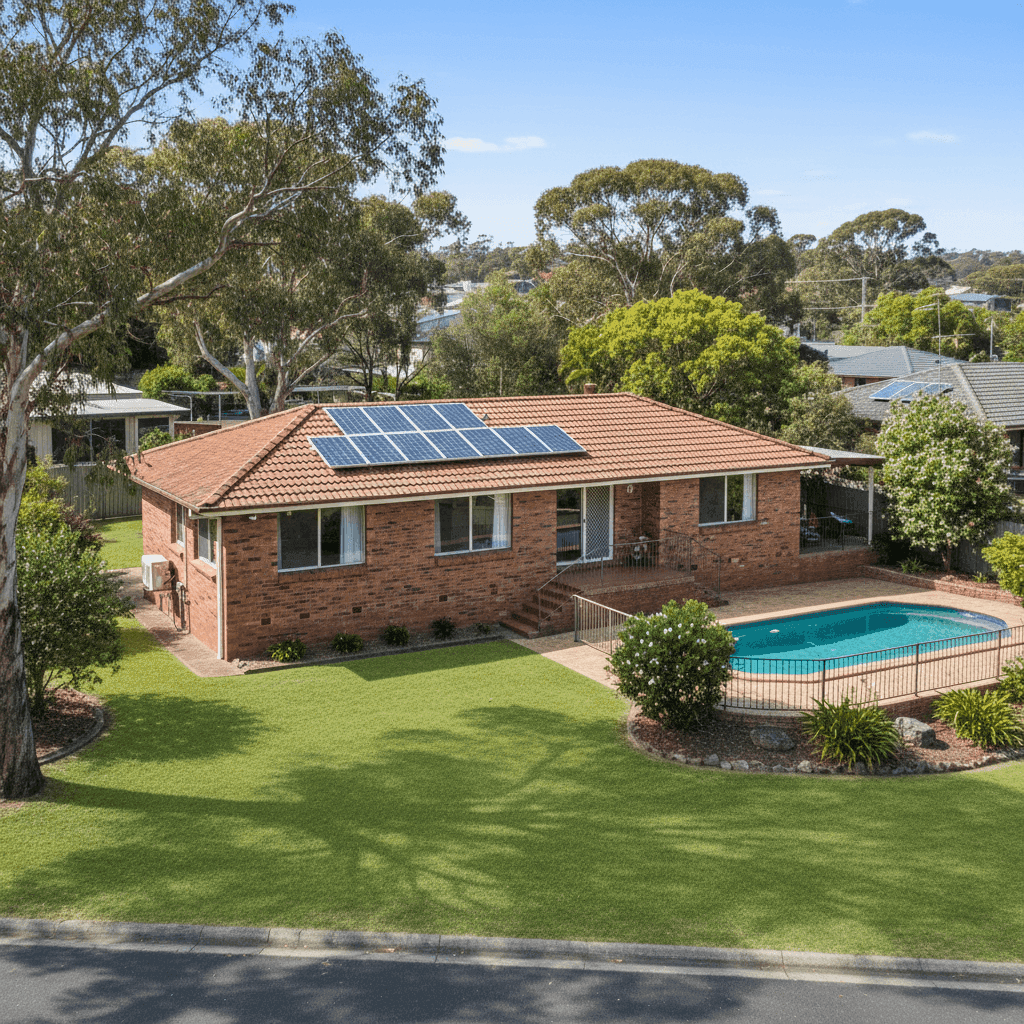
Nestled on the northern shores of Brisbane Water, Woy Woy Bay is one of the Central Coast's most picturesque and tightly held pockets. Properties here tend to be substantial, and insuring them appropriately is just as important as the location itself. This article breaks down a real building insurance quote for a six-bedroom, four-bathroom free standing home in Woy Woy Bay (NSW 2256) — and puts that number into context against what homeowners across NSW and Australia are paying.
---
Is This Quote Fair?
The quote in question comes in at $8,666 per year (or $858 per month) for building-only cover on a home insured for $1,800,000. Our price rating for this quote is FAIR — Around Average.
That rating makes sense when you dig into the numbers. At $8,666 annually, this premium sits comfortably below the NSW state average of $9,528 per year, which is a meaningful saving. However, it does sit well above both the national average of $5,347 and the national median of $2,764 — though that gap is largely explained by the property's size, value, and location rather than any pricing inefficiency.
For a home of this scale — 235 square metres, six bedrooms, four bathrooms, with a pool, solar panels, and a sum insured of $1.8 million — a premium approaching $9,000 is not unreasonable. The "Fair" rating reflects that while there may be room to shop around, the quote isn't wildly out of step with what similar properties in NSW attract.
---
How Woy Woy Bay Compares
Unfortunately, suburb-level premium data for Woy Woy Bay (2256) isn't available in sufficient volume to draw statistically reliable comparisons at the postcode level. You can check back on our Woy Woy Bay insurance stats page as more data becomes available.
What we can say is that the Central Coast LGA average premium sits at $8,387 per year — and this quote, at $8,666, is only marginally above that figure. Given the property's above-average size and high sum insured, being close to the LGA average is actually a reasonable outcome.
Here's how the numbers stack up at a glance:
| Benchmark | Annual Premium |
|---|---|
| This Quote | $8,666 |
| Central Coast LGA Average | $8,387 |
| NSW State Average | $9,528 |
| NSW State Median | $3,770 |
| National Average | $5,347 |
| National Median | $2,764 |
The gap between the state average and the state median — $9,528 vs $3,770 — is a reminder that a relatively small number of high-value properties can pull averages upward significantly. This home, with its $1.8 million sum insured, is firmly in that upper tier, which explains why its premium exceeds the national figures by a considerable margin.
---
Property Features That Affect Your Premium
Several characteristics of this property have a direct bearing on what insurers charge. Understanding them helps you make sense of the quote — and potentially find ways to reduce it.
Size and Sum Insured
At 235 square metres with six bedrooms and four bathrooms, this is a large home by any measure. The building sum insured of $1,800,000 reflects the cost to rebuild from scratch, including materials, labour, and associated costs. A higher sum insured means greater exposure for the insurer, which flows directly into the premium.
Construction: Brick Veneer Walls and Tiled Roof
Brick veneer construction is generally viewed favourably by insurers — it offers solid fire resistance and durability. A tiled roof similarly scores well for longevity and weather resistance. These construction materials typically attract more competitive premiums compared to timber-framed weatherboard homes or corrugated iron roofing.
Elevated Foundation
This property is elevated by at least one metre on a slab foundation. Elevation can be a double-edged sword in insurance terms — it may reduce flood risk in some scenarios, but elevated homes can also be more exposed to wind damage depending on the site. Insurers will assess the specific elevation context carefully.
Timber and Laminate Flooring
Timber and laminate flooring adds to the home's character and value, but it's worth noting that these materials can be more susceptible to water damage than tiles. In the event of a burst pipe or flooding event, replacement costs for timber flooring can be significant.
Pool and Solar Panels
A swimming pool introduces additional liability considerations, and some insurers factor this into their pricing. Solar panels, meanwhile, can be expensive to repair or replace and may affect the roof in the event of storm damage. Both features are worth confirming are explicitly covered under your policy.
No Cyclone Risk
Woy Woy Bay falls outside designated cyclone risk zones, which is a meaningful premium benefit. Cyclone-rated coverage can add substantially to premiums in northern parts of Australia, so this property avoids that loading entirely.
---
Tips for Homeowners in Woy Woy Bay
1. Confirm Your Sum Insured Reflects Current Rebuild Costs
With construction costs having risen sharply in recent years, it's worth reviewing your sum insured annually. A home insured for $1.8 million may sound like a lot, but labour and materials costs in regional coastal NSW have climbed considerably. Underinsurance is one of the most common — and costly — mistakes homeowners make.
2. Check Your Pool and Solar Panel Coverage
Not all standard building policies automatically cover pools or solar panel systems to the full extent of their value. Ask your insurer specifically what is and isn't included, and whether you need any endorsements or riders to ensure complete coverage.
3. Shop Around at Renewal Time
A "Fair" rating means this quote is in the ballpark — but it doesn't mean it's the best available. Insurers price risk differently, and a property with this profile could attract meaningfully different premiums from different providers. Use a comparison tool at renewal time rather than simply accepting the rollover quote.
4. Review Your Excess Strategy
This policy carries a $1,000 building excess. Opting for a higher excess — say $2,500 or $5,000 — can reduce your annual premium noticeably. If you have the financial buffer to absorb a larger out-of-pocket cost in the event of a claim, this can be a smart way to lower ongoing costs.
---
Ready to Compare?
Whether you're renewing your policy or insuring a new purchase, it pays to see what the market has to offer. Get a home insurance quote at CoverClub and compare options tailored to your property in Woy Woy Bay. A few minutes of comparison could save you hundreds — or give you the confidence that your current cover is genuinely competitive.