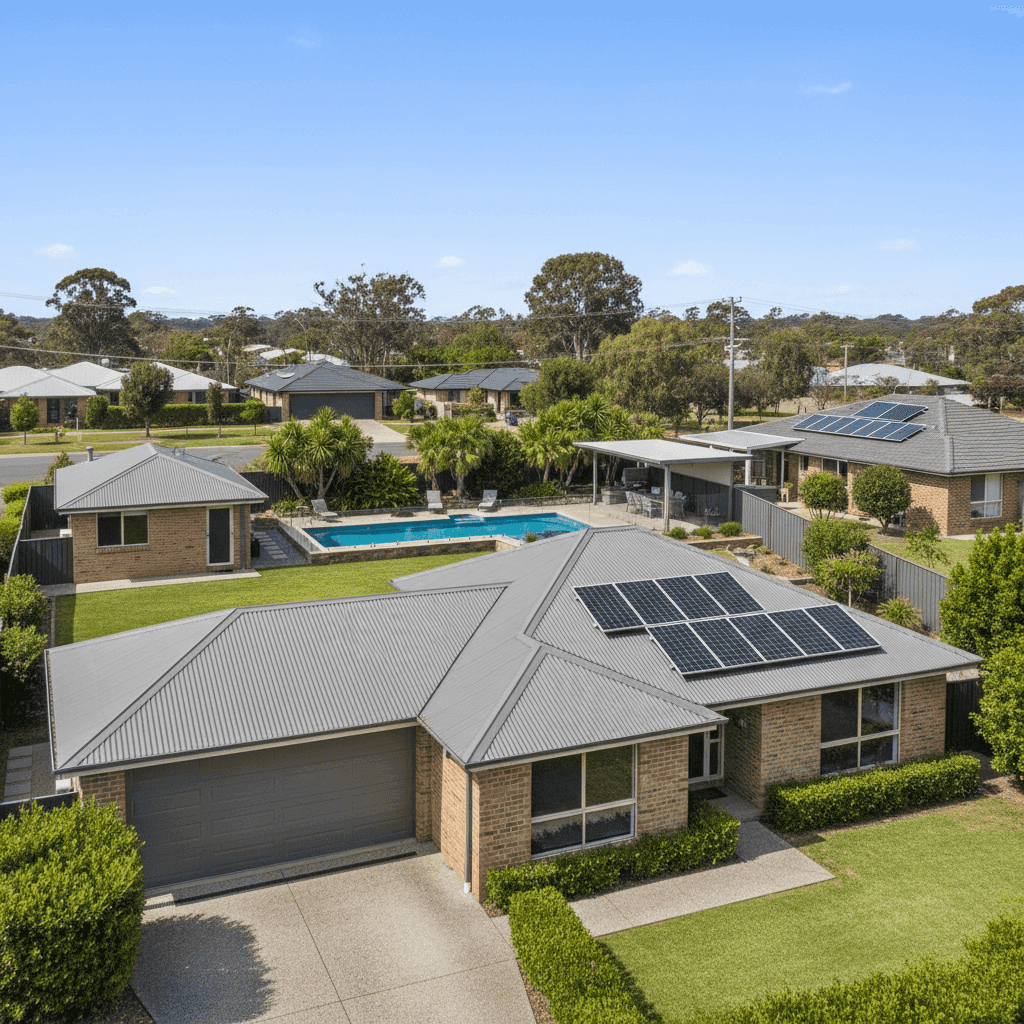
Woy Woy sits on the southern tip of the Central Coast, nestled between Brisbane Water and the Woy Woy Bay — a lifestyle location that's become increasingly popular with families and sea-changers alike. But with desirable real estate comes the question every homeowner eventually asks: am I paying too much for home insurance?
This article breaks down a real home and contents insurance quote for a five-bedroom, free-standing brick veneer home in Woy Woy (postcode 2256), and puts the numbers in context against local, state, and national benchmarks. Whether you're reviewing your own policy or shopping around for the first time, this analysis will help you make a more informed decision.
---
Is This Quote Fair?
The annual premium for this property came in at $5,922 per year (or $567/month), covering a building sum insured of $1,188,000 and contents valued at $249,000, each with a $1,000 excess.
Our price rating for this quote is Expensive — Above Average.
To put that in perspective: the average home and contents premium across Woy Woy (postcode 2256) sits at just $1,418 per year, with a median of $1,100. That means this quote is more than four times the local average — a significant gap that warrants a closer look.
It's worth noting, however, that the suburb average is drawn from a relatively small sample of 13 quotes, which may not fully reflect the range of larger or more feature-rich properties in the area. A 325 sqm home with a pool, solar panels, ducted climate control, and a granny flat is a considerably more complex risk than a standard three-bedroom cottage — and insurers price accordingly.
Even when compared to the broader NSW state average of $3,801/year or the national average of $2,965/year, this quote remains notably high. That said, the sum insured of $1,188,000 for the building alone is well above what a typical suburban home would be insured for, which naturally drives the premium upward.
---
How Woy Woy Compares
Here's a snapshot of how this quote stacks up against the broader market:
| Benchmark | Annual Premium |
|---|---|
| This Quote | $5,922 |
| Woy Woy (2256) Suburb Average | $1,418 |
| Woy Woy (2256) Suburb Median | $1,100 |
| Woy Woy 75th Percentile | $1,862 |
| Central Coast LGA Average | $4,203 |
| NSW State Average | $3,801 |
| National Average | $2,965 |
You can explore Woy Woy suburb insurance statistics and NSW-wide data in more detail on CoverClub.
One figure worth highlighting is the Central Coast LGA average of $4,203/year. This is the most relevant regional benchmark for a property of this type, and the quote of $5,922 sits roughly 41% above it. That's still a meaningful premium to pay, but the gap is far more understandable when you factor in the property's size, features, and high sum insured.
For comparison, the national median sits at $2,716/year — less than half of this quote — but again, that figure reflects the average Australian home, not a 325 sqm property with a granny flat and a pool.
---
Property Features That Affect Your Premium
Several characteristics of this property have a direct bearing on the premium quoted. Understanding these can help you have a more informed conversation with your insurer.
Size and Sum Insured
At 325 sqm, this is a large home by any measure. The building sum insured of $1,188,000 reflects the cost to fully rebuild the property — and with five bedrooms, two bathrooms, and a granny flat, that figure is not unreasonable. A higher sum insured means a higher premium, full stop.
Brick Veneer Walls and Colorbond Roof
Brick veneer construction with a steel (Colorbond) roof is generally viewed favourably by insurers. Brick veneer offers good fire resistance, while Colorbond roofing is durable and low-maintenance. This combination typically attracts more competitive premiums than, say, weatherboard walls or terracotta tiles.
Slab Foundation and Timber/Laminate Flooring
A concrete slab foundation is standard for homes of this era and is considered a stable, low-risk base. Timber and laminate flooring, while attractive, can be susceptible to water damage — something insurers factor into contents and building cover assessments.
Pool
A swimming pool adds both value and liability to a property. Insurers consider pools a risk factor due to the potential for water-related damage, pump and equipment failure, and public liability exposure. Expect this to contribute meaningfully to your premium.
Solar Panels
Solar panels are increasingly common on Australian homes, but they do add complexity to insurance assessments. Panels are typically covered under building insurance, and their replacement cost — which can run into the tens of thousands — is factored into both the sum insured and the premium.
Ducted Climate Control and Granny Flat
Ducted air conditioning systems are expensive to repair or replace, and insurers account for this in their pricing. Similarly, a granny flat adds significant insurable value to the property, effectively increasing the rebuild cost and the overall risk exposure.
1985 Construction
Homes built in the mid-1980s are well past their initial build phase, which can mean ageing plumbing, electrical systems, and roofing components. Insurers sometimes apply loadings to older homes, though the Colorbond roof and slab foundation help offset this concern here.
---
Tips for Homeowners in Woy Woy
1. Review Your Sum Insured Annually
Building costs have risen sharply in recent years. Make sure your sum insured reflects current rebuild costs — not what you paid for the property or what it's worth on the market. Underinsurance is one of the most common and costly mistakes Australian homeowners make.
2. Shop Around — Especially for Larger Properties
For a property this size, the difference between insurers can be thousands of dollars per year. Don't assume your current insurer is offering the best deal. Use CoverClub to compare quotes and see what other providers are offering for your specific property profile.
3. Ask About Bundling Discounts
Many insurers offer discounts when you combine home and contents cover under a single policy — which this quote already does. If you're currently holding separate policies, consolidating them could reduce your overall premium.
4. Consider Your Excess Level
This policy carries a $1,000 excess on both building and contents. Opting for a higher excess (say, $2,000 or $2,500) can meaningfully reduce your annual premium. Just make sure the excess is an amount you could comfortably cover in the event of a claim.
---
Compare Your Options with CoverClub
Whether this quote feels right or raises a few eyebrows, the best way to know if you're getting value is to compare. CoverClub makes it easy for Australian homeowners to benchmark their premiums against real data and explore alternatives — all in one place.
Get a home insurance quote today and see how your premium stacks up against your neighbours, your state, and the national average.