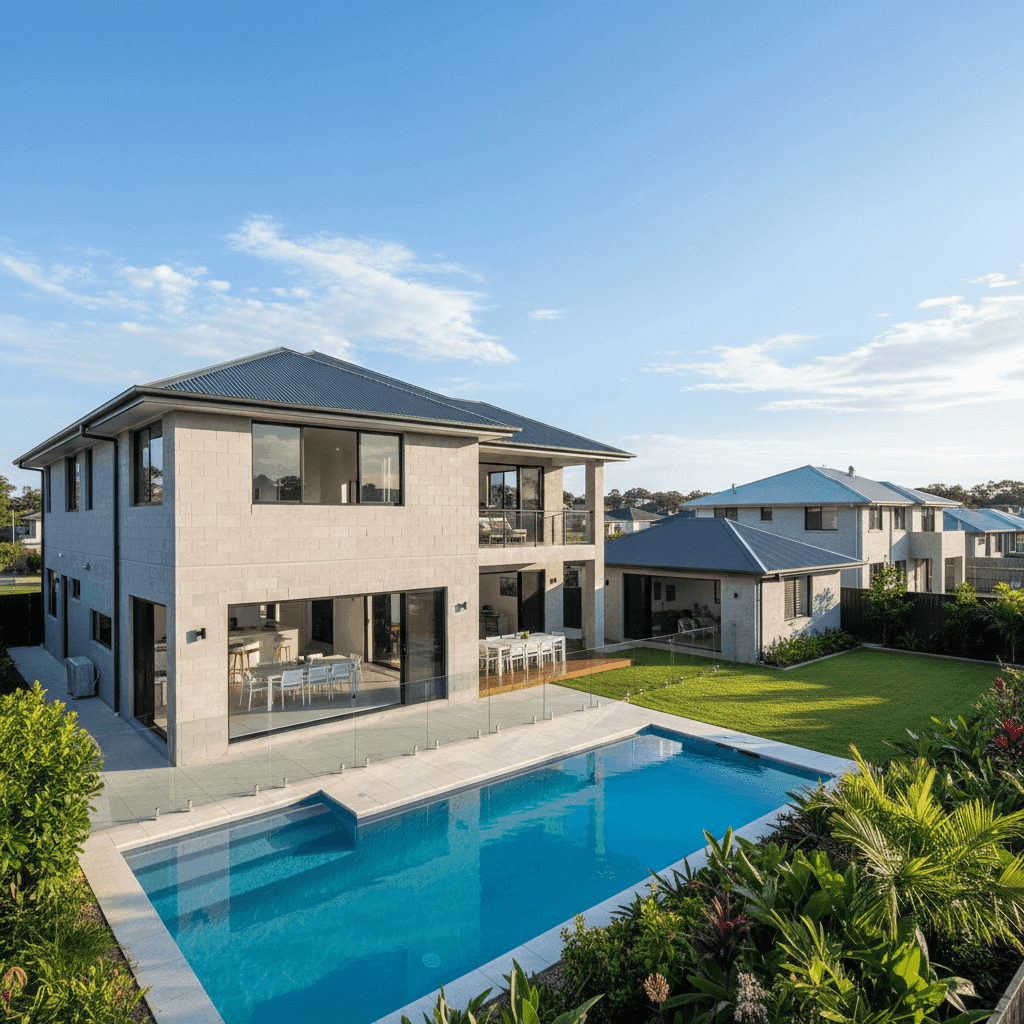
If you own a free standing home in Wurtulla, QLD 4575 on the Sunshine Coast, you've probably noticed that home insurance isn't cheap. This article breaks down a real home and contents insurance quote for a four-bedroom property in the suburb, compares it against local, state, and national benchmarks, and offers practical tips to help you get better value on your cover.
---
Is This Quote Fair?
The quote in question comes in at $3,135 per year (or $294 per month) for combined home and contents insurance, covering a building sum insured of $669,000 and contents valued at $39,000. Both the building and contents excess are set at $1,000.
Our price rating for this quote is Expensive — Above Average.
To put that in context: the suburb average for Wurtulla sits at $2,514 per year, with a median of $2,365. This quote lands well above the 75th percentile for the suburb ($2,761), meaning it's pricier than roughly three-quarters of comparable quotes we've seen in the area.
That said, it's worth keeping perspective. While the premium is on the higher end locally, it actually sits below the Queensland state average of $4,547 per year and below the state median of $3,931. Queensland is one of the most expensive states in the country for home insurance, largely due to the elevated risk of severe weather events — so beating the state average is at least a silver lining.
Whether this quote represents fair value depends heavily on the specific features of the property, which we'll explore below.
---
How Wurtulla Compares
Understanding where Wurtulla sits in the broader insurance landscape is useful context for any homeowner shopping around.
| Benchmark | Annual Premium |
|---|---|
| This Quote | $3,135 |
| Wurtulla Suburb Average | $2,514 |
| Wurtulla Suburb Median | $2,365 |
| QLD State Average | $4,547 |
| QLD State Median | $3,931 |
| National Average | $2,965 |
| National Median | $2,716 |
| Sunshine Coast LGA Average | $7,249 |
A few things stand out here. First, the Sunshine Coast LGA average of $7,249 is remarkably high — likely skewed by premium coastal and hinterland properties with elevated flood, storm surge, or bushfire risk. Wurtulla's suburb average of $2,514 is considerably lower than the broader LGA figure, suggesting the suburb itself carries a more moderate risk profile within the region.
Second, this quote is above the national average of $2,965, which reflects the general reality that insuring a home in Queensland tends to cost more than in many other parts of Australia. You can explore Queensland-wide insurance data or national benchmarks to see how your situation stacks up more broadly.
Note that the suburb sample size used in this comparison is six quotes, so the local averages should be treated as indicative rather than definitive.
---
Property Features That Affect Your Premium
Several characteristics of this particular property are likely influencing the premium — some pushing it up, others potentially keeping it in check.
Construction (Concrete Walls, Colorbond Roof, Slab Foundation)
Concrete external walls are generally viewed favourably by insurers. They're durable, fire-resistant, and less susceptible to termite damage than timber-framed construction. The steel Colorbond roof is similarly well-regarded — it's lightweight, long-lasting, and performs well in high-wind conditions. A slab foundation is standard for Queensland homes of this era and doesn't typically attract loading. Collectively, these construction features should work in the homeowner's favour.
Age of the Property (Built 1985)
At roughly 40 years old, this home is approaching the age bracket where insurers begin to factor in the cost of replacing ageing electrical wiring, plumbing, and roofing. Homes built in the mid-1980s predate many modern building codes, which can result in slightly higher premiums compared to newer builds.
Above-Average Fittings
The fittings quality is noted as above average, which directly increases the cost to rebuild or repair the home to its current standard. This is a legitimate driver of a higher building sum insured ($669,000) and, consequently, a higher premium.
Swimming Pool
A pool adds liability exposure and increases the overall replacement cost of the property. Most insurers factor this into their pricing, and it's a common contributor to elevated premiums for Queensland homes.
Granny Flat
The presence of a granny flat adds additional insurable structure to the property. Depending on how the policy is written, this may be covered under the main building sum insured or may require a separate endorsement. It's worth confirming with your insurer that the granny flat is explicitly included in your cover.
Tile Flooring
Tiled floors are relatively low-risk from an insurance perspective — they're durable and less susceptible to water damage than timber or carpet. This is unlikely to be a significant factor in either direction.
No Cyclone Risk Classification
Despite being in Queensland, this property is not classified as being in a cyclone risk area. This is a meaningful distinction — cyclone-rated premiums in North Queensland can be dramatically higher. The Sunshine Coast's location south of the typical cyclone belt means this loading doesn't apply here.
---
Tips for Homeowners in Wurtulla
If your premium feels steep, there are several steps worth taking before your next renewal.
1. Compare quotes before you renew Loyalty doesn't always pay with home insurance. Insurers often offer better rates to new customers, so it's worth getting at least two or three competing quotes at renewal time. Use CoverClub's free quote comparison tool to see what other providers are offering for your property.
2. Review your sum insured carefully A building sum insured of $669,000 for a 214 sqm home in Wurtulla is substantial. Make sure this figure reflects the cost to rebuild — not the market value of the property. Over-insuring drives up your premium unnecessarily, while under-insuring can leave you exposed. Online building calculators (or a quantity surveyor) can help you land on the right number.
3. Confirm your granny flat is properly covered Given the granny flat on this property, it's essential to check the policy wording. Some insurers include secondary dwellings automatically; others require them to be listed separately. A gap in cover here could be costly.
4. Ask about discounts for security and safety features Insurers often offer discounts for homes with monitored alarms, deadbolts, and other security measures. If you've made upgrades since your last renewal, let your insurer know — it may reduce your premium.
---
Ready to Find a Better Deal?
Whether you're renewing soon or just curious about whether you're paying too much, comparing quotes is the single most effective way to reduce your home insurance costs. Get a home insurance quote through CoverClub and see how your premium stacks up against the market in minutes — no obligation, no jargon.
For more localised data on insurance costs in your area, visit the Wurtulla suburb stats page.