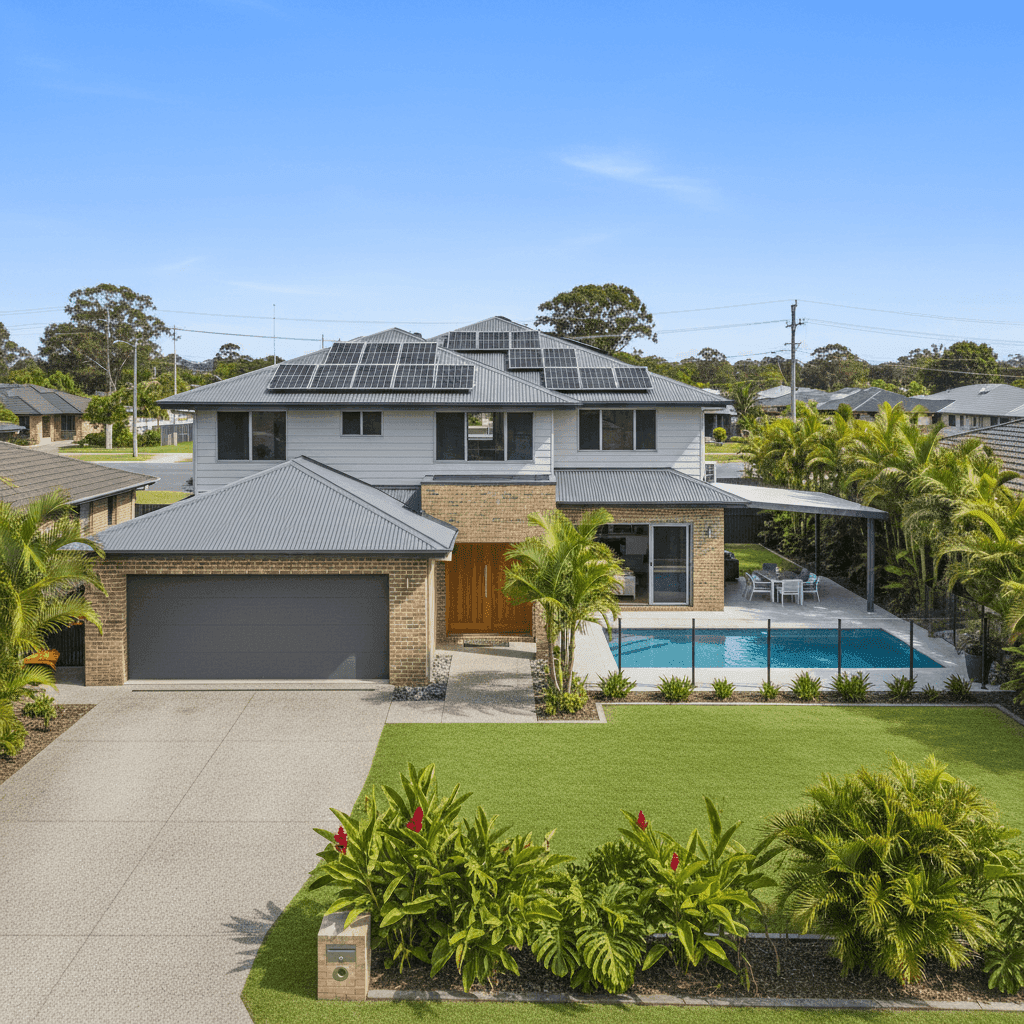
Wurtulla is a relaxed coastal suburb on Queensland's Sunshine Coast, sitting just minutes from Bokarina Beach and the Birtinya town centre. It's a popular spot for families, and the housing stock reflects that — well-established free standing homes, many built in the late 1990s and early 2000s, on generous suburban blocks. If you own a four-bedroom home here, understanding what you should be paying for home and contents insurance is well worth your time.
This article breaks down a real insurance quote for a four-bedroom, two-bathroom free standing home in Wurtulla, and puts it into context against local, state, and national benchmarks.
---
Is This Quote Fair?
The quote in question comes in at $3,351 per year (or $320/month) for combined home and contents cover, with a building sum insured of $751,000 and contents valued at $35,000. Both the building and contents excess are set at $1,000.
Our price rating for this quote is Fair — Around Average, which is a reasonable outcome for a property of this size and specification in coastal Queensland.
To put that in perspective:
- The suburb average for Wurtulla is $3,659/yr, and the median sits at $3,908/yr
- This quote comes in below both of those figures — roughly $308 less than the suburb average and $557 less than the median
- It also sits comfortably within the interquartile range for the suburb ($2,797–$4,314/yr), meaning it's a typical result rather than an outlier
So while there may be room to push the price lower, this is not an overpriced quote. For a 235 sqm home with a pool, solar panels, and ducted climate control on the Sunshine Coast, $3,351 is a defensible number.
---
How Wurtulla Compares
One of the most striking things about home insurance pricing in Queensland is the sheer variation across the state. Queensland's average home insurance premium sits at a staggering $9,129 per year — heavily skewed by high-risk cyclone and flood zones in Far North Queensland and other exposed regions. The state median, however, is a more grounded $3,903/yr, which tells you that most Queensland homeowners are paying something in that ballpark.
At $3,351, this Wurtulla quote comes in just below the state median — a positive sign that the property isn't being penalised heavily for its coastal location.
Zooming out to the national picture, the average Australian home insurance premium is $5,347/yr, though the national median is considerably lower at $2,764/yr. The national median is pulled down by lower-risk, lower-cost states like Victoria and South Australia, so it's not the most useful comparison for a Queensland coastal property.
Within the Sunshine Coast LGA, the average premium is $7,249/yr — again, skewed by higher-risk pockets across the region. Wurtulla, sitting outside designated cyclone risk zones, benefits from a more moderate risk profile than some of its northern Sunshine Coast neighbours.
You can explore more localised data on the Wurtulla suburb stats page.
> Note: The suburb sample for Wurtulla includes 9 quotes, so these figures are directionally useful but should be interpreted with some caution — a larger sample would give a more robust picture.
---
Property Features That Affect Your Premium
Several characteristics of this property have a meaningful influence on what insurers charge. Here's how they stack up:
Brick Veneer Walls & Colorbond Roof Brick veneer construction is generally viewed favourably by insurers — it's durable, fire-resistant, and holds up well in storms. Paired with a steel Colorbond roof, this home has a combination that tends to attract competitive premiums. Colorbond is lightweight, resistant to corrosion, and performs well in high-wind conditions, which is a plus on the Sunshine Coast.
Slab Foundation A concrete slab foundation is standard for homes of this era and is considered low-risk by insurers. There's no subfloor cavity to worry about, and it's generally resilient against the kind of moisture issues that can affect older homes on stumps.
Timber/Laminate Flooring Flooring type can influence contents and building claims. Timber and laminate floors can be costly to repair or replace after water damage events, so it's worth ensuring your sum insured accounts for this.
Swimming Pool A pool adds to the replacement cost of the home and introduces some liability considerations. Insurers factor this into the building sum insured calculation, so it's important to make sure your coverage reflects the full cost of the pool structure and surrounds.
Solar Panels Solar panels are typically covered under building insurance, but it's worth confirming this with your insurer. They add value to the property and, in some cases, can slightly increase the building premium due to the cost of replacement.
Ducted Climate Control Ducted air conditioning systems are a significant fixed asset in any home. Like solar panels, they're generally covered under building insurance, and their presence is one reason the $751,000 sum insured for this property is well-calibrated.
No Cyclone Risk Wurtulla falls outside Queensland's designated cyclone risk zones, which is a meaningful factor in keeping premiums more moderate. Properties in cyclone-prone areas can face dramatically higher premiums, so this is a genuine advantage for Wurtulla homeowners.
---
Tips for Homeowners in Wurtulla
1. Review your building sum insured annually Construction costs in South East Queensland have risen significantly over recent years. A sum insured that was accurate in 2022 may no longer reflect the true cost of rebuilding your home. Make sure your $751,000 figure is regularly reviewed — your insurer may offer an automatic indexation feature, but it's still worth checking.
2. Don't underinsure your contents $35,000 in contents cover is on the lower end for a four-bedroom home. A thorough home inventory — including furniture, appliances, clothing, and valuables — often reveals a higher replacement value than homeowners initially estimate. Underinsuring your contents can leave you significantly out of pocket after a claim.
3. Consider your excess strategically Both the building and contents excess on this policy are set at $1,000. Opting for a higher excess (say, $2,000) can reduce your annual premium, but only makes sense if you're confident you could comfortably cover that amount at claim time. For a property with a pool and solar, where repair claims can be substantial, think carefully before increasing the excess purely to save on premiums.
4. Compare quotes before renewal Insurance pricing is not static. Insurers reprice risk regularly, and the market can shift meaningfully from one year to the next. With a "Fair" rating on this quote, there's a reasonable chance that shopping around could yield a better price — particularly if your risk profile or the broader market has changed since you last compared.
---
Ready to Compare?
Whether you're assessing a quote you've already received or starting fresh, CoverClub makes it easy to see how your premium stacks up. Get a home insurance quote today and compare options side by side — so you can make a confident, informed decision about protecting one of your most valuable assets.