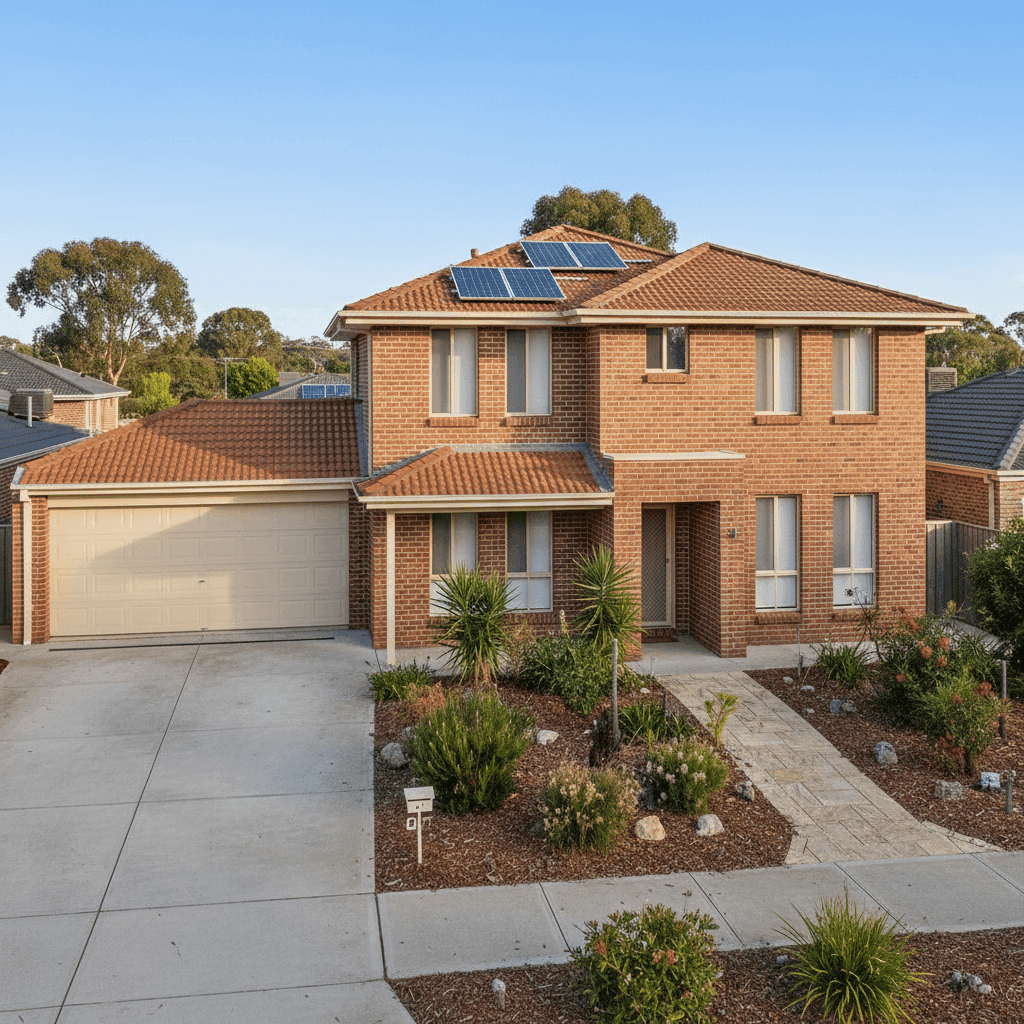
If you own a free standing home in Wy Yung, VIC 3875, you've probably wondered whether you're paying a fair price for home and contents insurance — or quietly overpaying year after year. In this article, we break down a real insurance quote for a four-bedroom, two-bathroom brick veneer home in Wy Yung, and put it in context against local, state-wide, and national benchmarks. Whether you're renewing your policy or shopping around for the first time, this analysis gives you the numbers you need to make a confident decision.
---
Is This Quote Fair?
The quote in question comes in at $2,225 per year (or $227/month) for combined home and contents cover, with a building sum insured of $1,004,000 and contents valued at $300,000. The building excess is set at $3,000, with a separate $1,000 excess on contents.
Our price rating for this quote is FAIR — Around Average.
That assessment holds up when you look at the local data. The suburb average for Wy Yung sits at $2,406/year, with a median of $2,770/year. This quote lands comfortably below both figures, which is a positive sign. It also falls within the interquartile range for the suburb — between the 25th percentile of $1,733/year and the 75th percentile of $2,888/year — meaning it's squarely in the middle of what most Wy Yung homeowners are paying.
So while this isn't the cheapest quote on the market, it's not overpriced either. For a property with above-average fittings and a relatively high sum insured, landing below the suburb average is a reasonable outcome.
---
How Wy Yung Compares
Zooming out beyond the suburb tells an interesting story. Here's how this quote stacks up across different benchmarks:
| Benchmark | Annual Premium |
|---|---|
| This Quote | $2,225 |
| Wy Yung Suburb Average | $2,406 |
| Wy Yung Suburb Median | $2,770 |
| East Gippsland LGA Average | $3,003 |
| VIC State Average | $3,000 |
| VIC State Median | $2,718 |
| National Average | $5,347 |
| National Median | $2,764 |
A few things stand out here. First, this quote is notably below the East Gippsland LGA average of $3,003/year — a meaningful saving for a region where bushfire risk and rural factors can push premiums higher. Second, it sits well under the Victorian state average of $3,000/year, and is a fraction of the national average of $5,347/year (which is skewed upward by high-risk and high-value properties in other states, particularly Queensland and NSW).
It's worth noting that the suburb sample size is 13 quotes, so the local data gives a reasonable directional guide, but the state and LGA figures provide a more statistically robust comparison. On every measure, this quote is performing at or below the relevant benchmark — which is a good position to be in.
---
Property Features That Affect Your Premium
Several characteristics of this property work in the homeowner's favour when it comes to insurance pricing.
Brick veneer construction is generally viewed favourably by insurers. It offers solid fire resistance and structural durability compared to weatherboard or lightweight cladding, which can translate to lower premiums. Combined with a tiled roof, the home presents a relatively low-risk profile from a building materials perspective.
The slab foundation is another positive. Slab homes tend to have fewer issues with subfloor moisture, pests, and structural movement than raised or stumped foundations — all factors that can affect claims history and, by extension, premiums.
Solar panels are worth flagging. While they add value to the property and reduce energy costs, they do increase the replacement cost of the home if damaged in a storm or fire. Homeowners should confirm their policy explicitly covers solar panels as part of the building sum insured — not all standard policies do by default.
The timber and laminate flooring throughout the home is a contents and building consideration. Timber floors can be expensive to repair or replace after water damage events, so it's worth checking whether the policy covers accidental water damage and what the limits are.
Finally, the above-average fittings quality is a key driver of the $1,004,000 building sum insured. Homes with premium fixtures, appliances, and finishes cost more to rebuild to the same standard, and underinsuring is a common and costly mistake. The sum insured here appears to reflect the property's quality appropriately.
---
Tips for Homeowners in Wy Yung
1. Review your building sum insured annually Construction costs in regional Victoria have risen significantly in recent years. A sum insured that was accurate two years ago may no longer cover a full rebuild today. Use a building cost calculator or speak with a quantity surveyor to validate your figure each year.
2. Check your solar panel coverage As mentioned above, solar panels aren't always automatically covered under a standard home policy. Ask your insurer specifically whether panels are included in the building sum insured and whether storm, hail, and accidental damage are covered.
3. Consider your excess trade-off carefully This quote carries a $3,000 building excess — higher than average. A higher excess typically lowers your annual premium, but it means more out-of-pocket cost when you make a claim. If cash flow in an emergency would be a concern, it may be worth requesting a quote with a lower excess to compare the difference.
4. Don't set and forget your contents value $300,000 in contents cover is substantial, but it's easy for this figure to become outdated as you accumulate furniture, electronics, jewellery, and appliances. Do a quick home inventory every year or two to make sure your contents sum still reflects what you actually own.
---
Compare Your Own Quote
Curious how your current policy stacks up? CoverClub makes it easy to benchmark your premium against real data from your suburb, LGA, and state — so you always know whether you're getting a fair deal. Get a quote or compare your existing policy at CoverClub and see where you stand in seconds.
For more suburb-level data on Wy Yung, visit the Wy Yung insurance stats page, or explore Victoria-wide home insurance benchmarks to see how your area compares across the state.