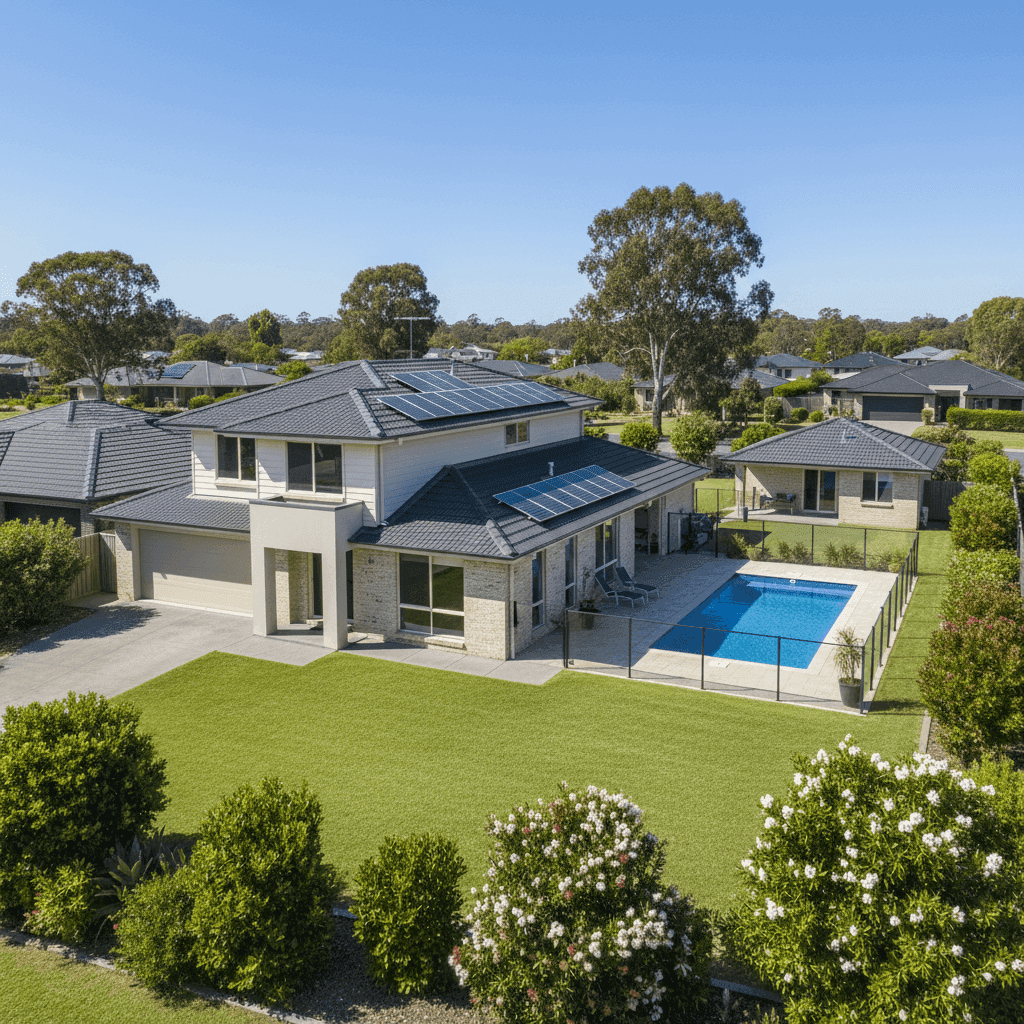
If you own a free standing home in Wyee, NSW 2259, you've likely noticed that home insurance isn't cheap — and working out whether the quote in front of you is reasonable can feel like guesswork. This article breaks down a real home and contents insurance quote for a five-bedroom property in Wyee, putting it in context against local, state, and national benchmarks so you can make a more informed decision.
---
Is This Quote Fair?
The quote in question comes in at $4,113 per year (or roughly $402 per month) for combined home and contents cover, with a building sum insured of $980,000 and contents valued at $100,000. Both the building and contents excess are set at $1,000.
Our independent price rating for this quote is FAIR — Around Average. That means the premium isn't a bargain, but it's not a red flag either. For a property of this size and specification in New South Wales, the pricing sits in a reasonable range, though there's certainly room to explore whether a better deal exists elsewhere.
It's worth noting that "fair" doesn't mean you should simply accept the first quote you receive. Insurance markets are competitive, and premiums for the same property can vary significantly between providers — sometimes by hundreds of dollars annually.
---
How Wyee Compares
Understanding where your premium sits relative to broader averages helps put the number in perspective. Here's how this quote stacks up:
| Benchmark | Annual Premium |
|---|---|
| This Quote | $4,113 |
| NSW Average | $3,801 |
| NSW Median | $3,410 |
| National Average | $2,965 |
| National Median | $2,716 |
| LGA (Cessnock) Average | $2,585 |
A few things stand out here. The quote is 8% above the [NSW state average](https://coverclub.com.au/stats/NSW) and notably higher than both the national average and the LGA average for the Cessnock area. That gap is meaningful — at $4,113 versus a national average of $2,965, you're paying roughly $1,148 more per year than the typical Australian homeowner.
However, this comparison needs context. The property being insured is a large, five-bedroom home with a high building sum insured of $980,000, a pool, solar panels, and a granny flat — all of which push premiums upward. A more modest home would attract a lower premium, so direct comparisons to averages have their limits. Still, the Cessnock LGA average of $2,585 is a useful data point, suggesting that even within the same local government area, there may be scope to find more competitive pricing.
No suburb-level data is currently available for Wyee specifically, but you can check for updates at the Wyee suburb stats page as our dataset grows.
---
Property Features That Affect Your Premium
Several characteristics of this property have a direct bearing on what insurers charge. Understanding them can help you have more informed conversations with insurers — and potentially identify areas where adjustments could reduce your cost.
Size and sum insured At 286 sqm with five bedrooms and three bathrooms, this is a substantial home. The $980,000 building sum insured reflects the cost to rebuild a property of this scale, and higher rebuild costs translate directly into higher premiums. It's essential that your sum insured accurately reflects true rebuild costs — underinsurance is a serious risk, but overinsurance means you're paying more than necessary.
Brick veneer construction and tiled roof Brick veneer walls and a tiled roof are generally viewed favourably by insurers. These materials are durable and offer solid resistance to fire and weather events. Compared to timber-framed or colorbond constructions, this combination typically attracts more competitive pricing.
Slab foundation A concrete slab foundation is standard for homes built around the year 2000 and is generally considered low-risk by insurers. It offers good structural stability and reduces concerns around subsidence or pest-related damage.
Swimming pool A pool adds liability exposure and increases the overall insured value of the property. Most insurers factor pool ownership into their risk assessments, which can nudge premiums upward — particularly when combined with other features like a granny flat.
Solar panels Solar panels increase the replacement value of the home and introduce some additional risk (electrical faults, storm damage). Insurers typically account for these when calculating premiums. It's worth confirming with your insurer that your solar system is explicitly covered under your policy.
Granny flat The presence of a granny flat adds complexity to a home insurance policy. Depending on your insurer, a secondary dwelling may or may not be automatically covered under a standard home policy. Always confirm whether your granny flat — including its fixtures and any contents — is covered, or whether a separate policy or endorsement is required.
Standard fittings With standard-quality fittings throughout, the property doesn't attract the premium loading that high-end or custom finishes would. This is a modest positive from a pricing perspective.
---
Tips for Homeowners in Wyee
1. Shop around — seriously The gap between this quote and the LGA average suggests meaningful price variation exists in the market. Use a comparison service like CoverClub to get multiple quotes side by side. Even if you're happy with your current insurer, running a comparison annually is good financial hygiene.
2. Confirm your granny flat is covered This is one of the most commonly overlooked gaps in home insurance. Check your policy documents carefully. If your granny flat is used as a rental, you may need landlord insurance or a specific endorsement — a standard home policy may not cover tenant-related risks.
3. Review your building sum insured regularly Construction costs in Australia have risen significantly in recent years. A sum insured that was accurate two or three years ago may no longer reflect the true cost to rebuild. Ask your insurer how they calculate your sum insured, and consider getting an independent building valuation if you're unsure.
4. Ask about bundling discounts Many insurers offer discounts when you hold multiple policies — such as home, contents, and car insurance — with the same provider. If your home and contents are currently with different insurers, consolidating them (as this quote does) may unlock savings.
---
Ready to Compare?
Whether this quote is the right one for your home comes down to more than just the price — policy inclusions, exclusions, and claims service all matter. The best way to find out if you're getting value is to compare. Visit CoverClub to get a home and contents insurance quote tailored to your property in Wyee and see how different providers stack up.