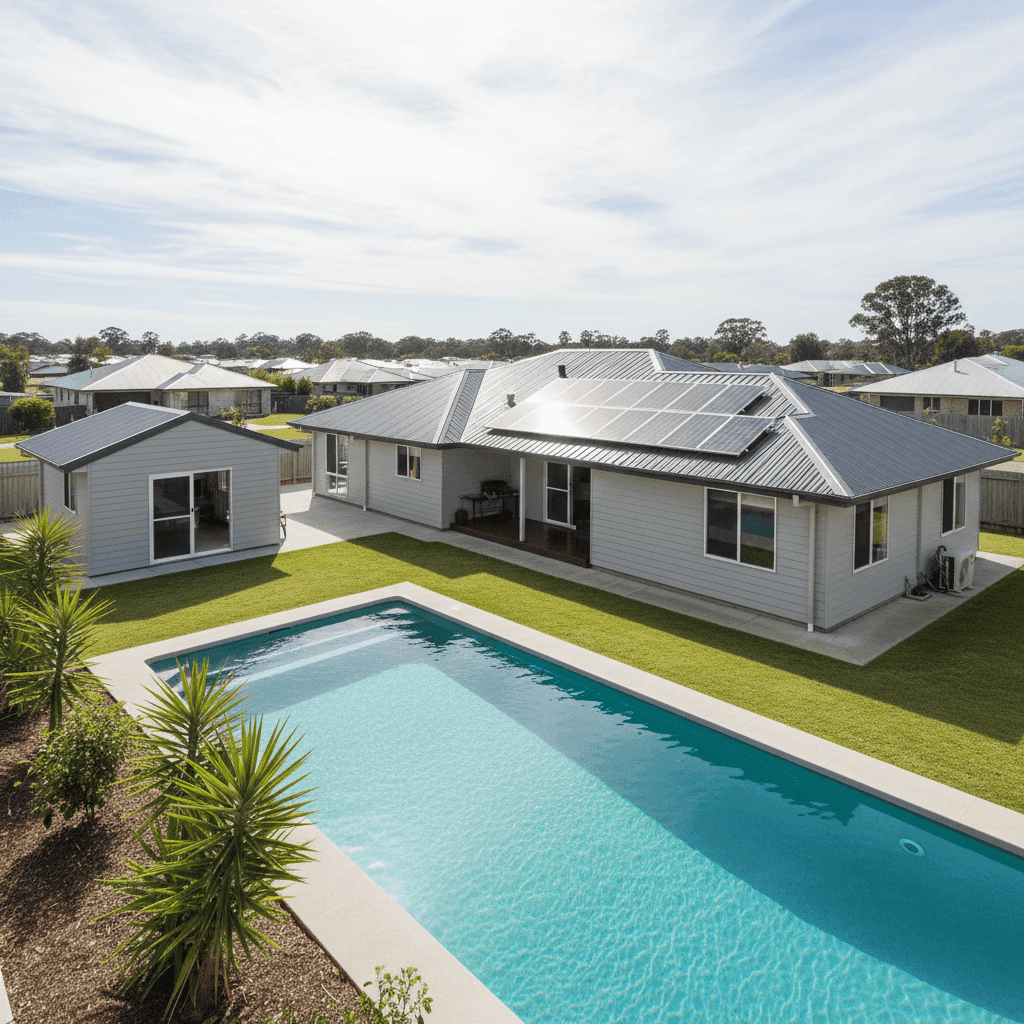
If you own a free standing home in Wyee, NSW 2259, you're likely no stranger to the wide variation in home insurance premiums across the Central Coast and Hunter regions. This article breaks down a real home and contents insurance quote for a four-bedroom property in Wyee, compares it against local, state, and national benchmarks, and offers practical tips to help you make a more informed decision at renewal time.
---
Is This Quote Fair?
The quote in question comes in at $7,726 per year (or $740 per month) for combined home and contents cover, with a building sum insured of $1,002,000 and contents valued at $253,000. Both the building and contents excess are set at $1,000.
Our pricing analysis rates this quote as Expensive — Above Average.
To put that in perspective, the suburb average for Wyee sits at just $3,779 per year, with a median of $3,682. That means this quote is more than double what most Wyee homeowners are paying. Even at the 75th percentile — meaning only 25% of quotes in the suburb are higher — the figure is $4,074 per year, still well below this premium.
So what's driving the price up? A combination of property-specific features, a high building sum insured, and the inclusion of contents cover all play a role. We'll unpack each of these below.
---
How Wyee Compares
Understanding where Wyee sits in the broader insurance landscape helps contextualise any individual quote.
| Benchmark | Average Premium | Median Premium |
|---|---|---|
| Wyee (suburb) | $3,779/yr | $3,682/yr |
| LGA (Cessnock) | $2,462/yr | — |
| NSW (state) | $9,528/yr | $3,770/yr |
| National | $5,347/yr | $2,764/yr |
A few things stand out here. The NSW state average of $9,528 per year is notably high — but that figure is heavily skewed by expensive properties and high-risk areas across the state. The NSW median of $3,770 is far more representative of what most homeowners pay, and it aligns closely with the Wyee suburb median.
Interestingly, the national average of $5,347 sits above the Wyee suburb average, suggesting that Wyee is generally a reasonably affordable area to insure — at least for typical properties. The LGA average for Cessnock ($2,462) is even lower, which may reflect a higher proportion of smaller or lower-value homes in that council area.
The quote analysed here, at $7,726, sits above the national average but below the NSW state average. For a property of this size, age, and feature set, that positioning isn't entirely surprising — but it does suggest there may be room to shop around.
---
Property Features That Affect Your Premium
Several characteristics of this property are likely contributing to a higher-than-average premium. Here's what insurers are factoring in:
High Building Sum Insured
At $1,002,000, the building sum insured is substantial. This reflects the cost to fully rebuild a 214 sqm home with standard fittings, and it directly drives the base premium. Getting this figure right is important — underinsuring can leave you exposed, but overinsuring means you're paying for cover you'll never claim.
Hardiplank / Hardiflex External Walls
Fibre cement cladding such as Hardiplank or Hardiflex is generally viewed favourably by insurers due to its fire resistance and durability. However, it can be more expensive to repair or replace than brick veneer, which may influence the rebuild cost estimate.
Steel / Colorbond Roof
Colorbond roofing is common across regional NSW and is generally considered a low-risk roofing material. It's durable, fire-resistant, and widely used — so this shouldn't be adding a significant loading to the premium.
Swimming Pool
The presence of a pool adds to both the rebuild cost and the liability exposure for insurers. Pools require dedicated cover and can increase the overall premium, particularly if the property is in an area with any flood or storm risk.
Solar Panels
Solar panels are increasingly common on Australian homes, but they do add to the insured value of the property. Panels and inverters can be costly to replace, and some insurers apply a loading or require specific endorsements for solar systems.
Granny Flat
A secondary dwelling on the property adds complexity to the policy. Depending on the insurer, a granny flat may need to be specifically listed, and its inclusion in the building sum insured will naturally push the premium higher.
Ducted Climate Control
Ducted air conditioning systems are expensive to replace and can be a significant item in any building claim. Their inclusion in the rebuild cost estimate is another factor contributing to the higher sum insured — and therefore the premium.
Construction Year: 1987
A home built in 1987 is approaching 40 years old. While this doesn't automatically mean higher premiums, older homes can carry greater risk of electrical, plumbing, or structural issues, and some insurers price this in.
---
Tips for Homeowners in Wyee
1. Review Your Sum Insured Carefully
The building sum insured of $1,002,000 is the single biggest lever on your premium. Use a reputable rebuild cost calculator — or engage a quantity surveyor — to confirm this figure is accurate. If it's higher than necessary, you're paying more than you need to. If it's too low, you risk being underinsured in the event of a total loss.
2. Shop Around at Renewal
Insurance loyalty rarely pays off in Australia. Insurers frequently offer better rates to new customers than they do to existing ones. With a quote this far above the Wyee suburb average, it's well worth getting two or three competing quotes before renewing. Even saving $1,000–$2,000 per year is realistic based on the benchmarks above.
3. Consider Your Excess Settings
Both the building and contents excess on this policy are set at $1,000. Increasing your excess — say, to $2,000 or $2,500 — can meaningfully reduce your annual premium. This strategy works best if you have the financial buffer to cover a higher out-of-pocket cost in the event of a claim.
4. Check What's Included for the Pool, Solar, and Granny Flat
These three features each add complexity to your policy. Make sure your policy documents explicitly cover the solar panel system (including the inverter), the pool and its equipment, and the granny flat as a secondary dwelling. Gaps in cover here can be costly — and worth clarifying before you need to make a claim.
---
Compare Your Home Insurance with CoverClub
Whether you're renewing soon or just curious about whether you're getting a fair deal, CoverClub makes it easy to see how your premium stacks up. We aggregate real quote data from across Australia so you can benchmark your cover against your neighbours and the broader market.
Get a home insurance quote today and find out if you could be paying less for the same level of protection.