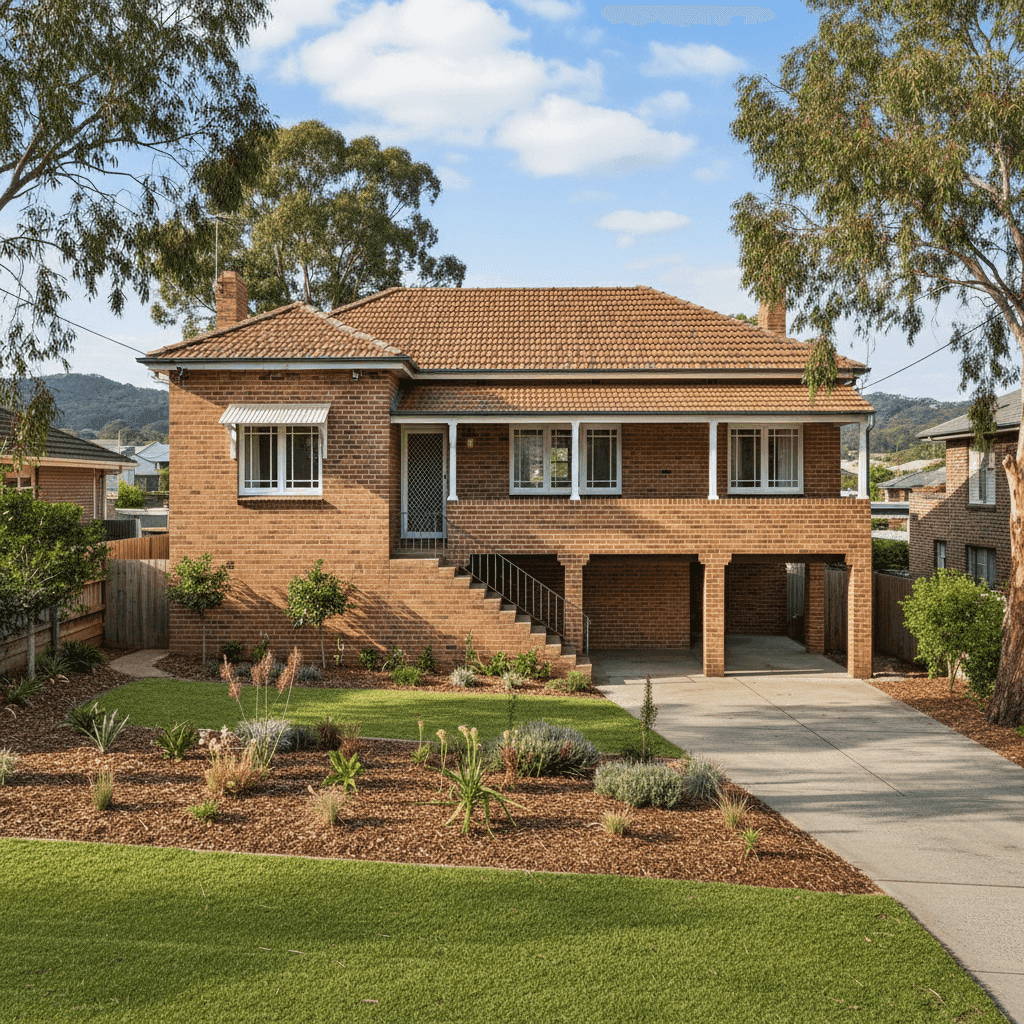
Wyoming is a well-established residential suburb on the Central Coast of New South Wales, sitting just inland from Gosford within the scenic Gosford LGA. It attracts families and long-term homeowners alike, thanks to its leafy streets, proximity to schools, and easy freeway access to Sydney. If you own a free-standing home here — particularly a double brick construction from the 1990s — understanding what you should be paying for building insurance is an important part of protecting one of your most significant assets.
This article breaks down a recent building-only insurance quote for a 4-bedroom, 2-bathroom free-standing home in Wyoming (postcode 2250), examining how the premium stacks up against local, state, and national benchmarks.
---
Is This Quote Fair?
The quote in question comes in at $3,893 per year (or $366/month) for building-only cover, with a $1,000 building excess and a sum insured of $770,000.
Our price rating for this quote is FAIR — Around Average, and the data backs that up. When you look at the Wyoming and NSW 2250 suburb statistics, the suburb average premium sits at $3,305/yr, which means this quote runs about 18% above the local average. However, it's worth noting that the suburb's 75th percentile reaches $4,807/yr — so roughly a quarter of comparable properties in the area are paying even more. This quote sits comfortably between the suburb average and the upper quartile, which is a reasonable position given the property's characteristics (more on those below).
Compared to the NSW state average of $3,801/yr, this quote is only marginally higher — just $92 more annually, or less than $8/month. That's well within the range of normal variation and reinforces the "around average" rating.
---
How Wyoming Compares
To put this quote in proper context, here's how Wyoming's insurance costs sit relative to broader benchmarks:
| Benchmark | Average Premium | Median Premium |
|---|---|---|
| Wyoming (NSW 2250) | $3,305/yr | $2,609/yr |
| NSW State | $3,801/yr | $3,410/yr |
| National | $2,965/yr | $2,716/yr |
| Hawkesbury LGA | $4,423/yr | — |
(Based on a sample of 24 quotes in the Wyoming suburb.)
A few things stand out here. First, Wyoming's median premium of $2,609/yr is notably lower than both the NSW and national medians, suggesting that many properties in the suburb attract relatively modest premiums. However, the suburb average is pulled upward by higher-cost properties, which creates a wider spread — reflected in the gap between the 25th percentile ($1,738/yr) and the 75th percentile ($4,807/yr).
Second, it's worth noting that the Hawkesbury LGA average of $4,423/yr is significantly higher than Wyoming's suburb average. Wyoming falls under the Central Coast Council area rather than Hawkesbury, but the comparison is a useful reminder that geography and flood/risk zoning can dramatically influence what homeowners pay across the broader region.
You can explore the national home insurance statistics to see how the Central Coast compares with the rest of Australia.
---
Property Features That Affect Your Premium
Several characteristics of this particular property influence the premium — some favourably, others less so.
Double Brick Construction
Double brick is generally regarded by insurers as one of the more resilient wall types. It offers strong resistance to fire, wind, and general structural damage, which can work in a homeowner's favour at quoting time. Compared to weatherboard or clad homes, double brick properties often attract more competitive premiums.
Tiled Roof
A tiled roof is a standard, well-regarded roofing material in Australia. Tiles are durable and perform well in a range of weather conditions. They're not as premium as Colorbond steel in some insurer's eyes, but they're far preferable to older materials like fibro or corrugated iron in terms of risk assessment.
Elevated Foundation (Stumps, Elevated by at Least 1m)
This is a notable factor. The home sits on stumps and is elevated by at least one metre — a design characteristic that can cut both ways. On the positive side, elevation provides natural protection against surface-level flooding and moisture ingress. On the other hand, elevated homes can be more vulnerable to wind uplift and may carry slightly higher rebuild costs due to the complexity of the subfloor structure. Insurers will weigh these factors when assessing risk.
Construction Year (1996)
A home built in 1996 is now approaching 30 years old. While it's not new, it was built under more modern building codes than homes from earlier decades. Regular maintenance will be key to keeping it in good condition and ensuring claims aren't complicated by pre-existing wear and tear.
No Pool, Solar Panels, or Ducted Climate Control
The absence of a pool, solar system, and ducted air conditioning simplifies the risk profile and keeps the sum insured more straightforward. These features, when present, can add meaningful cost to both the rebuild estimate and the annual premium.
---
Tips for Homeowners in Wyoming
1. Review your sum insured regularly A sum insured of $770,000 for a 214 sqm double brick home in Wyoming is a significant figure — but building costs have risen sharply in recent years. Make sure your sum insured reflects current construction costs, not what it cost to build five years ago. Underinsurance is one of the most common and costly mistakes Australian homeowners make.
2. Consider your excess carefully A $1,000 excess is fairly standard, but increasing your excess can noticeably reduce your annual premium. If you're financially comfortable absorbing a higher out-of-pocket cost in the event of a claim, opting for a $2,000 or even $2,500 excess could save you hundreds per year.
3. Maintain your subfloor and stumps Given the elevated foundation, it's important to have your stumps inspected periodically for signs of rot, pest damage, or subsidence. Insurers may scrutinise claims more closely if there's evidence of long-term neglect in the subfloor structure, and some policies may exclude damage arising from gradual deterioration.
4. Compare quotes before renewal The spread of premiums in Wyoming — from $1,738/yr at the 25th percentile to $4,807/yr at the 75th — shows just how much variation exists between insurers for similar properties. Don't assume your renewal price is the best available. Shopping around at renewal time is one of the easiest ways to save.
---
Compare Your Home Insurance with CoverClub
Whether you're a first-time buyer in Wyoming or a long-term homeowner reviewing your current policy, comparing quotes is the smartest first step. CoverClub makes it easy to see what multiple insurers would charge for your specific property — so you're never paying more than you should.
Get a home insurance quote today and find out where your premium sits relative to your neighbours.