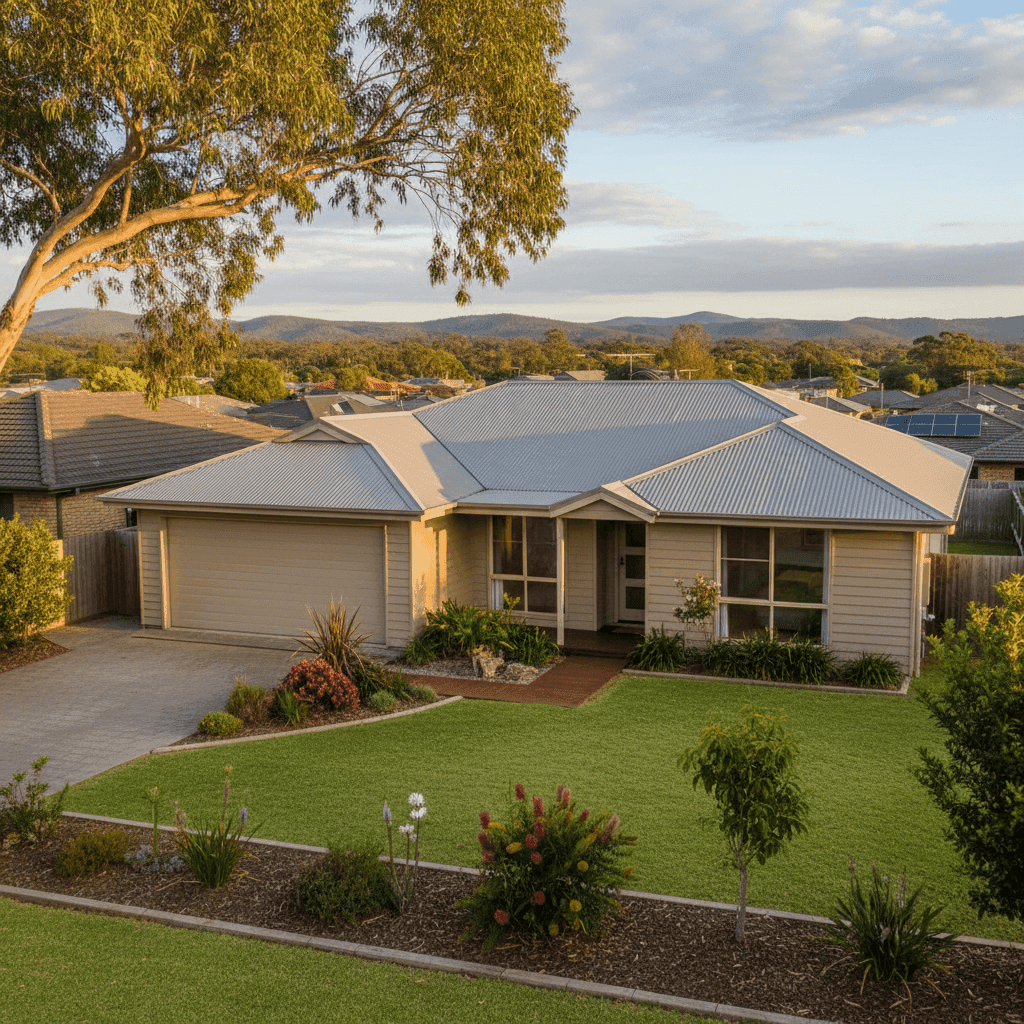
If you own a free standing home in Wyongah, NSW 2259, you're probably curious about what a fair home insurance premium looks like — and whether the quote sitting in your inbox is competitive. This article breaks down a real home and contents insurance quote for a four-bedroom, two-bathroom weatherboard property in Wyongah, and puts the numbers in context using suburb, state, and national data.
---
Is This Quote Fair?
The annual premium for this quote comes in at $4,973 per year (or $477 per month), covering both building and contents. The building is insured for $810,000 and contents for $249,000, with a $1,000 excess applying to both.
Our price rating for this quote is FAIR — Around Average.
That assessment holds up when you look at the local data. The suburb average for Wyongah sits at $3,880 per year, with a median of $4,030. At $4,973, this quote is above the suburb median, but it's worth noting that the 75th percentile for the area is $5,099 — meaning roughly a quarter of quotes in Wyongah come in higher than this one. So while it's not the cheapest option on the market, it's well within the normal range for the area, particularly given the building and contents values involved.
---
How Wyongah Compares
To understand whether this premium is genuinely reasonable, it helps to zoom out and look at the broader picture.
| Benchmark | Average Premium | Median Premium |
|---|---|---|
| Wyongah (suburb) | $3,880/yr | $4,030/yr |
| NSW (state) | $9,528/yr | $3,770/yr |
| National | $5,347/yr | $2,764/yr |
A few things stand out here. The NSW state average of $9,528 is exceptionally high — but this is heavily skewed by high-risk coastal and flood-prone areas across the state, which is why the median of $3,770 tells a more grounded story. Wyongah's suburb average of $3,880 sits very close to the NSW median, suggesting the area carries a moderate, fairly typical risk profile for New South Wales.
Compared to the national average of $5,347, this quote of $4,973 is actually below the country-wide figure — a reassuring sign. The national median of $2,764 is significantly lower, but that reflects the large number of lower-value properties and lower-risk regions across Australia pulling the figure down.
You can explore more data on the NSW insurance statistics page or dig into national home insurance trends for additional context.
It's also worth noting that the LGA average for Cessnock is $2,462/yr — considerably lower than this quote. This divergence likely reflects differences in property values, construction types, and coverage amounts across the broader local government area, rather than a red flag about this particular quote.
---
Property Features That Affect Your Premium
Several characteristics of this property have a meaningful influence on the premium. Understanding them can help you make sense of the pricing — and potentially identify areas where adjustments could be made.
Weatherboard timber walls are one of the most significant factors. While weatherboard homes have a classic Australian charm, timber is more susceptible to fire, rot, and pest damage than brick or rendered masonry. Insurers price this risk into the premium, so weatherboard properties typically attract higher building premiums than their brick counterparts.
The steel/Colorbond roof is actually a positive from an insurance perspective. Colorbond is durable, resistant to corrosion, and performs well in high-wind conditions — all of which can moderate risk in the eyes of underwriters.
Stump foundations are common in older Australian homes, particularly those built in the 1980s. While stumps can be susceptible to movement and deterioration over time, they're a well-understood construction type and don't typically attract major premium penalties in this region.
Timber and laminate flooring is factored into the contents and building valuation. Timber floors can be costly to repair or replace, which is reflected in the building sum insured.
Ducted climate control adds to the replacement value of the home. Ducted systems are expensive to install and repair, and their inclusion in the building sum insured of $810,000 is appropriate for a 214 sqm home of this age and specification.
The property's 1985 construction year means it's over 40 years old. Older homes can carry higher risk due to ageing plumbing, wiring, and structural elements — factors that insurers weigh carefully when calculating premiums.
---
Tips for Homeowners in Wyongah
1. Review your sum insured regularly Building costs have risen sharply in recent years. A 214 sqm home with weatherboard construction and ducted climate control in NSW could cost significantly more to rebuild today than it did even a few years ago. Make sure your $810,000 building sum insured reflects current construction costs — being underinsured is one of the most common and costly mistakes homeowners make.
2. Consider the value of your excess Both the building and contents excess on this policy sit at $1,000. Opting for a higher excess — say $2,000 — could meaningfully reduce your annual premium. If you have a good claims history and a financial buffer to cover a higher out-of-pocket cost, this is worth exploring.
3. Maintain your weatherboard exterior Insurers may scrutinise the condition of timber-clad homes at claim time. Keeping your weatherboards painted, sealed, and free from rot or pest damage not only protects the structure but also ensures your claim won't be complicated by maintenance-related exclusions.
4. Compare quotes at renewal The 25th percentile for Wyongah is just $909 per year — a dramatic difference from the 75th percentile of $5,099. This wide spread shows that premiums in the suburb vary enormously depending on the insurer, coverage level, and property specifics. Shopping around at renewal is one of the most effective ways to ensure you're not overpaying.
---
Ready to Compare?
Whether this quote is the right fit depends on your full coverage needs, risk tolerance, and budget. The best way to know for certain is to compare multiple quotes side by side. Get a home insurance quote at CoverClub and see how your premium stacks up — it takes just a few minutes and could save you hundreds of dollars a year.