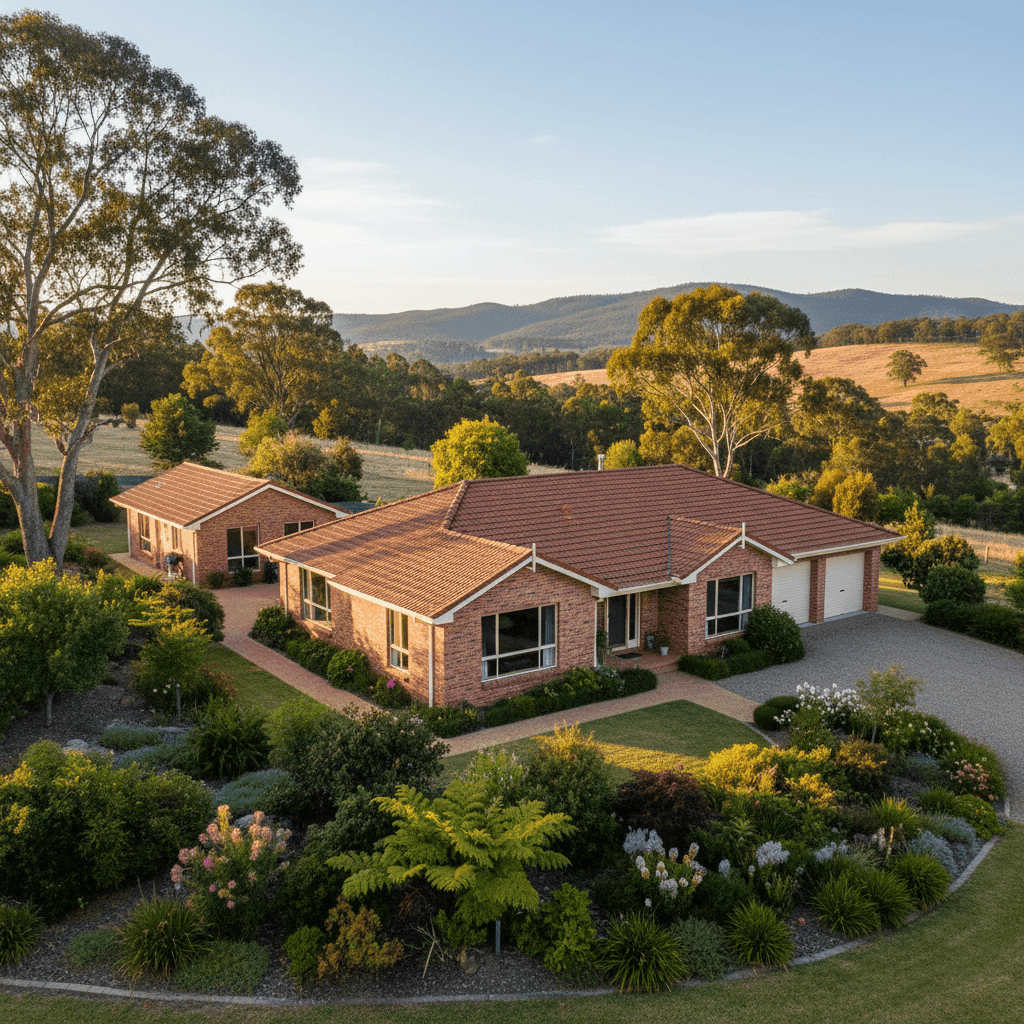
Nestled in the foothills of the Victorian Alps, Yackandandah is one of regional Victoria's most charming historic townships. For owners of a free standing home in this picturesque area, understanding what you should be paying for home and contents insurance is just as important as finding the right policy. This article breaks down a real insurance quote for a five-bedroom property in Yackandandah (VIC 3749) and puts the numbers into context — suburb, state, and nationally.
---
Is This Quote Fair?
The short answer: yes, and then some. This quote came in at $2,281 per year (or approximately $223 per month), which CoverClub rates as CHEAP — below average for the area.
To put that in perspective, the average premium across the 45 quotes sampled in Yackandandah sits at $3,252 per year, with a median of $3,065. This policy is priced well below both benchmarks — sitting beneath even the suburb's 25th percentile of $2,453. In plain terms, roughly 75% of comparable quotes in the suburb cost more than this one.
For a property with a building sum insured of $1,050,000 and $50,000 in contents cover, that's a meaningful saving. The building excess is set at $2,000 and the contents excess at $1,000 — both reasonable figures that help explain part of the pricing, though the premium remains competitive even accounting for those offsets.
---
How Yackandandah Compares
Understanding where Yackandandah sits relative to broader benchmarks helps frame just how well-priced this quote is.
| Benchmark | Average Premium | Median Premium |
|---|---|---|
| Yackandandah (3749) | $3,252/yr | $3,065/yr |
| LGA — Indigo | $3,278/yr | — |
| Victoria (VIC) | $3,000/yr | $2,718/yr |
| National | $5,347/yr | $2,764/yr |
You can explore the full breakdown on the Yackandandah suburb stats page, or compare it against all of Victoria and the national picture.
A few things stand out here. Yackandandah's average premium of $3,252 is slightly above the Victorian state average of $3,000, which makes sense given the region's bushfire exposure and the higher rebuild costs associated with properties in rural townships. The LGA of Indigo tells a similar story, with an average of $3,278 — closely aligned with the suburb figure.
The national average of $5,347 looks startling at first glance, but this is heavily influenced by high-premium states like Queensland and Western Australia, where cyclone and flood risk drive costs significantly higher. The national median of $2,764 is a more useful comparison point for Victorian homeowners, and even against that figure, this quote is still competitive.
---
Property Features That Affect Your Premium
Several characteristics of this property play a meaningful role in how insurers price the risk.
Brick veneer construction is generally viewed favourably by insurers. While it doesn't offer the same fire resistance as full double-brick, brick veneer performs well against impact and is considered a lower-risk wall type compared to timber weatherboard — which is common in older homes across regional Victoria.
Tiled roof is another positive. Tile roofs are durable, fire-resistant, and less susceptible to ember attack than corrugated iron in some configurations, making them a preferred material in bushfire-adjacent regions.
Built in 1978, the home sits in a generation of construction that insurers assess carefully. Properties from this era can carry legacy risks — older plumbing, wiring, and materials — but a well-maintained home of this age on a slab foundation is generally straightforward to underwrite.
Timber and laminate flooring adds to the contents and fixtures valuation, and with above average fittings quality, the $1,050,000 building sum insured is appropriate for a five-bedroom, three-bathroom home of this calibre. Underinsuring a home with premium finishes is a common and costly mistake.
The presence of a granny flat is worth noting. Separate structures on the property can affect both the total rebuild cost and the policy terms — it's worth confirming with your insurer that the granny flat is explicitly covered under the building sum insured.
Ducted climate control is another feature that adds to the rebuild value. These systems are expensive to replace and should be factored into your building sum insured calculation.
---
Tips for Homeowners in Yackandandah
1. Review your bushfire preparedness annually Yackandandah and the broader Indigo region sit in areas with elevated bushfire risk. While this property isn't in a designated cyclone zone, bushfire season brings real exposure. Maintaining a well-cleared perimeter, ember-proofing vents and eaves, and following local CFA guidelines can reduce both your risk and, in some cases, your premium.
2. Make sure your granny flat is covered Not all standard home insurance policies automatically extend to secondary dwellings. Check the product disclosure statement (PDS) carefully to confirm whether the granny flat — including its fixtures and any contents — is included. Some insurers treat it as a separate insurable interest.
3. Don't set-and-forget your sum insured Building costs in regional Victoria have risen sharply over the past few years. A sum insured that was accurate in 2021 may leave you significantly underinsured today. Use a building cost estimator or speak with a local builder to sense-check your $1,050,000 figure every year at renewal.
4. Compare quotes at renewal, not just at inception Insurance loyalty rarely pays. The fact that this quote came in well below the suburb average is a reminder that premiums vary significantly between providers for the same property. Even if you're happy with your current insurer, running a comparison at renewal takes minutes and can save hundreds of dollars.
---
Ready to Compare?
Whether you're a first-time buyer or a long-term Yackandandah resident, it pays to know what the market looks like before you commit to a policy. Get a home insurance quote at CoverClub and see how your property stacks up — in seconds, with no obligation.