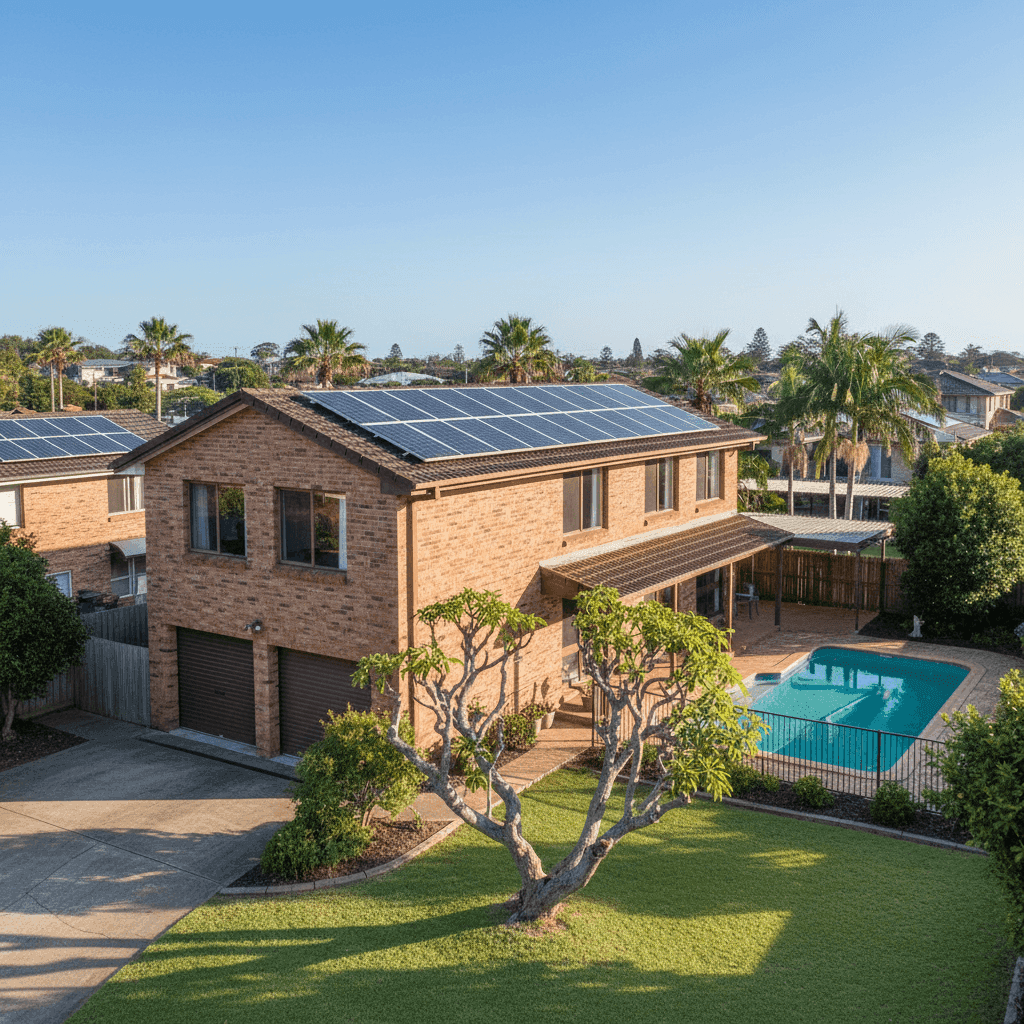
Yamba is one of coastal New South Wales' most sought-after towns — a relaxed seaside community at the mouth of the Clarence River, popular with retirees, families, and holiday homeowners alike. But living the coastal dream comes with its own insurance considerations. This article breaks down a real home and contents insurance quote for a three-bedroom, free-standing brick veneer home in Yamba (postcode 2464), helping you understand what's driving the premium and whether it stacks up against the broader market.
---
Is This Quote Fair?
The annual premium for this property came in at $6,710 per year (or approximately $643 per month), covering a building sum insured of $500,000 and contents valued at $40,000, each with a $1,000 excess.
Our pricing engine has rated this quote as FAIR — Around Average, and the data backs that up. Within the Yamba suburb, the median premium sits at $5,003 per year, while the 75th percentile reaches $8,904. At $6,710, this quote falls comfortably between those two markers — meaning roughly half of Yamba homeowners are paying less, but a significant portion are paying more.
In other words, this isn't a bargain, but it's not an outlier either. For a property of this size, age, and specification — including a pool, solar panels, and ducted climate control — landing in the middle of the local range is a reasonable result.
---
How Yamba Compares
To put this quote in proper context, it helps to zoom out and look at the broader picture. Here's how Yamba stacks up against state and national benchmarks:
| Benchmark | Average Premium | Median Premium |
|---|---|---|
| Yamba (2464) | $55,545/yr | $5,003/yr |
| NSW | $9,528/yr | $3,770/yr |
| National | $5,347/yr | $2,764/yr |
(Based on [Yamba suburb data](https://coverclub.com.au/stats/NSW/2464/yamba), [NSW state data](https://coverclub.com.au/stats/NSW), and [national data](https://coverclub.com.au/stats/national) from CoverClub.)
A few things stand out here. First, the Yamba suburb average of $55,545 is dramatically higher than the median of $5,003 — a classic sign that a small number of very high-value or high-risk properties are skewing the average upward. This is common in coastal towns where luxury homes and flood-exposed properties can attract eye-watering premiums. The median is a far more reliable benchmark for typical homeowners.
Compared to the NSW median of $3,770 and the national median of $2,764, Yamba's median of $5,003 confirms what many locals already suspect: insuring a home on the NSW far north coast costs more than the state and national norms. Coastal exposure, flood risk in parts of the Clarence Valley, and the higher cost of rebuilding in regional areas all contribute to this premium loading.
The Clarence Valley LGA average of $31,244 further illustrates the wide spread of premiums across the region — again, heavily influenced by high-risk outliers, but a reminder that location within the LGA matters enormously.
At $6,710, this quote sits above both the NSW and national medians, but that's not surprising given the property's features and coastal location. For NSW home insurance benchmarks, this result is broadly in line with expectations for a well-appointed coastal property.
---
Property Features That Affect Your Premium
Several characteristics of this property will have influenced the final premium — some pushing it higher, others potentially keeping it in check.
Brick Veneer Walls & Tiled Roof
Brick veneer construction with a tiled roof is generally viewed favourably by insurers. Both materials offer solid fire resistance and durability compared to lightweight alternatives like weatherboard or Colorbond. This combination can help moderate premiums relative to more vulnerable construction types.
Slab Foundation
A concrete slab foundation is standard for homes of this era and is generally considered low-risk by insurers. Unlike raised timber stumps, slabs offer less vulnerability to termite damage and some forms of water ingress underneath the structure.
Age of Construction (1986)
At around 40 years old, the property sits in a bracket that insurers watch carefully. Homes built in the 1980s may have ageing plumbing, electrical systems, or roofing that increases the likelihood of claims. Some insurers apply age-based loadings for properties in this range, particularly if no significant renovations have been disclosed.
Swimming Pool
Pools add both value and liability. From an insurance perspective, they increase the replacement cost of the property and introduce additional liability considerations. Expect a pool to contribute a modest but measurable loading to your premium.
Solar Panels
Solar panel systems — particularly inverters and the panels themselves — can be expensive to replace after storm damage or fire. Including them in your building sum insured is important, and insurers factor their presence into the overall risk profile.
Ducted Climate Control
Ducted air conditioning systems are a significant fixed asset. Like solar panels, they add to the cost of rebuilding or repairing the home and are reflected in the sum insured and, by extension, the premium.
Timber & Laminate Flooring
Timber and laminate floors are more susceptible to water damage than tiles, which can influence contents and building claims. This is worth keeping in mind when assessing your contents cover and excess levels.
---
Tips for Homeowners in Yamba
Whether you're reviewing an existing policy or shopping for the first time, here are four practical steps Yamba homeowners can take to get better value from their home insurance.
1. Review your sum insured annually. Building costs have risen sharply across regional NSW in recent years. A sum insured of $500,000 may be appropriate today, but it's worth checking against current construction cost estimates each year. Being underinsured at claim time can be financially devastating — but over-insuring unnecessarily inflates your premium.
2. Check your flood and storm cover carefully. Parts of the Clarence Valley — including some areas in and around Yamba — are subject to flooding. Make sure your policy explicitly covers flood (not just storm), and understand exactly what your insurer defines as each. These are not always the same thing, and the distinction matters enormously when a claim is lodged.
3. Bundle building and contents for potential savings. This quote already combines home and contents cover, which is a smart move. Many insurers offer multi-policy discounts when both are held together. If you currently have them with separate providers, it's worth comparing a combined quote.
4. Increase your excess to reduce your premium. Both the building and contents excesses on this policy are set at $1,000. Raising these — if you're comfortable covering a higher out-of-pocket cost in a claim — can meaningfully reduce your annual premium. Just make sure the saving justifies the additional financial exposure.
---
Ready to Compare?
Whether this quote feels right or you're wondering if you could do better, the smartest move is to compare. CoverClub makes it easy to benchmark your current premium against real market data from across Australia. Get a home insurance quote today and see how your property stacks up — you might be surprised what's out there.
Explore more Yamba insurance data or browse national home insurance benchmarks to see the full picture.