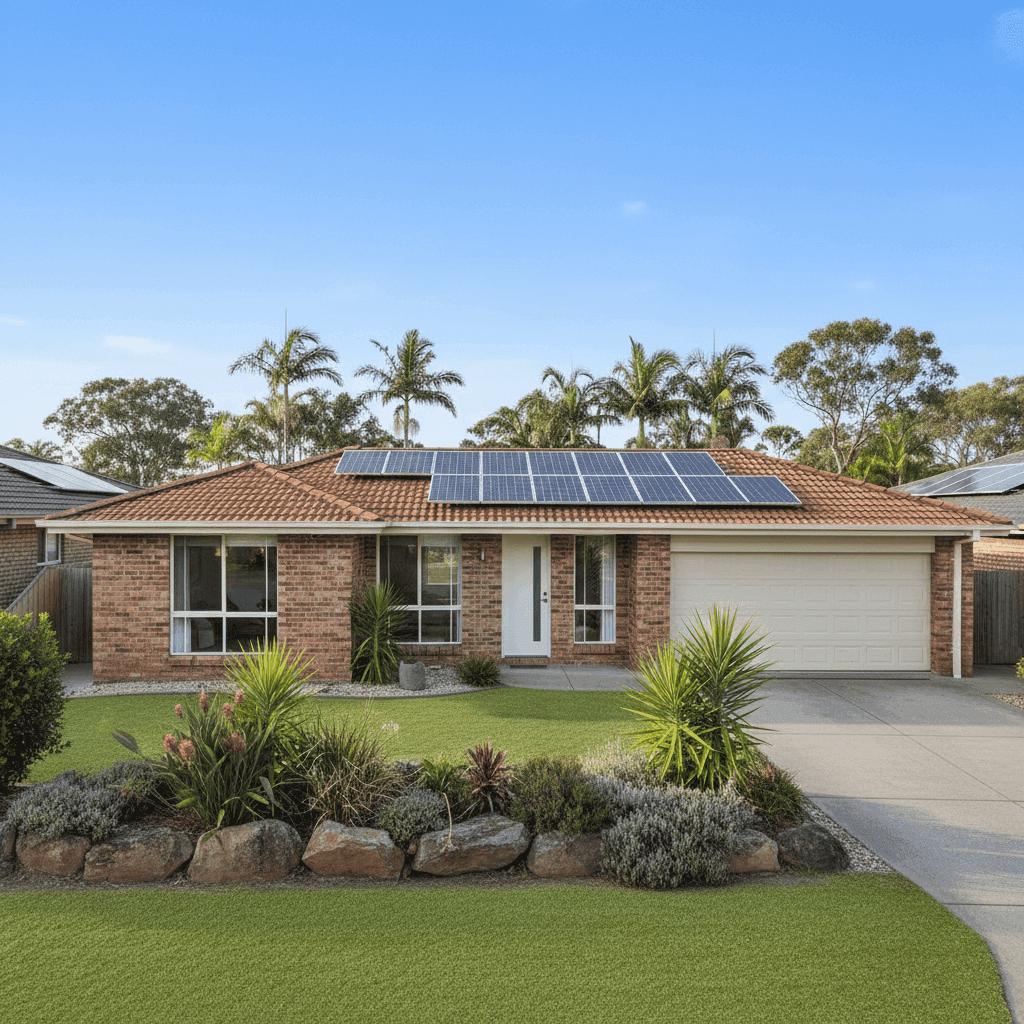
Yamba is one of New South Wales' most beloved coastal towns — a relaxed, sun-drenched community at the mouth of the Clarence River that continues to attract sea-changers and long-term locals alike. But living near the coast comes with its own set of insurance considerations, and if you own a free standing home here, understanding what you're paying — and why — is well worth your time.
This article breaks down a real home and contents insurance quote for a 3-bedroom, 1-bathroom free standing home in Yamba (postcode 2464), compares it against local, state, and national benchmarks, and offers practical guidance for homeowners looking to get better value from their cover.
---
Is This Quote Fair?
The annual premium for this property came in at $16,342 per year (or $1,566/month), covering both building (sum insured: $500,000) and contents ($10,000), each with a $1,000 excess.
Our pricing engine has rated this quote as Expensive — Above Average.
To put that in perspective: the median home insurance premium across Yamba sits at $5,003 per year, meaning this quote is more than three times the local midpoint. Even at the 75th percentile — where the more expensive quarter of Yamba quotes begin — premiums sit at $8,904/yr, still well below the $16,342 quoted here.
That said, it's important to acknowledge that the suburb average for Yamba is a notably high $55,545/yr, which tells us that while most properties in the area are insured at moderate premiums, a subset of homes attract extremely high quotes — likely due to flood zone classifications, elevated rebuild costs, or high-value properties. This quote, while expensive, sits well below that average, which is somewhat reassuring.
Still, if you're paying $16,342 annually, it's absolutely worth shopping around.
---
How Yamba Compares
Understanding where Yamba sits in the broader insurance landscape helps contextualise this quote. Here's a snapshot:
| Benchmark | Average Premium | Median Premium |
|---|---|---|
| Yamba (2464) | $55,545/yr | $5,003/yr |
| NSW | $9,528/yr | $3,770/yr |
| National | $5,347/yr | $2,764/yr |
| Clarence Valley LGA | $31,244/yr | — |
You can explore the full breakdown of Yamba insurance statistics, compare against NSW-wide data, or view national home insurance benchmarks to see how your own situation stacks up.
A few things stand out from this data:
- Yamba's suburb average ($55,545) is nearly six times the national average ($5,347), reflecting the outsized risk some properties in the postcode carry — particularly those in flood-prone areas near the Clarence River.
- The median, however, is more grounded at $5,003, suggesting the majority of Yamba homeowners are paying reasonable premiums, and the average is being pulled up by a small number of very high-risk or high-value properties.
- This quote of $16,342 sits above the NSW state average of $9,528 and significantly above the national median of $2,764 — reinforcing the "Expensive" rating.
The Clarence Valley LGA average of $31,244/yr is also notably elevated, which suggests flood and weather risk is a recurring theme across the broader region, not just isolated to specific streets.
---
Property Features That Affect Your Premium
Several characteristics of this property will be influencing the quoted premium — some pushing it up, others helping to keep it in check.
Brick Veneer Walls & Tiled Roof Brick veneer construction is generally viewed favourably by insurers. It's durable, fire-resistant, and holds up well in storms compared to lightweight cladding. Similarly, a tiled roof is considered a solid, long-lasting material. Together, these features typically result in more competitive premiums than, say, a weatherboard home with a corrugated iron roof.
Slab Foundation A concrete slab foundation is standard for homes of this era and is generally considered low-risk from a structural standpoint. It does, however, offer less protection against inundation in flood events — water can enter at ground level with no sub-floor buffer — which may be a factor insurers weigh for a coastal/river-adjacent suburb like Yamba.
Solar Panels This property has solar panels installed, which adds replacement value to the building sum insured. Solar systems can cost $5,000–$15,000+ to replace, and insurers factor this into their pricing. Ensuring your building sum insured adequately covers the solar installation is important — underinsurance is a common and costly mistake.
Ducted Climate Control Ducted air conditioning systems are another significant asset. These systems are expensive to repair or replace (often $10,000–$20,000), and their inclusion in the property can incrementally increase both the rebuild cost and the premium.
Building Size & Age At 130 sqm and built in 1999, this is a modest-sized home of relatively recent vintage. Homes built in the late 1990s generally comply with improved building codes compared to older stock, which can work in your favour at renewal time.
Contents Cover The contents sum insured of $10,000 is on the lower end. While it keeps the contents component of the premium modest, homeowners should periodically audit their belongings to ensure this figure genuinely reflects the value of what's inside — furniture, appliances, clothing, and electronics add up quickly.
---
Tips for Homeowners in Yamba
1. Request a flood zone assessment Given Yamba's proximity to the Clarence River and the dramatically elevated LGA average premiums, flood risk classification is likely playing a significant role in this quote. Ask your insurer exactly how your property is classified and whether a formal flood report (such as a FEMA-equivalent or council flood map check) could support a reclassification. Some homeowners have successfully had their flood rating reviewed with the right documentation.
2. Compare multiple insurers — not just at renewal Insurance pricing varies enormously between providers, especially in regional coastal areas. A premium that seems fixed is often simply the first number one insurer has offered. Use a comparison platform like CoverClub to run multiple quotes simultaneously and find the most competitive rate for your specific property.
3. Review your sum insured annually With solar panels and ducted climate control on this property, it's easy for the true rebuild cost to creep above or fall below the insured amount over time. Underinsurance leaves you exposed; overinsurance means you're paying for cover you don't need. Tools like the Cordell Sum Sure calculator can help you estimate an accurate rebuild figure.
4. Consider a higher excess to reduce your premium If you have the financial buffer to absorb a larger out-of-pocket cost in the event of a claim, increasing your excess from $1,000 to $2,500 or even $5,000 can meaningfully reduce your annual premium. This strategy works best for homeowners who are unlikely to make small claims and want to lower their ongoing costs.
---
Find a Better Deal with CoverClub
Whether you're reviewing your existing policy or shopping for the first time, comparing quotes is the single most effective way to ensure you're not overpaying. CoverClub makes it easy to see multiple home and contents insurance options side by side, tailored to your property's specific features and location.