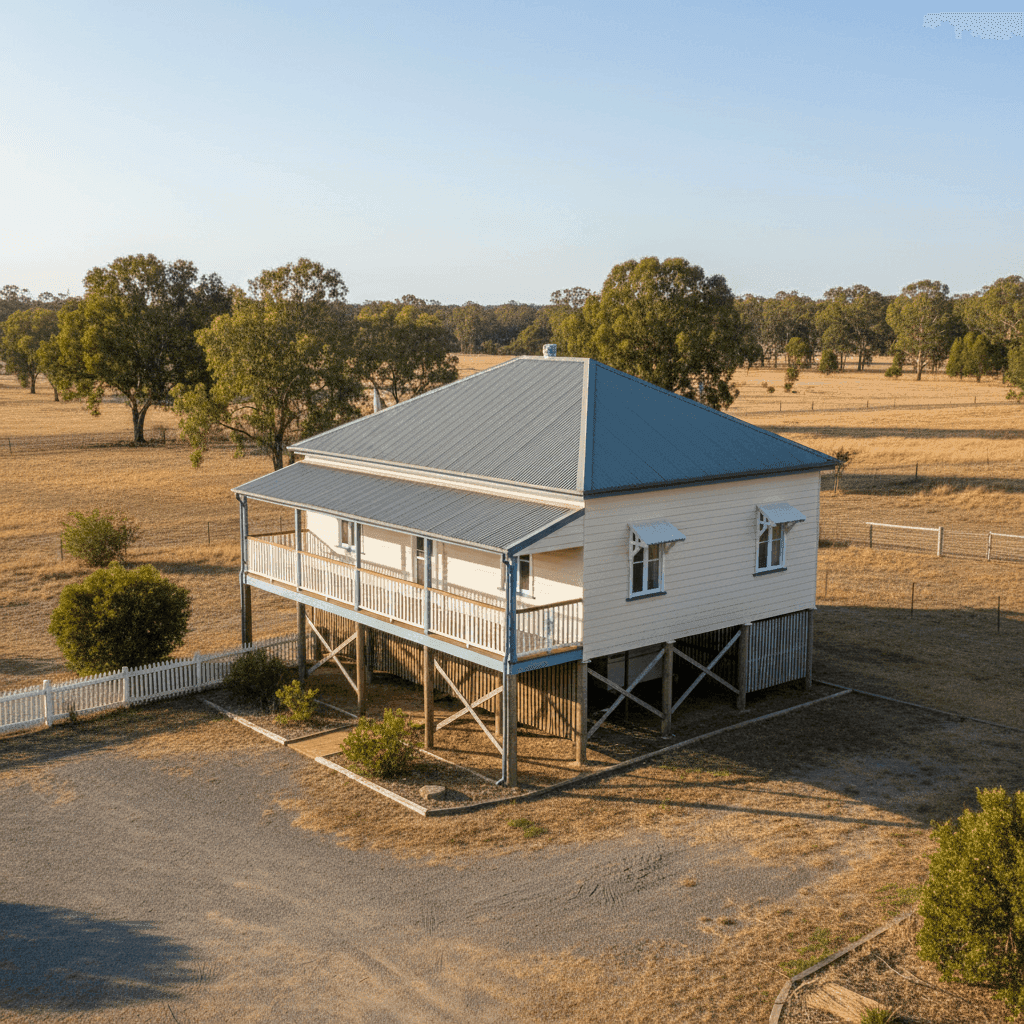
If you own a free standing home in Yelarbon, QLD 4388, you're probably well aware that home insurance isn't always straightforward to price. Rural Queensland properties come with their own set of risk factors, and premiums can vary dramatically from one street to the next. This article breaks down a real home and contents insurance quote for a three-bedroom weatherboard home in Yelarbon, benchmarks it against local, state and national data, and offers practical tips to help you get the best value cover.
---
Is This Quote Fair?
The quote in question comes in at $4,214 per year (or roughly $397 per month) for combined home and contents cover, with a building sum insured of $581,000 and contents valued at $30,000. Both the building and contents excess sit at $1,000.
Our price rating for this quote is FAIR — Around Average, which is a reasonable outcome for a property of this age and construction type. It's not the cheapest quote you'll find in the region, but it's also far from the most expensive — and given the characteristics of this home, that's actually a solid result.
To put it in context: the suburb median premium for Yelarbon sits at $8,606 per year, meaning this quote comes in well below the local median. That's a meaningful saving, and it suggests the policy is competitively priced relative to what many Yelarbon homeowners are paying.
---
How Yelarbon Compares
Understanding where your premium sits in the broader landscape is key to knowing whether you're getting a fair deal. Here's how Yelarbon stacks up:
| Benchmark | Premium |
|---|---|
| This Quote | $4,214/yr |
| Yelarbon Suburb Median | $8,606/yr |
| Yelarbon Suburb Average | $80,740/yr |
| Yelarbon 25th Percentile | $2,377/yr |
| Yelarbon 75th Percentile | $11,474/yr |
| QLD State Median | $3,903/yr |
| QLD State Average | $9,129/yr |
| National Median | $2,764/yr |
| National Average | $5,347/yr |
| Goondiwindi LGA Average | $6,634/yr |
A few things stand out here. First, the suburb average of $80,740 is extraordinarily high — a figure heavily skewed by a small sample size of just 11 quotes, where one or two very high-risk or high-value properties can distort the mean significantly. The median is a far more reliable guide, and at $8,606, it tells a clearer story.
This quote of $4,214 sits between the 25th and 75th percentile range for Yelarbon ($2,377–$11,474), landing comfortably in the middle of the pack. It's slightly above the QLD state median of $3,903 and above the national median of $2,764, which is expected for a rural Queensland property with older construction. It also comes in below the Goondiwindi LGA average of $6,634 — another positive signal.
Overall, for a home of this age and build in a rural Queensland postcode, a premium of $4,214 is a reasonable and competitive result.
---
Property Features That Affect Your Premium
Several characteristics of this particular home have a direct influence on the premium being quoted. Understanding these factors helps you make sense of your costs — and potentially identify areas where you might reduce them.
Age and Construction (1946, Weatherboard Wood)
This home was built in 1946, making it nearly 80 years old. Older homes are generally viewed as higher risk by insurers due to ageing electrical wiring, plumbing, and structural components that may not meet modern building standards. Weatherboard timber walls, while charming and common in rural Queensland, are also considered a higher fire risk compared to brick or rendered masonry, and can be more susceptible to moisture damage and pest ingress over time.
Roof Type (Steel / Colorbond)
On the positive side, a steel Colorbond roof is viewed favourably by insurers. It's durable, low-maintenance, and performs well in extreme weather. If the roof has been replaced or upgraded at any point, this can help offset some of the risk associated with the home's age.
Foundation (Stumps)
Homes on stumps — also known as raised or pier foundations — are common across Queensland and can be both a blessing and a concern for insurers. They allow airflow beneath the home (helpful in humid climates) and can reduce flood risk in some scenarios, but they may also introduce structural movement risk over time as stumps settle or deteriorate.
Flooring (Timber / Laminate)
Timber and laminate flooring are standard in homes of this era and don't significantly move the needle on premium in isolation, but they do factor into replacement cost calculations, which influences the building sum insured.
Ducted Climate Control
The presence of ducted climate control adds to the replacement value of the home's fixtures and fittings, which is appropriately reflected in the sum insured. It's worth ensuring your building sum insured accounts for the full cost of reinstating this system in the event of a total loss.
No Pool, No Solar
The absence of a swimming pool removes a common liability risk factor, and the lack of solar panels simplifies the replacement cost calculation. Both of these can contribute to a more straightforward — and potentially lower — premium.
---
Tips for Homeowners in Yelarbon
Whether you're reviewing your current policy or shopping for new cover, here are four practical steps worth taking:
- Don't rely on the suburb average — use the median. With only 11 quotes in the Yelarbon sample, the average of $80,740 is heavily distorted. Focus on the median ($8,606) as your benchmark, and note that this quote already sits well below it.
- Review your building sum insured carefully. At $581,000 for a 130 sqm weatherboard home, it's worth double-checking this figure against a professional building replacement cost estimate. Being underinsured is a common and costly mistake — but so is over-insuring, which unnecessarily inflates your premium.
- Ask about discounts for security and maintenance upgrades. Some insurers offer reduced premiums for homes with monitored alarm systems, deadbolts, or recently updated electrical and plumbing. Given the age of this property, documenting any recent upgrades could work in your favour at renewal time.
- Compare quotes annually. The insurance market shifts, and loyalty doesn't always pay. Using a comparison tool like CoverClub at renewal time takes just a few minutes and can surface meaningfully cheaper options without sacrificing cover quality.
---
Ready to Compare?
Whether you're a first-time buyer or a long-time Yelarbon local, it pays to know what the market looks like. At CoverClub, we make it easy to compare home and contents insurance quotes side by side, so you can make a confident, informed decision. Get your quote today and see how your current premium stacks up — you might be surprised at what's available.
You can also explore detailed premium data for your area on our Yelarbon suburb stats page, or browse broader Queensland insurance benchmarks to understand the full picture.