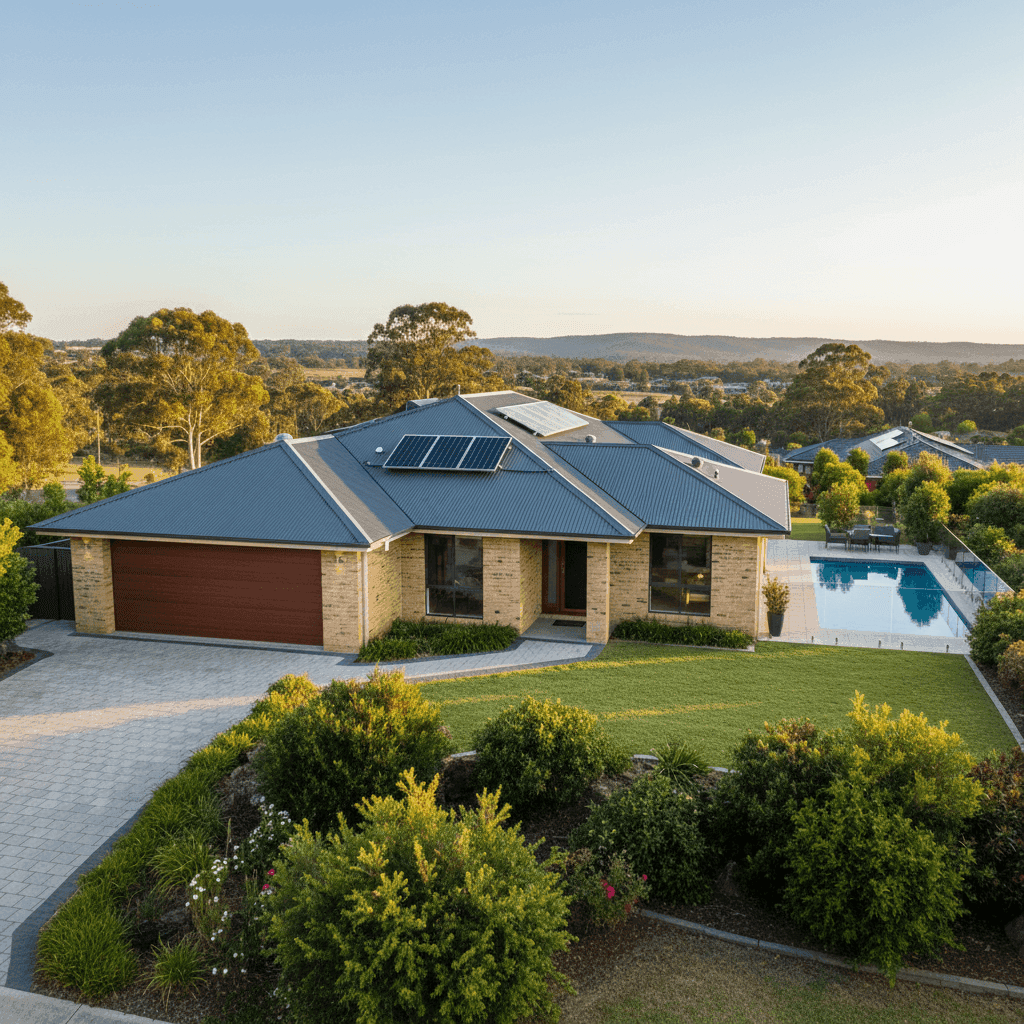
If you own a free standing home in Yellow Rock Ridge, NSW 2527, you're likely no stranger to the balancing act of protecting a significant asset while keeping household costs under control. Home and contents insurance is one of those non-negotiable expenses — but that doesn't mean you should pay more than you need to. In this article, we break down a real insurance quote for a four-bedroom, two-bathroom home in Yellow Rock Ridge, compare it against local and national benchmarks, and offer practical tips to help you get better value.
---
Is This Quote Fair?
The quote in question comes in at $3,788 per year (or $363/month) for combined home and contents cover, with a $550,000 building sum insured and $50,000 contents value. Both the building and contents excess are set at $1,000.
Our price rating for this quote is Expensive (Above Average).
To put that in context: the suburb average for Yellow Rock Ridge sits at $2,488/yr, with a median of $2,172/yr. That means this quote is running roughly 52% above the suburb average and 74% above the local median — a meaningful gap worth investigating.
That said, "expensive" is relative. The quote does sit within the suburb's 75th percentile threshold of $3,190/yr — though it exceeds even that upper benchmark. For a brand-new, well-appointed home with above-average fittings, a pool, solar panels, and ducted climate control, some premium loading is to be expected. The question is whether that loading is proportionate.
---
How Yellow Rock Ridge Compares
Understanding your premium in isolation only tells part of the story. Here's how this quote stacks up across different geographic benchmarks:
| Benchmark | Annual Premium |
|---|---|
| This Quote | $3,788 |
| Yellow Rock Ridge suburb average | $2,488 |
| Yellow Rock Ridge suburb median | $2,172 |
| Kiama LGA average | $3,332 |
| NSW state median | $3,770 |
| NSW state average | $9,528 |
| National median | $2,764 |
| National average | $5,347 |
A few things stand out here. First, the NSW state average of $9,528 is dramatically higher than the state median of $3,770 — a clear sign that a small number of very high-value or high-risk properties are pulling the average upward significantly. This quote, at $3,788, is almost exactly in line with the NSW state median, which is actually a reasonably reassuring position to be in.
Compared to the national median of $2,764, this quote is around 37% higher — but nationally, property values, risk profiles, and construction costs vary enormously, so direct comparisons require some nuance.
Within the Kiama LGA, the average premium is $3,332/yr, meaning this quote is about $456 above the LGA average. Given the property's premium features and high building sum insured, that gap is understandable — but it still warrants shopping around.
> Note: The suburb sample size for Yellow Rock Ridge is 7 quotes, so local averages should be treated as indicative rather than definitive. More data points would sharpen these comparisons over time.
---
Property Features That Affect Your Premium
Several characteristics of this property have a direct bearing on what insurers charge. Here's how each one plays into the pricing:
Brand-New Construction (2024)
Newly built homes typically attract more favourable rates from some insurers due to compliance with modern building codes, reduced likelihood of structural issues, and better fire and safety standards. However, a high replacement cost — reflected in the $550,000 building sum insured — can offset those savings.
Brick Veneer Walls & Colorbond Roof
Brick veneer is widely regarded as a solid, fire-resistant construction method, and insurers generally view it positively. A steel Colorbond roof is similarly durable and low-maintenance, offering good resistance to weather events. This combination is common across coastal NSW and tends to be viewed neutrally to favourably by underwriters.
Slab Foundation
Concrete slab foundations are standard for modern builds and present minimal additional risk from an insurance perspective. They're less susceptible to subsidence and pest damage compared to older raised timber foundations.
Swimming Pool
A pool adds both value and liability to a property. Insurers factor in the cost of pool fencing compliance, potential public liability exposure, and the replacement cost of pool infrastructure. Expect this to contribute a modest but real loading to your premium.
Solar Panels
Solar systems represent a significant capital asset — often $10,000–$20,000 or more — and their inclusion in a building sum insured can push premiums upward. It's worth confirming with your insurer exactly how solar panels are covered: whether they fall under the building policy, and whether damage from storms or hail is explicitly included.
Ducted Climate Control
Ducted air conditioning systems are expensive to repair or replace, and their presence in a home contributes to a higher effective replacement cost. This is consistent with the "above average fittings quality" noted for this property.
Above-Average Fittings
Stone benchtops, quality appliances, premium flooring, and high-end fixtures all increase the cost to rebuild or replace — and insurers price accordingly. For a 2024 build with above-average fittings, the $550,000 building sum insured may well be appropriate.
---
Tips for Homeowners in Yellow Rock Ridge
1. Shop Around — Seriously
With only 7 quotes in the local dataset, the range of premiums available in Yellow Rock Ridge is likely broader than the numbers suggest. Using a comparison platform like CoverClub to run multiple quotes simultaneously is the most efficient way to identify whether a better rate exists for your specific property profile.
2. Review Your Contents Sum Insured
A $50,000 contents value is on the lower end for a four-bedroom home with above-average fittings. While underinsuring reduces your premium, it can leave you seriously out of pocket after a major loss. Do a room-by-room inventory to make sure your contents cover reflects reality — especially for electronics, furniture, and valuables.
3. Consider Increasing Your Excess
Both the building and contents excess are set at $1,000. Opting for a higher voluntary excess — say, $2,000 or $2,500 — can reduce your annual premium meaningfully. This strategy works best if you have an emergency fund to cover the higher out-of-pocket cost in the event of a claim.
4. Confirm Solar Panel and Pool Coverage
Ask your insurer directly: are your solar panels covered under the building policy for storm, hail, and accidental damage? Is your pool equipment (pump, filter, heating) included in the building sum insured? Gaps in coverage for these high-value items are surprisingly common and can be costly to discover at claim time.
---
Compare Your Home Insurance Today
Whether you're reviewing an existing policy or shopping for cover on a new property, comparing quotes is the single most effective way to ensure you're not overpaying. CoverClub makes it easy to benchmark your premium against real data from your suburb and across Australia.