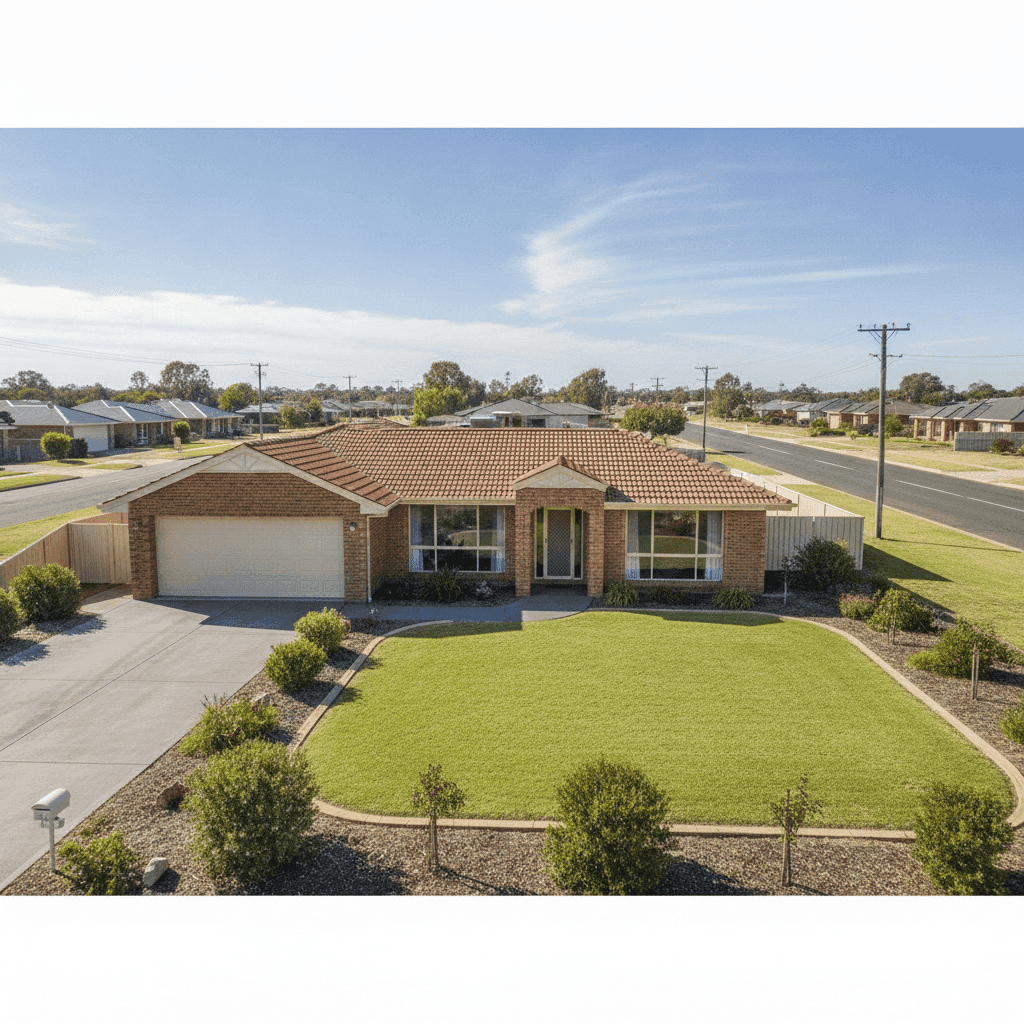
If you own a home in Yenda, NSW 2681, you've probably wondered whether you're paying a fair price for home insurance — or whether there's a better deal out there. This article breaks down a real home and contents insurance quote for a four-bedroom, free-standing brick veneer home in Yenda, comparing it against suburb, state, and national benchmarks so you can make a more informed decision.
---
Is This Quote Fair?
The short answer: yes, and then some. This quote came in at $2,582 per year (or roughly $233 per month), covering both building and contents — with a $600,000 building sum insured and $202,000 in contents cover. Our price rating for this quote is CHEAP, meaning it sits well below the average for the area.
To put that in perspective, the suburb average premium in Yenda is $6,314 per year, and the median sits at $6,182. That means this quote is less than half of what many Yenda homeowners are currently paying. Even at the 25th percentile — the cheapest quarter of quotes in the suburb — premiums average $5,629 per year. This quote comfortably undercuts that figure by a significant margin.
For homeowners with a building excess and contents excess of $1,000 each, this represents genuinely strong value, particularly given the level of cover provided.
---
How Yenda Compares
Understanding where Yenda sits in the broader insurance landscape helps put this quote into proper context. Here's how the numbers stack up:
| Benchmark | Annual Premium |
|---|---|
| This Quote | $2,582 |
| Yenda Suburb Average | $6,314 |
| Yenda Suburb Median | $6,182 |
| Carrathool LGA Average | $4,109 |
| NSW State Average | $9,528 |
| NSW State Median | $3,770 |
| National Average | $5,347 |
| National Median | $2,764 |
A few things stand out here. First, the NSW state average of $9,528 is extraordinarily high compared to the state median of $3,770 — a sign that a small number of very expensive policies (likely in high-risk coastal or flood-prone areas) are pulling the average upward. The median is almost always a more reliable indicator of what most homeowners actually pay.
Yenda's suburb average of $6,314 is notably higher than the Carrathool LGA average of $4,109, which suggests some variation within the local government area. It's worth noting that the suburb sample size here is 10 quotes, so these figures should be treated as indicative rather than definitive.
Compared to the national median of $2,764, this quote at $2,582 is slightly below — a solid outcome for a four-bedroom home with a substantial sum insured.
For more localised data, you can explore Yenda's suburb insurance statistics, NSW state-wide insurance data, or the national home insurance overview.
---
Property Features That Affect Your Premium
Several characteristics of this property likely contribute to its competitive premium. Let's walk through the key factors:
Brick Veneer Construction
Brick veneer external walls are generally well-regarded by insurers. While not as robust as full double-brick, brick veneer offers good fire resistance and structural durability, which tends to attract more favourable underwriting treatment compared to timber or weatherboard homes.
Tiled Roof
A tiled roof is one of the more insurer-friendly roofing materials available. Tiles are durable, fire-resistant, and have a long lifespan when maintained properly. Compared to corrugated iron or Colorbond, tiles typically don't attract a premium loading — and in some cases, may result in modest savings.
Slab Foundation
A concrete slab foundation is standard for homes of this era and construction type. It's generally considered low-risk by insurers, with fewer concerns around subsidence or pest damage compared to suspended timber floors.
Construction Year (1983)
Homes built in the early 1980s sit in an interesting middle ground. They're old enough that some components — plumbing, electrical wiring, and roofing — may be approaching the end of their serviceable life, which can increase claim risk. However, they were built to standards that are generally considered solid, and many insurers price them reasonably when the property is well-maintained.
Ducted Climate Control
The presence of ducted climate control adds some value to the building sum insured calculation and may marginally influence the premium, but it's unlikely to be a significant driver in this case.
No Pool or Solar Panels
The absence of a swimming pool removes a common source of liability claims, and no solar panels means there's no added complexity around electrical systems or roof penetrations. Both of these factors can contribute to a cleaner risk profile.
Building Size (130 sqm)
At 130 square metres, this is a modest footprint for a four-bedroom home. A smaller floor area generally means lower rebuild costs, which can support a more competitive premium — even when the sum insured is set conservatively higher to account for construction cost inflation.
---
Tips for Homeowners in Yenda
Whether you're reviewing your current policy or shopping for the first time, here are four practical steps to make the most of your home insurance in Yenda:
- Review your sum insured annually. Building costs in regional NSW have risen sharply in recent years. Make sure your $600,000 building sum insured still reflects the actual cost to rebuild — not just the market value of the property. Underinsurance is one of the most common and costly mistakes homeowners make.
- Check what's included in your contents cover. $202,000 in contents cover is a reasonable starting point, but it's easy to underestimate the replacement value of everything inside your home. Do a room-by-room inventory every year or two, and don't forget items like whitegoods, tools, clothing, and electronics.
- Consider your excess carefully. Both the building and contents excess on this policy are set at $1,000. A higher excess typically lowers your premium, but make sure you could comfortably cover that amount out of pocket if you needed to make a claim. Conversely, if your current excess feels too high, it may be worth paying a slightly higher premium for peace of mind.
- Compare quotes at renewal time. Even if you're happy with your insurer, the home insurance market is competitive — and loyalty doesn't always pay. Running a fresh comparison before your renewal date takes only a few minutes and could reveal meaningful savings.
---
Ready to Find a Better Deal?
Whether this quote reflects your own situation or you're simply curious about what you could be paying, the best way to find out is to compare. At CoverClub, we make it easy to see how home and contents insurance quotes stack up for your specific property and location. Get a personalised quote today and see whether you could be paying less — or getting more cover for the same price.