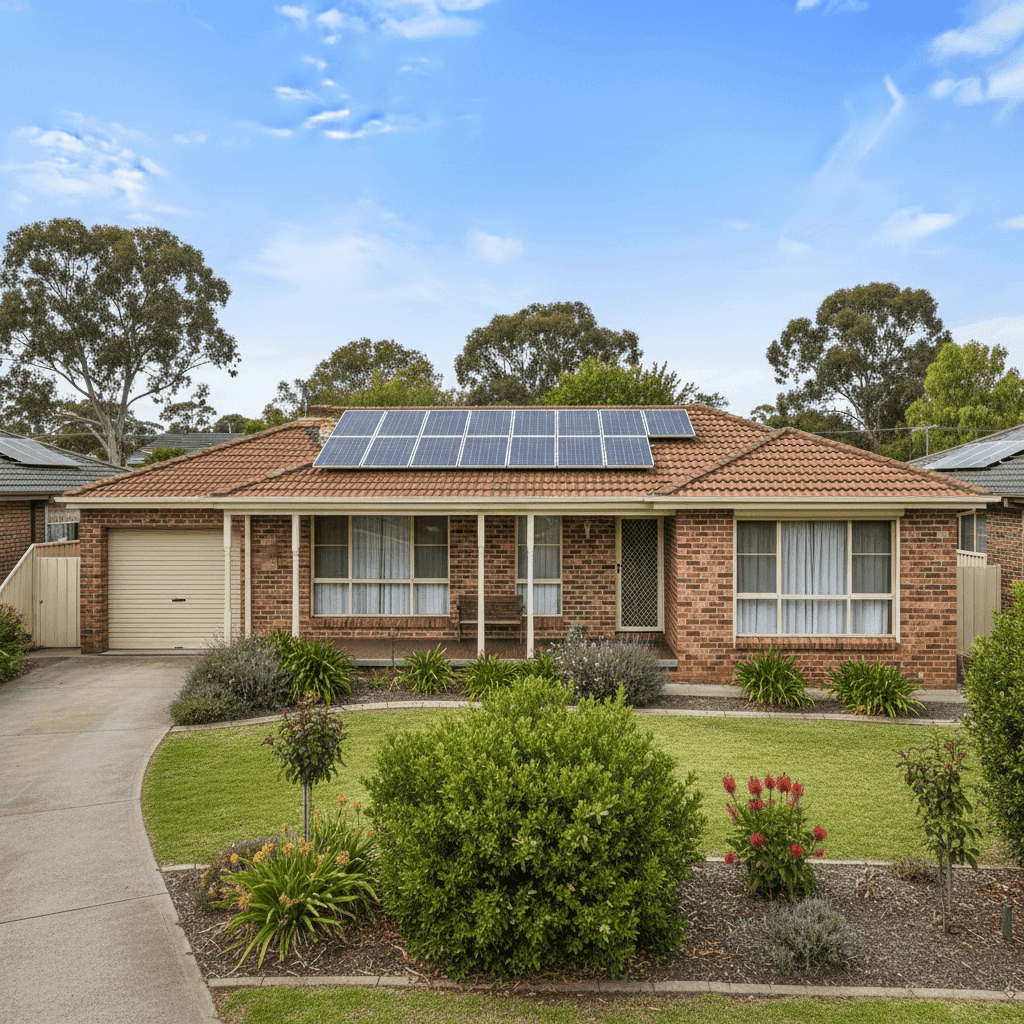
If you own a free standing home in Yenda, NSW 2681, you might be wondering whether your home insurance premium is competitive — or whether you're leaving money on the table. This article breaks down a real home and contents insurance quote for a three-bedroom brick veneer property in Yenda, comparing it against local, state, and national benchmarks so you can make a more informed decision at renewal time.
---
Is This Quote Fair?
The short answer? Yes — and then some. This quote came in at $1,557 per year (or roughly $152 per month), covering both building (insured at $450,000) and contents (insured at $50,000). Our pricing engine rates this as CHEAP, meaning it sits well below the average for the area.
To put that in perspective, the suburb average for Yenda is $6,314 per year, and the median sits at $6,182 per year. Even the cheapest quarter of quotes in the suburb (the 25th percentile) comes in at $5,629 per year — still more than three and a half times this quote. That's a significant difference, and it's worth understanding why.
A few factors likely contribute to this favourable pricing: the property's brick veneer construction and tiled roof are among the most insurer-friendly combinations in Australia, offering strong fire resistance and durability. The slab foundation is also viewed positively by underwriters. Additionally, the relatively modest building size of 130 sqm and standard fittings quality help keep the replacement cost estimate reasonable, even at a $450,000 sum insured.
The excess on both building and contents is set at $5,000, which is on the higher end. This is a common trade-off — accepting a higher excess in exchange for a lower premium. It's worth making sure you're comfortable covering that amount out of pocket in the event of a claim.
---
How Yenda Compares
Understanding where Yenda sits in the broader insurance landscape helps put this quote in context. Here's a snapshot:
| Benchmark | Average Premium | Median Premium |
|---|---|---|
| Yenda (NSW 2681) | $6,314/yr | $6,182/yr |
| Carrathool LGA | $4,109/yr | — |
| New South Wales | $9,528/yr | $3,770/yr |
| National | $5,347/yr | $2,764/yr |
A few things stand out here. First, the NSW state average of $9,528 is extraordinarily high compared to the median of $3,770 — a classic sign that a relatively small number of very expensive quotes (likely in high-risk coastal or flood-prone areas) are pulling the average up significantly. This is worth keeping in mind when you see state-level figures quoted in the media.
Yenda's suburb average of $6,314 is notably above both the NSW median and the national median, suggesting the area carries some elevated risk factors in insurers' models — potentially related to its inland location and exposure to agricultural weather events. However, this quote sits far below all of those benchmarks.
You can explore more localised data on the Yenda suburb stats page, compare it against the NSW state overview, or see where it stacks up on the national insurance stats page.
---
Property Features That Affect Your Premium
Every property is unique, and insurers weigh up a range of characteristics when calculating your premium. Here's how the features of this particular home play into the pricing:
Brick Veneer Walls Brick veneer is one of the most common and insurer-preferred external wall types in Australia. It offers solid fire resistance and is relatively inexpensive to repair or rebuild compared to weatherboard or rendered finishes. This works in the homeowner's favour at premium time.
Tiled Roof Like brick veneer, a tiled roof signals durability and weather resistance to insurers. Tiles are less susceptible to fire damage than Colorbond in some scenarios, though they can be more expensive to replace if damaged by hail. Overall, it's a neutral-to-positive factor.
Slab Foundation Slab foundations are standard across much of regional NSW and are generally viewed favourably by underwriters. They're less susceptible to subsidence and pest-related damage compared to raised timber stumps.
Solar Panels This property has solar panels, which can be a double-edged sword in insurance terms. Some policies cover solar panels as part of the building sum insured, while others treat them as an optional extra. It's essential to confirm with your insurer that your panels — including inverters and mounting hardware — are explicitly covered under your policy.
Ducted Climate Control Ducted air conditioning systems are a fixed building feature and should be included in your building sum insured. At $450,000, there's a reasonable buffer here, but it's worth double-checking that your sum insured reflects the full cost of rebuilding, including this system.
No Pool The absence of a swimming pool removes a common source of liability claims and keeps the premium profile cleaner. Pools can add meaningful cost to a policy, particularly when liability cover for third-party injury is factored in.
Construction Year: 1985 A home built in 1985 is around 40 years old — old enough that some components (plumbing, electrical wiring, roofing) may be approaching the end of their serviceable life. Insurers are increasingly scrutinising older homes, so it's worth ensuring your property is well maintained and that any ageing systems have been updated.
---
Tips for Homeowners in Yenda
1. Review your sum insured annually Building costs have risen sharply across regional NSW in recent years. A $450,000 sum insured may have been appropriate when the policy was first taken out, but it's worth getting an independent building cost estimate to make sure it still reflects the true cost of rebuilding your home from scratch — not just its market value.
2. Clarify solar panel coverage With solar panels on the roof, don't assume they're automatically included in your building cover. Ask your insurer specifically whether the panels, inverter, and associated wiring are covered, and under what circumstances (e.g., storm damage, accidental breakage, power surge).
3. Understand your $5,000 excess A $5,000 excess is a meaningful financial commitment in the event of a claim. Make sure you have that amount readily accessible, and consider whether a slightly higher premium with a lower excess might be a better fit for your financial situation — particularly for contents claims, where the total claim value may not be dramatically higher than the excess itself.
4. Compare at renewal, not just at sign-up The insurance market in regional NSW is competitive, and premiums can shift significantly from year to year. Don't let your policy roll over automatically without checking whether a better deal is available. Even with a quote this competitive, it's good practice to compare options annually.
---
Find a Better Deal with CoverClub
Whether you're a first-time buyer or a long-term Yenda homeowner, comparing home insurance quotes is one of the simplest ways to save money without sacrificing cover. CoverClub makes it easy to see what multiple insurers would charge for your specific property — in minutes, not hours. Get a quote today and find out whether your current premium is as competitive as this one.