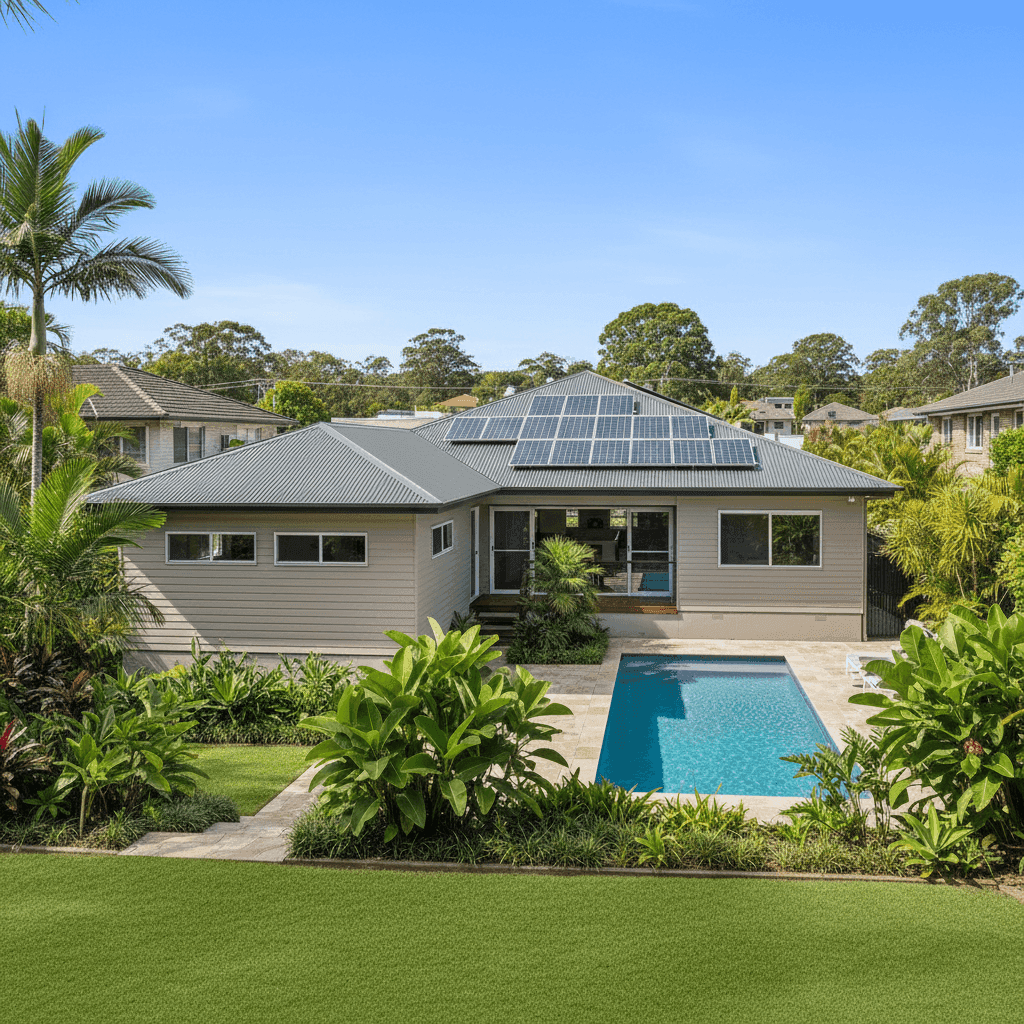
Yeronga is a well-established inner-south Brisbane suburb sitting just 6 kilometres from the CBD, bordered by the Brisbane River on three sides. It's a sought-after pocket of Queensland that blends character homes with newer builds — and like much of South East Queensland, home insurance here can be a significant household expense. This article breaks down a real home and contents insurance quote for a three-bedroom, two-bathroom free-standing home in Yeronga, examining whether the price stacks up and what's driving the cost.
---
Is This Quote Fair?
The quote in question comes in at $15,563 per year (or $1,485/month) for combined home and contents cover, with a building sum insured of $800,000 and contents valued at $50,000. The building excess is $5,000 and the contents excess is $2,000.
Our price rating for this quote is FAIR — Around Average.
That assessment holds up when you look at the numbers in context. The Yeronga suburb average sits at a striking $54,620 per year, though the median — a more reliable measure given the small sample size of 27 quotes — is $20,154 per year. At $15,563, this quote lands below the suburb median and comfortably within the interquartile range (25th percentile: $9,505 / 75th percentile: $27,048). In other words, it's neither a bargain nor a red flag — it's a reasonable market price for this type of property in this location.
That said, "around average" in Yeronga still means paying considerably more than most Queenslanders and Australians. It's worth understanding why.
---
How Yeronga Compares
The pricing gap between Yeronga and broader benchmarks is stark:
| Benchmark | Average Premium | Median Premium |
|---|---|---|
| Yeronga (QLD 4104) | $54,620/yr | $20,154/yr |
| Brisbane LGA | $16,277/yr | — |
| Queensland | $9,129/yr | $3,903/yr |
| National | $5,347/yr | $2,764/yr |
Even setting aside the suburb average (which is skewed by high-value outliers in a small dataset), the Yeronga median of $20,154 is more than five times the national median of $2,764. The Queensland state average of $9,129 is itself nearly double the national average of $5,347 — a reflection of the elevated natural hazard risk across much of the state.
Yeronga's position along the Brisbane River is a key driver. The suburb experienced significant inundation during the 2011 and 2022 Brisbane floods, and insurers price this risk into premiums across the postcode — even for properties on higher ground. Flood risk, storm surge exposure, and severe weather events all contribute to Queensland's elevated baseline, and Yeronga sits firmly in that risk category.
For this particular quote, the $15,563 annual figure sits below the Brisbane LGA average of $16,277, which suggests the property's specific characteristics and cover settings are working in the homeowner's favour relative to peers in the area.
---
Property Features That Affect Your Premium
Several characteristics of this property have a meaningful influence on the insurance cost:
Weatherboard timber walls are generally considered a higher fire risk than brick or rendered masonry, and can also be more susceptible to storm and water damage. Insurers typically price timber-clad homes at a slight premium compared to brick equivalents.
Steel/Colorbond roofing is actually viewed favourably by most insurers. It's durable, resistant to ember attack, and performs well in high-wind events — all positives that can moderate your premium compared to older tile or corrugated iron alternatives.
Slab foundation is standard for a 2014 build and is generally neutral from an underwriting perspective, though it does mean the property has no sub-floor cavity — relevant in flood-prone areas where elevated stumped homes can sometimes fare better in minor inundation events.
Timber and laminate flooring can be more costly to replace than carpet after a water damage event, which may factor into both the building sum insured and the assessed risk.
Swimming pool adds replacement value to the property and can introduce liability considerations — both of which nudge the premium upward.
Solar panels are an increasingly common feature in Queensland, and while they add value to the property, they also represent an additional insurable asset. It's important to confirm with your insurer that panels are explicitly covered under your building policy, particularly for storm and hail damage.
Ducted climate control is another high-value fixed installation that contributes to the overall building replacement cost, supporting the $800,000 sum insured figure.
The $800,000 building sum insured is worth scrutinising. This figure should reflect the full cost of rebuilding the home from scratch — including demolition, materials, labour, and compliance with current building codes — not the market value of the property. For a 153 sqm home built in 2014 with standard fittings, this sum insured is on the higher end, which will be contributing to the premium. It may be worth obtaining a professional building replacement cost assessment to ensure you're neither underinsured nor over-insured.
---
Tips for Homeowners in Yeronga
1. Get a professional rebuild cost assessment The single biggest lever on your building premium is your sum insured. An independent quantity surveyor or building replacement cost assessment can confirm whether $800,000 is appropriate for your home — potentially saving you hundreds per year if it can be adjusted downward without leaving you underinsured.
2. Review your excess settings This quote carries a $5,000 building excess and $2,000 contents excess — both relatively high. Higher excesses reduce your premium, which can make sense if you're financially comfortable absorbing smaller claims. However, make sure you could genuinely cover those amounts out of pocket in the event of a claim, particularly given Yeronga's flood history.
3. Ask specifically about flood cover Not all home insurance policies include flood cover by default, and definitions vary between insurers. Given Yeronga's documented flood exposure, it's essential to confirm exactly what your policy covers — distinguishing between riverine flooding, storm surge, and rainwater runoff. Don't assume it's included; ask for it in writing.
4. Compare at renewal time — every year Insurance premiums can shift significantly year on year, and loyalty rarely pays. Using a comparison service like CoverClub at each renewal ensures you're not paying more than necessary for equivalent cover. Even a "fair" quote today might look expensive in 12 months if your circumstances or the market changes.
---
Ready to Compare?
Whether you're reviewing an existing policy or shopping for cover for the first time, CoverClub makes it easy to see how your quote stacks up. Enter your address at CoverClub to get a personalised comparison and access suburb-level pricing data for Yeronga and the surrounding area. A few minutes of comparison could save you thousands.