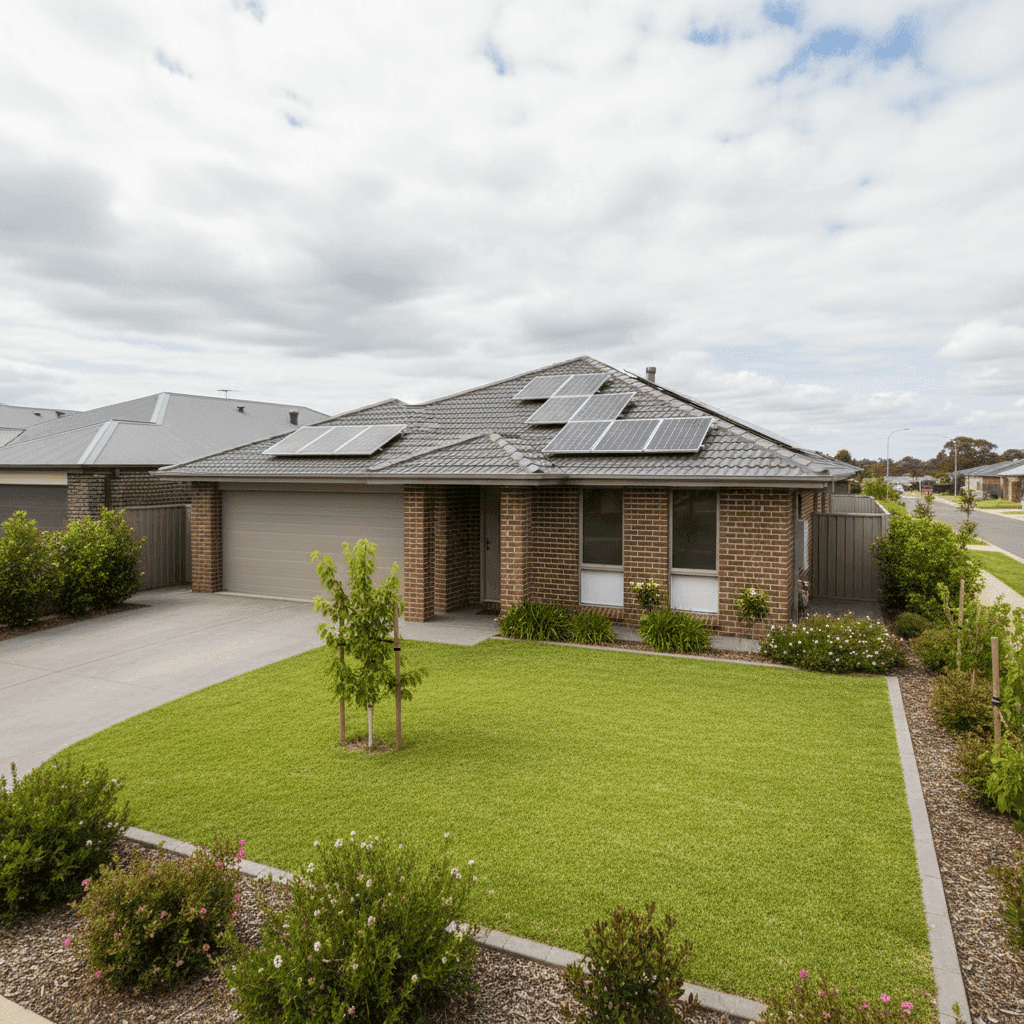
If you own a free standing home in Yinnar, VIC 3869, you're likely aware that insurance costs can vary enormously depending on your property's characteristics and the insurer you choose. This article breaks down a real home and contents insurance quote for a four-bedroom, two-bathroom brick veneer home in Yinnar — and puts that figure in context against local, state, and national benchmarks — so you can judge whether you're getting a fair deal.
---
Is This Quote Fair?
The quote in question comes in at $1,516 per year (or roughly $156 per month), covering both building and contents. The building is insured for $672,000 with a $3,000 excess, while contents are valued at $147,000 with a $1,000 excess.
Our price rating for this quote? Cheap — below average. That's a strong result.
To put it plainly: this premium sits well below what most Yinnar homeowners are paying. Based on 24 quotes collected for the Yinnar area, the suburb average is $2,821/yr and the median sits at $2,502/yr. Even the cheapest quarter of quotes (the 25th percentile) averages $2,091/yr — still nearly $600 more than this quote. At $1,516, this homeowner is paying roughly 46% less than the suburb average, which is a genuinely impressive outcome.
---
How Yinnar Compares
Zooming out beyond the suburb, the value of this quote becomes even clearer.
| Benchmark | Annual Premium |
|---|---|
| This Quote | $1,516 |
| Yinnar Suburb Average | $2,821 |
| Yinnar Suburb Median | $2,502 |
| VIC State Average | $3,000 |
| VIC State Median | $2,718 |
| Latrobe LGA Average | $3,607 |
| National Average | $5,347 |
| National Median | $2,764 |
The Victorian state average sits at $3,000/yr, meaning this quote is roughly half the statewide norm. The Latrobe LGA average is even higher at $3,607/yr, which reflects the broader risk profile of the region — including bushfire exposure in parts of Gippsland.
On a national level, the picture is striking: the national average of $5,347/yr is more than three times this quote. That national figure is heavily influenced by high-risk areas in Queensland and Western Australia (cyclone and flood zones), but it illustrates just how competitive this premium is in relative terms.
For Yinnar homeowners, this is a useful reminder that shopping around can yield dramatically different results — even within the same postcode.
---
Property Features That Affect Your Premium
Several characteristics of this particular property work in its favour from an underwriting perspective:
Brick Veneer Walls & Tiled Roof Brick veneer is one of the more favoured wall constructions in Australian home insurance. It offers solid fire resistance and structural durability compared to timber weatherboard or fibre cement cladding. Combined with a tiled roof — which is similarly well-regarded for its longevity and fire resistance — this home presents a lower risk profile than many alternatives.
Concrete Slab Foundation A slab-on-ground foundation is standard for homes built in this era and is generally viewed favourably by insurers. It reduces the risk of subsidence and pest-related structural damage compared to older raised timber subfloors.
Built in 2013 Relatively modern construction means the home was built to contemporary building codes, including improved standards for energy efficiency, structural integrity, and bushfire risk mitigation (AS 3959). Newer homes tend to attract lower premiums than older dwellings with ageing electrical systems or plumbing.
Solar Panels The presence of solar panels on the roof is worth noting. While they add value to the property, they also add a small element of risk — panels can be damaged by hail or high winds, and some insurers treat them as a separate consideration. It's worth confirming with your insurer that your solar system is covered under your building policy and understanding any sub-limits that may apply.
Ducted Climate Control Ducted heating and cooling systems are a standard inclusion in building cover, but it's worth ensuring your sum insured accounts for the replacement cost of these systems, which can run into the tens of thousands of dollars for a home of this size.
No Pool, Standard Fittings The absence of a pool simplifies the risk profile, and standard-quality fittings mean the contents and building valuations are straightforward to assess without luxury item complications.
---
Tips for Homeowners in Yinnar
1. Review your sum insured annually Building costs in regional Victoria have risen significantly in recent years. A sum insured of $672,000 for a 214 sqm home built to standard specifications seems reasonable, but it's worth running a rebuild cost estimate each year — especially as labour and material costs fluctuate. Being underinsured at claim time can be a costly mistake.
2. Confirm solar panel coverage As noted above, solar panels aren't always automatically covered under standard building policies. Check whether your insurer includes them, and whether there's a limit on the value covered. Some policies require you to list them separately or pay an additional premium.
3. Understand your bushfire risk Yinnar sits in the Latrobe Valley, and while it's not a high-cyclone area, parts of Gippsland carry meaningful bushfire exposure. Check your property's Bushfire Attack Level (BAL) rating — this can affect both your premium and the specific conditions of your cover. Keeping vegetation cleared around the home and maintaining ember guards can also support your claim position in the event of a fire.
4. Don't set and forget The fact that this quote is well below the suburb average is great — but insurance markets shift. Premiums can change significantly at renewal, particularly if there have been local weather events or if your insurer updates its risk models. Make a habit of comparing quotes at renewal time rather than simply auto-renewing.
---
Compare Your Own Quote
Whether you're a first-time buyer in Yinnar or a long-term homeowner wondering if you're overpaying, it pays to compare. CoverClub makes it easy to see how your current premium stacks up against real quotes from across the suburb, state, and country. Get a home insurance quote today and find out if you're getting the deal you deserve.