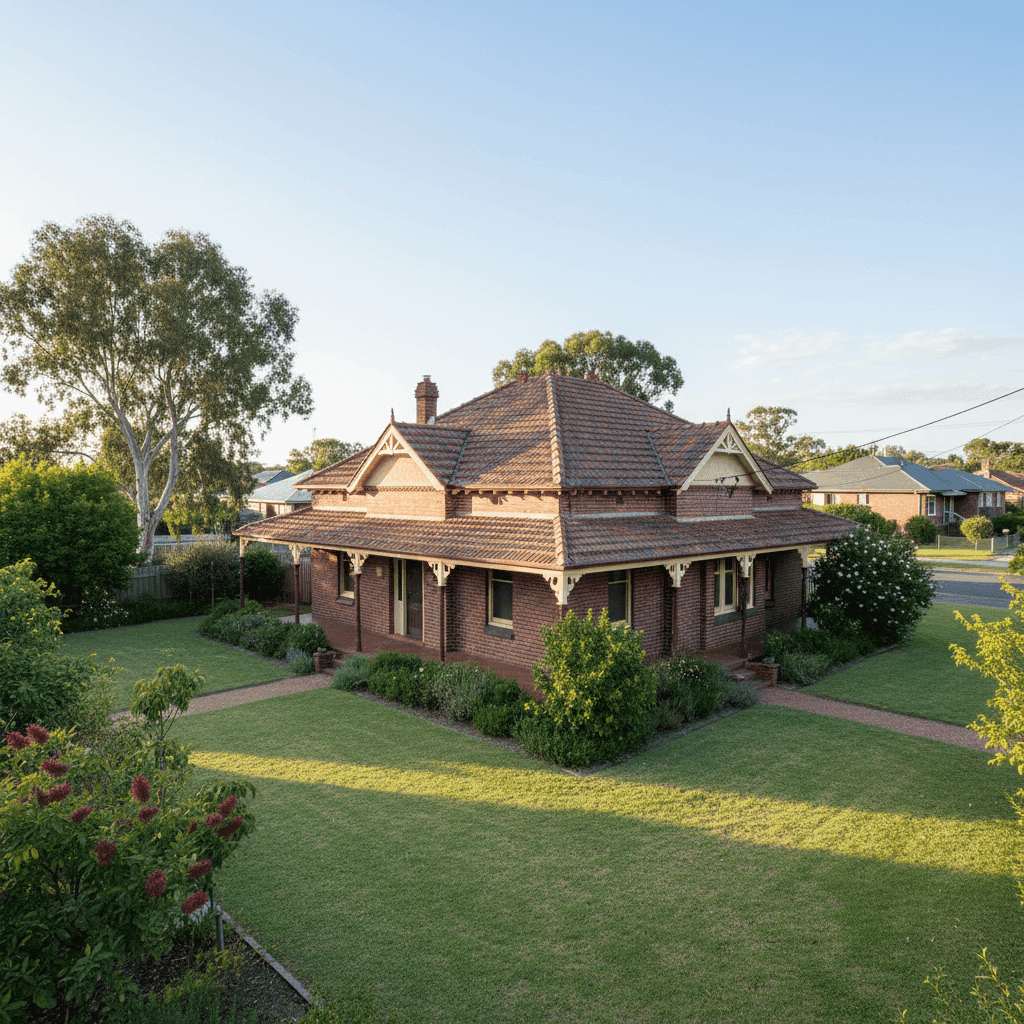
If you own a free standing home in Young, NSW 2594, you're likely no stranger to the charm — and the quirks — of living in one of the Central West's most beloved country towns. Known for its cherry blossoms and rich agricultural heritage, Young is a relatively affordable place to live. But when it comes to home insurance, the numbers don't always tell a simple story. This article breaks down a recent home and contents insurance quote for a four-bedroom, double brick property in Young, helping you understand what's driving the cost and whether there's room to do better.
---
Is This Quote Fair?
The quote in question comes in at $4,602 per year (or $441/month) for combined home and contents cover, with a $2,000 excess on both building and contents. The building is insured for $1,197,000 and contents for $155,000.
Our analysis rates this quote as Expensive — above average for the area.
To put that in perspective, the suburb average for Young (2594) sits at just $2,364 per year, with a median of $2,246. This quote is nearly double the local median, which is a significant gap worth investigating.
That said, context matters. A few factors can legitimately push a premium higher than the suburb average — and for this particular property, several of those factors are at play (more on that below). But even accounting for those, a premium this far above the local benchmark is a signal that it's worth shopping around.
---
How Young Compares to the Rest of Australia
One of the most useful things you can do when assessing any insurance quote is to zoom out and look at the broader picture.
| Benchmark | Average Premium | Median Premium |
|---|---|---|
| Young (2594) | $2,364/yr | $2,246/yr |
| NSW | $9,528/yr | $3,770/yr |
| National | $5,347/yr | $2,764/yr |
| Weddin LGA | $18,505/yr | — |
A few things stand out here. First, Young's suburb average of $2,364 is well below both the NSW and national medians, suggesting that home insurance in this part of the Central West is generally quite accessible. The NSW state average is heavily skewed by high-risk coastal and flood-prone areas, which inflates that $9,528 figure considerably — the median of $3,770 is a more realistic benchmark for most NSW homeowners.
Interestingly, the Weddin LGA average of $18,505 is extraordinarily high compared to the suburb-level data. This is likely driven by a small number of very high-value rural properties or farm policies within the LGA, which can distort the average significantly. It's a good reminder that LGA-level data isn't always the most relevant comparison for a residential home in town.
At the national level, the median of $2,764 is close to Young's local median, which reinforces that Young is a reasonably priced market — making this particular quote stand out even more.
---
Property Features That Affect Your Premium
This isn't a cookie-cutter property, and the insurer's pricing reflects that. Here's what's likely influencing the premium:
Age of Construction (1926) Built nearly a century ago, this home falls into a category that many insurers treat with extra caution. Older homes can have ageing plumbing, outdated electrical wiring, and structural elements that are costly to repair or replace to modern standards. Insurers often apply age-related loadings to properties built before the 1960s.
Large Building Size (325 sqm) At 325 square metres, this is a substantial home. The sum insured of $1,197,000 reflects the genuine cost of rebuilding a large, quality home — and a higher sum insured naturally means a higher premium. It's worth ensuring this figure is accurate; over-insuring is costly, but under-insuring can leave you seriously exposed.
Double Brick Construction Double brick is generally viewed favourably by insurers — it's durable, fire-resistant, and built to last. However, it can also be more expensive to repair than timber-framed homes, particularly in regional areas where specialist tradespeople may need to travel.
Stump Foundation Homes on stumps (also known as pier foundations) are common in older Australian properties. While they offer excellent ventilation and can be easier to access for maintenance, they can also be more susceptible to movement, pest damage, and certain types of flood or storm impact. Some insurers apply a loading for this foundation type.
Timber and Laminate Flooring Timber floors are a premium feature in many homes, but they're also more expensive to replace or repair than concrete or carpet. This can contribute to a higher contents or building valuation.
Ducted Climate Control The presence of ducted climate control adds to the overall replacement value of the home's fixtures and fittings, and is factored into the building sum insured.
---
Tips for Homeowners in Young
1. Compare multiple quotes — especially for older homes Insurers assess older properties very differently from one another. Some specialise in heritage or character homes and may offer more competitive rates; others apply blanket age loadings. Using a comparison platform like CoverClub means you can see a range of options side by side rather than accepting the first quote you receive.
2. Review your sum insured carefully At $1,197,000, the building sum insured is the single biggest driver of this premium. It's worth getting an independent building replacement cost estimate to confirm this figure is appropriate for your property. A quantity surveyor or online calculator can help — just make sure you're not leaving yourself underinsured in the process.
3. Consider a higher excess to reduce your premium The current excess is set at $2,000 for both building and contents. If you're comfortable self-insuring for smaller claims, increasing your excess — say, to $3,000 or $5,000 — can meaningfully reduce your annual premium. Just make sure the savings justify the additional out-of-pocket risk.
4. Ask about loyalty discounts and bundling If your home and contents are insured with the same provider, you may already be receiving a bundling discount. But if you've been with the same insurer for several years without shopping around, there's a good chance newer customers are getting a better deal. Loyalty doesn't always pay in insurance — it's worth checking.
---
Ready to Compare?
Whether you're renewing your policy or buying cover for the first time, it pays to know what the market looks like. Young is generally an affordable area for home insurance, and there's a real chance you could find a more competitive premium than the one analysed here. Head to CoverClub to compare home and contents quotes for your property in Young — it only takes a few minutes, and the savings could be significant.
For more suburb-level data and benchmarks, visit the Young NSW 2594 insurance stats page.