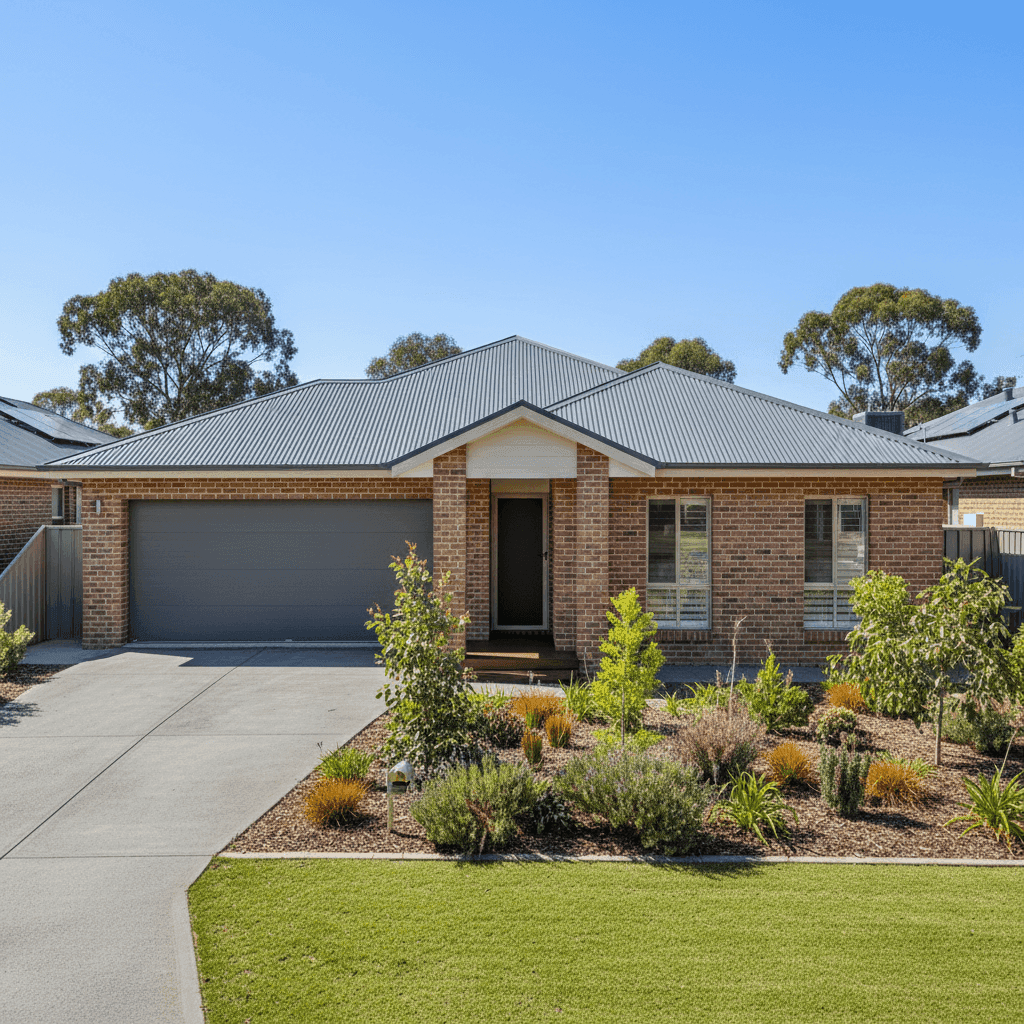
If you own a free standing home in Young, NSW 2594, you're probably curious about what a fair home insurance premium looks like in your area. Young is a charming regional town in the Central West of New South Wales — best known for its cherry orchards and relaxed lifestyle — but that doesn't mean home insurance is something you can afford to overlook. This article breaks down a real building insurance quote for a 3-bedroom, 2-bathroom home in Young, and puts it into context against local, state, and national benchmarks.
---
Is This Quote Fair?
The quote in question comes in at $2,420 per year (or $232/month) for building-only cover, with a $1,000 building excess and a sum insured of $704,000. Our price rating for this quote is FAIR — Around Average.
That rating holds up when you dig into the numbers. The suburb average premium for Young (2594) sits at $2,364/yr, and the median is $2,246/yr, meaning this quote is only modestly above the typical price paid by homeowners in the same postcode. It falls comfortably within the interquartile range — between the 25th percentile of $1,760/yr and the 75th percentile of $2,730/yr — which confirms it's neither a bargain nor an outlier.
In plain terms: this is a competitive quote that reflects what most Young homeowners are paying. There may be room to trim costs, but there's no immediate cause for alarm.
---
How Young Compares to the Rest of Australia
One of the more reassuring aspects of insuring a home in Young is just how affordable it is relative to the broader market. Here's how the numbers stack up:
| Benchmark | Average Premium | Median Premium |
|---|---|---|
| Young (2594) | $2,364/yr | $2,246/yr |
| NSW (State) | $9,528/yr | $3,770/yr |
| National | $5,347/yr | $2,764/yr |
| Weddin LGA | $18,505/yr | — |
The NSW state average of $9,528/yr is dramatically higher than what Young homeowners typically pay — though it's worth noting that NSW averages are heavily skewed by high-risk coastal and flood-prone areas, as well as premium properties in Sydney. The state median of $3,770/yr is a more realistic comparison point, and Young still comes in well below it.
Nationally, the average premium of $5,347/yr reflects similar distortions from cyclone-prone regions in Queensland and the Northern Territory. The national median of $2,764/yr is closer to Young's experience, and this quote sits just below that figure.
Perhaps the most striking figure is the Weddin LGA average of $18,505/yr. This is an unusually high number and is likely influenced by a small sample of properties with very high sums insured or elevated risk profiles within the local government area. It's a good reminder that LGA-level averages can be misleading — postcode-level data, like what you'll find on our Young NSW 2594 stats page, gives you a much more accurate picture.
For broader context, you can also explore NSW state insurance statistics or the national home insurance benchmarks.
---
Property Features That Affect Your Premium
Every home is different, and insurers price risk based on a range of property characteristics. Here's how the features of this particular home influence its premium:
Brick Veneer Walls Brick veneer is one of the most common and insurer-friendly wall materials in Australia. It offers solid fire resistance and durability, which generally works in your favour at premium time. It's not as robust as full double-brick, but it's a significant step up from lightweight cladding or weatherboard in terms of perceived risk.
Steel/Colorbond Roof Colorbond roofing is widely regarded as a low-maintenance, long-lasting option that performs well in Australian conditions. It's resistant to fire, pests, and corrosion — all factors that insurers appreciate. Compared to terracotta or concrete tiles, Colorbond roofs are less prone to cracking and storm damage, which can contribute to a more competitive premium.
Slab Foundation A concrete slab foundation is stable, low-maintenance, and carries minimal subsidence risk in most soil conditions. It's a neutral-to-positive factor for insurers.
Timber/Laminate Flooring Timber and laminate floors can be a consideration in water damage claims, as they're more susceptible to warping than tiles. However, this is generally a minor factor in overall premium pricing.
Above-Average Fittings Quality The above-average quality of fittings in this home — think stone benchtops, quality tapware, and premium appliances — is reflected in the higher sum insured of $704,000 for a 139 sqm home. Better fittings cost more to replace, and insurers price accordingly.
Ducted Climate Control Ducted air conditioning systems are a meaningful asset that adds to the rebuild cost of a home. Its inclusion here is appropriate and contributes to the sum insured calculation.
No Pool, No Solar Panels The absence of a pool and solar panels simplifies the risk profile and keeps the premium from creeping up. Both features, while common in regional NSW, can add complexity and cost to a policy.
Construction Year: 2015 A home built in 2015 is relatively modern, meaning it was constructed under more recent building codes with better standards for energy efficiency, structural integrity, and fire safety. Newer homes typically attract more competitive premiums than older stock.
---
Tips for Homeowners in Young
1. Review Your Sum Insured Annually Building costs in regional NSW have risen significantly over the past few years. Make sure your $704,000 sum insured still reflects the true cost of rebuilding your home — not just its market value. Underinsurance is one of the most common and costly mistakes homeowners make.
2. Consider a Higher Excess to Lower Your Premium If you're comfortable covering minor repairs yourself, increasing your excess from $1,000 to $2,000 or more can meaningfully reduce your annual premium. Just ensure you have that amount readily accessible if you ever need to make a claim.
3. Bundle Where It Makes Sense — But Compare First Some insurers offer discounts when you bundle building and contents cover. However, bundling isn't always cheaper. Use a comparison tool to check whether a combined policy or separate policies work out better for your situation.
4. Don't Assume Loyalty Pays Off Insurers don't always reward long-term customers with the best rates. If you've been with the same provider for several years without shopping around, there's a good chance you're paying more than you need to. Comparing quotes annually is one of the simplest ways to keep costs in check.
---
Compare Home Insurance Quotes in Young Today
Whether you're a first-time buyer or a long-time homeowner in Young, it pays to know what the market looks like. CoverClub makes it easy to compare building and contents insurance quotes from multiple insurers in minutes. Get a quote now and see how your current premium stacks up — you might be surprised at what's available.