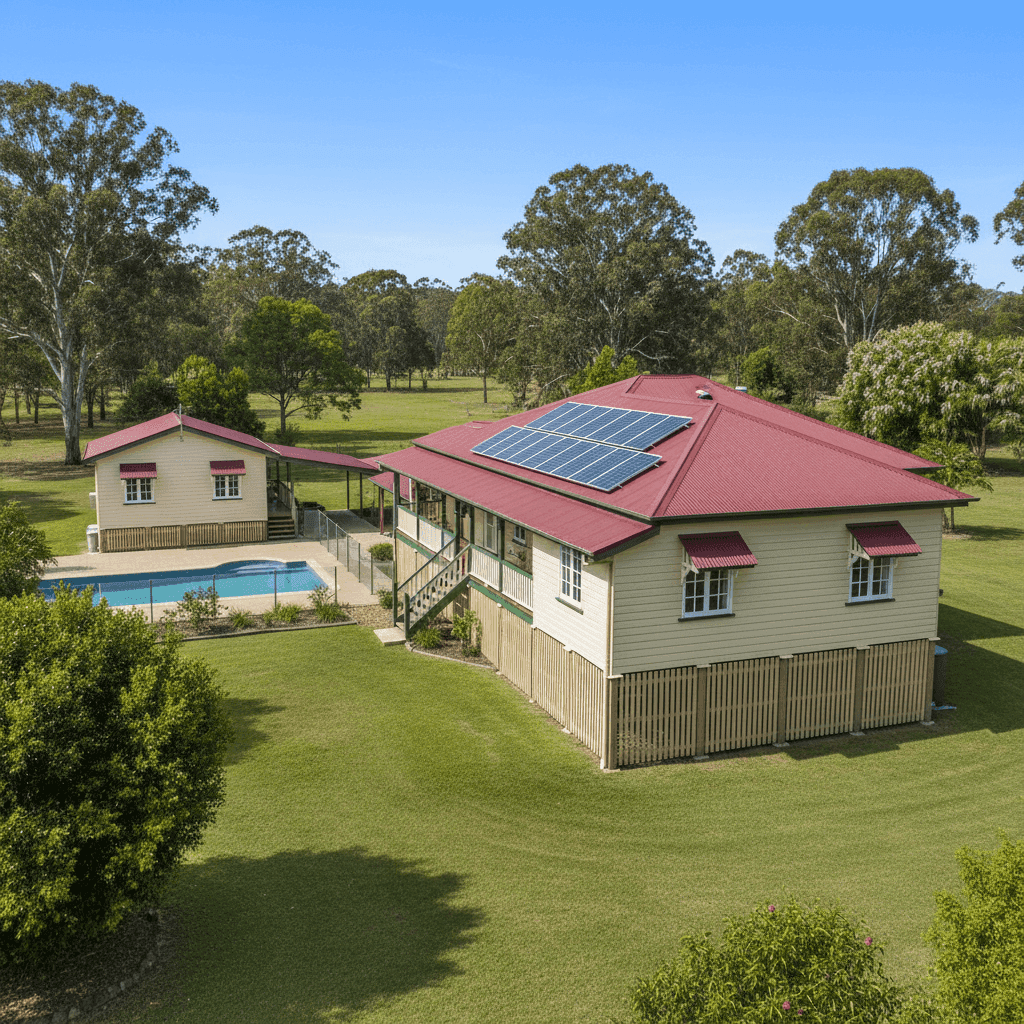
Yugar is a quiet, semi-rural suburb nestled in the hills north of Brisbane, known for its leafy character, large blocks, and older-style homes. If you own a free standing home here — particularly one with heritage charm, generous living space, and a handful of modern additions — you've likely noticed that home insurance isn't cheap. This article breaks down a real home and contents insurance quote for a 5-bedroom property in Yugar (postcode 4520), examines whether the price stacks up, and offers practical guidance for homeowners looking to get better value.
---
Is This Quote Fair?
The quote in question sits at $4,563 per year (or $430/month) for combined home and contents cover, with a building sum insured of $1,102,000 and contents valued at $93,000. Both the building and contents excess are set at $1,000.
Our pricing analysis rates this quote as Expensive — Above Average.
To put that in context: the suburb average for Yugar sits at just $2,489 per year, with a median of $2,481. This quote comes in at roughly 83% above the local suburb average — a significant gap that warrants a closer look.
That said, "expensive" doesn't necessarily mean "wrong." This property has a number of features that legitimately push premiums higher, which we'll unpack below. The key question for any homeowner is whether the cover is appropriate for the risk — and whether the price is competitive given those specific circumstances.
---
How Yugar Compares
Understanding where your premium sits relative to broader benchmarks is essential when evaluating any quote.
| Benchmark | Premium |
|---|---|
| This Quote | $4,563/yr |
| Yugar Suburb Average | $2,489/yr |
| Yugar Suburb Median | $2,481/yr |
| Yugar 25th Percentile | $1,812/yr |
| Yugar 75th Percentile | $2,879/yr |
| QLD State Average | $9,129/yr |
| QLD State Median | $3,903/yr |
| National Average | $5,347/yr |
| National Median | $2,764/yr |
| Brisbane LGA Average | $16,277/yr |
A few things stand out here. First, the Queensland state average of $9,129 is heavily skewed by high-risk coastal and cyclone-prone areas in Far North Queensland — so the median of $3,903 is a more useful yardstick for a suburb like Yugar. This quote sits just above that QLD median.
When measured against national figures, the $4,563 annual premium is below the national average of $5,347, though above the national median of $2,764. The Brisbane LGA average of $16,277 is strikingly high, but this is again pulled upward by high-value and high-risk properties across the broader metro area.
So while this quote is above average for Yugar specifically, it's not out of step with what similar properties across Queensland and the country are paying — particularly given the property's characteristics.
> Note: The Yugar sample size used in this comparison is 8 quotes, which is a relatively small dataset. Results may shift as more local data becomes available.
---
Property Features That Affect Your Premium
Several features of this property directly influence the cost of cover. Here's how each one plays a role:
Age and Construction (Built 1902)
This is one of the most significant premium drivers. A home built in 1902 is over 120 years old, and weatherboard timber construction — while characterful — is more susceptible to fire, rot, and pest damage than modern materials. Insurers price in the higher cost and complexity of repairing or rebuilding heritage-era homes to a comparable standard.
Weatherboard Walls and Timber Flooring
Weatherboard external walls and timber/laminate flooring are common in older Queensland homes, but they carry elevated fire risk compared to brick or fibre cement. Insurers factor this into their risk models, which typically results in higher premiums.
Stump Foundation and Elevated Design
The home sits on stumps and is elevated by less than 1 metre — a classic Queenslander-style build. While this elevation can actually help with flood resilience, stump foundations require ongoing maintenance and can be costly to repair or replace. Insurers account for this structural characteristic in their assessment.
High Building Sum Insured ($1,102,000)
The building is insured for just over $1.1 million, which reflects both the size of the home (277 sqm) and the cost of rebuilding an older, character-filled property. Reconstruction costs for homes of this era are substantially higher than for modern builds due to the specialised materials and labour involved.
Pool, Solar Panels, and Ducted Climate Control
Each of these additions increases the replacement value of the property and introduces additional liability or repair risk. A pool, in particular, adds public liability exposure. Solar panels on a steel/Colorbond roof can complicate roof repairs. Ducted climate control systems are expensive to replace if damaged.
Granny Flat
The presence of a granny flat adds to the overall insurable value of the property and may introduce additional considerations around liability and contents if the space is tenanted.
Colorbond Roof
Steel/Colorbond roofing is actually a positive from an insurer's perspective — it's durable, fire-resistant, and performs well in storms. This may partially offset some of the premium pressure from other features.
No Cyclone Risk
Yugar is not classified as a cyclone risk area, which is a meaningful saving compared to properties in North Queensland. This keeps the premium considerably lower than it might otherwise be.
---
Tips for Homeowners in Yugar
1. Review Your Building Sum Insured Carefully
A sum insured of $1,102,000 is substantial. Make sure it reflects the actual cost to rebuild — not the market value of the land and home combined. Overinsuring can mean you're paying more than necessary, while underinsuring can leave you exposed. Use a qualified quantity surveyor or your insurer's rebuild cost calculator to get an accurate figure.
2. Shop Around — Especially for Older Homes
Not all insurers assess risk the same way, and older weatherboard homes can attract very different premiums across providers. Some insurers specialise in heritage or character homes and may offer more competitive rates. Compare quotes through CoverClub to see what multiple providers would charge for your specific property.
3. Consider Your Excess Settings
Both the building and contents excess on this policy are set at $1,000. Increasing your excess — say, to $2,000 or $2,500 — can meaningfully reduce your annual premium. Just make sure you're comfortable covering that amount out of pocket in the event of a claim.
4. Ask About Discounts for Security and Safety Features
If your home has security cameras, deadlocks, smoke alarms, or a monitored alarm system, make sure your insurer knows. Many providers offer discounts for these features, and they're easy to overlook when setting up a policy.
---
Ready to Compare?
Whether you think this quote is fair or you're convinced you can do better, the only way to know for certain is to compare. At CoverClub, you can enter your property details and see quotes from multiple Australian insurers side by side — making it easier to find cover that's right for your home at a price that makes sense. You can also explore local insurance data for Yugar to understand how premiums in your area are trending.